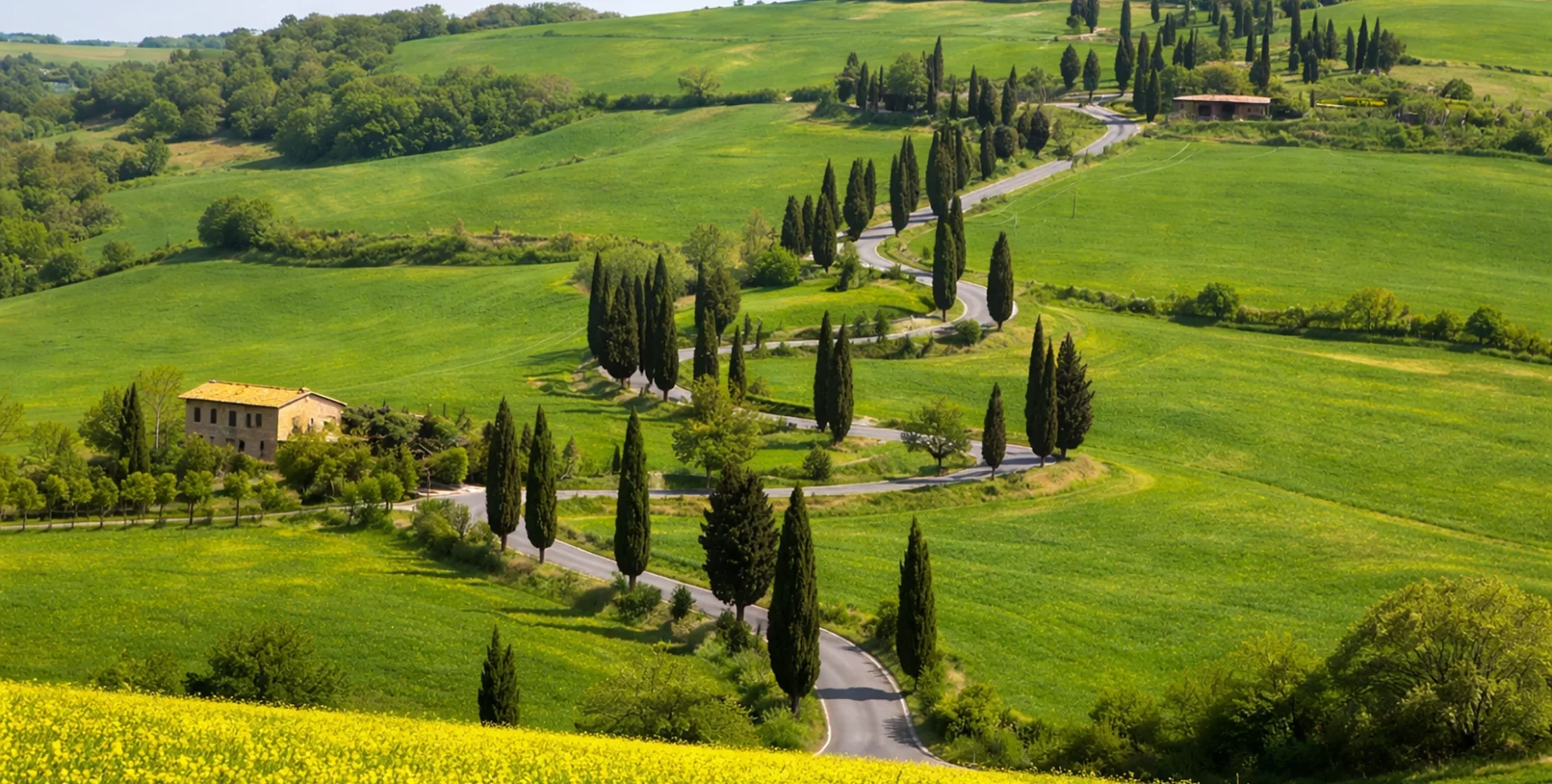
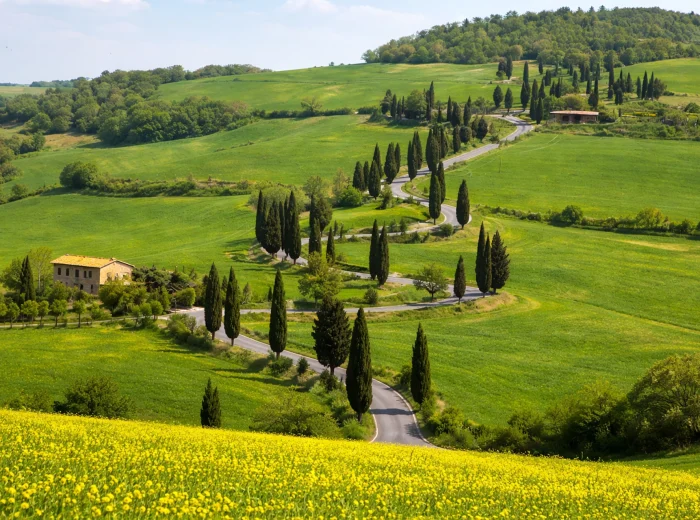
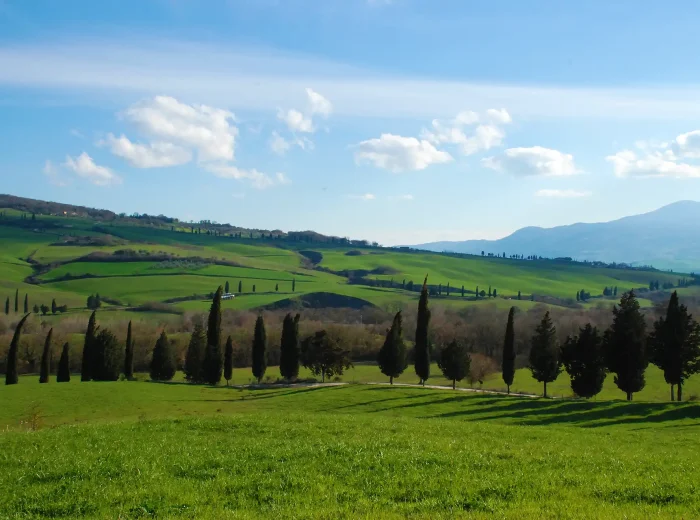
From the centre of Pienza, head north, following the paved SS146 state road towards San Quirico d’Orcia. After about 1 km, at the Pietrafitta junction, turn right into the SP71 provincial road in the direction of Trequanda and San Giovanni d’Asso. The road descends, running alongside fields and woods, until it crosses a small bridge over the Toma Torrent. Just after the bridge, turn right, towards the San Polo dairy, leaving the paved road to follow a very quiet unpaved road. Proceed for a few kilometres, alongside the woods and Borgo Sant’Ambrogio, until you come to the junction for Le Regge, where you turn left. This unpaved road leads onto the SP15 provincial road, where you turn right.
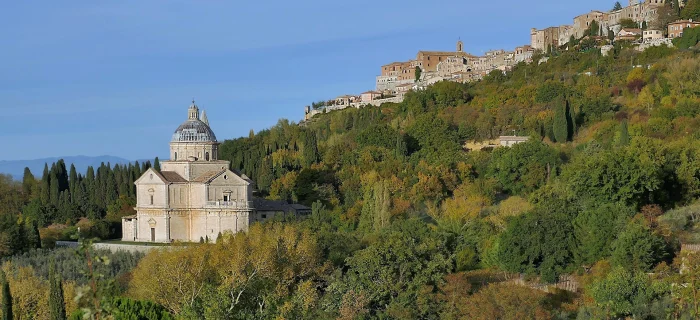
After about 3 kilometres, turn left and head towards Lupaia. This is a picturesque unpaved road that crosses the Nobile vineyards, leading to Montepulciano from the Church of San Biagio, its main architectural jewel, which is well worth a visit.
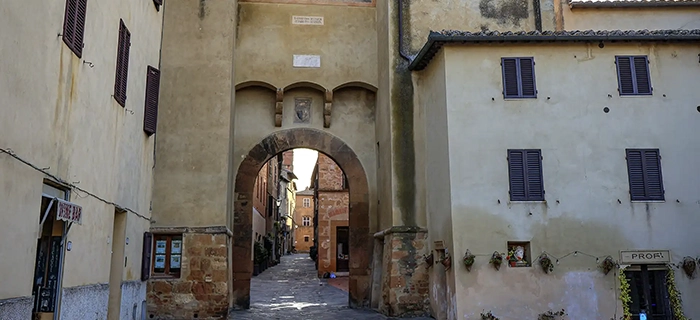
The construction of the so-called Temple of San Biagio began in 1518, based on a design by architect Antonio da San Gallo the Elder, when Montepulciano was part of the Florentine Republic. This is where Agnolo Ambrogini, known as Poliziano, was born. He was a humanist poet at the court of Lorenzo the Magnificent and a tutor to his sons, including Giovanni, who later became Pope Leo X and chose to grant privileges to Montepulciano to honour his former teacher. This central-plan church features a harmonious combination of geometric forms. The stone is calcareous tufa from the quarries of the nearby hamlet of Sant’Albino. Beyond the lawn, stands the rectory with a well in front of it, both designed by Sangallo. A steep road climbs up alongside the rectory, leading to the upper and oldest part of Montepulciano, entering the walls through the Arco del Paolino. Further up, you will come to Piazza Grande, which is 600 metres above sea level. Overlooking the square, you will see the 17th-century cathedral with its unfinished façade, the town hall, designed in the early 15th century by Florentine architect Michelozzo, and Palazzo del Capitano. In front of this building is the beautiful Pozzo dei Grifi e dei Leoni (Well of Griffins and Lions), symbols of Etruscan Montepulciano and Florence respectively, also emphasised by the Medici coat of arms. Completing the square are the elegant Nobili Tarugi and Contucci private palaces, both attributed to Sangallo. Behind the cathedral block stands the Fortress, surrounded by a public garden.