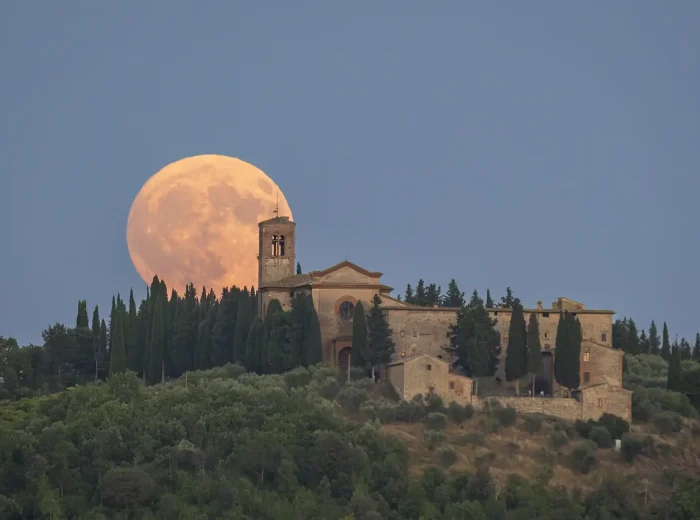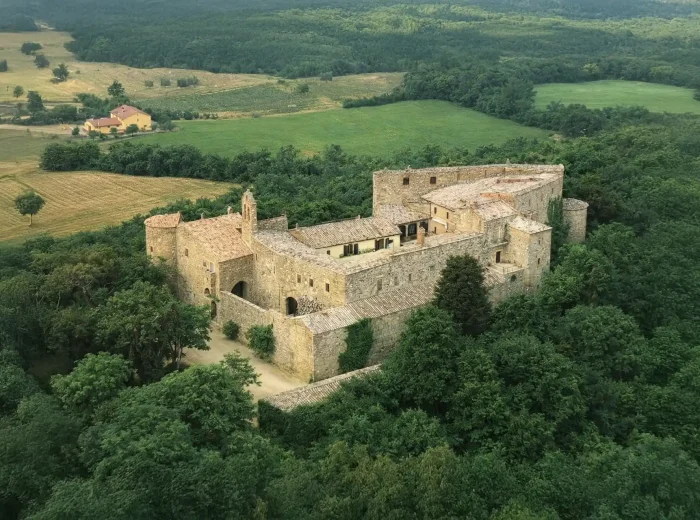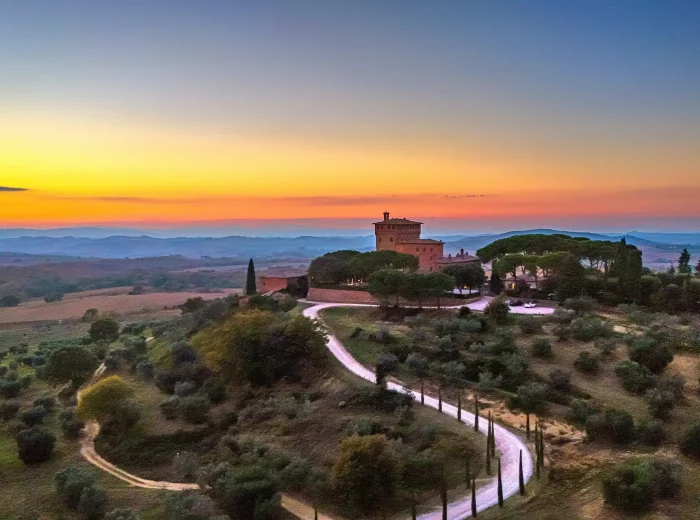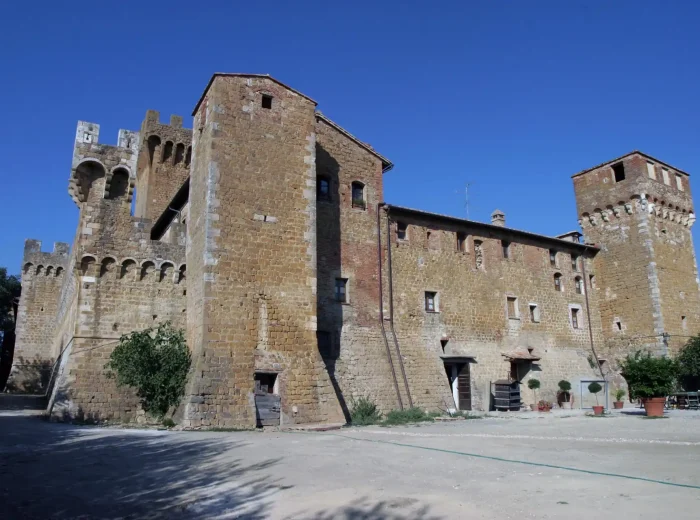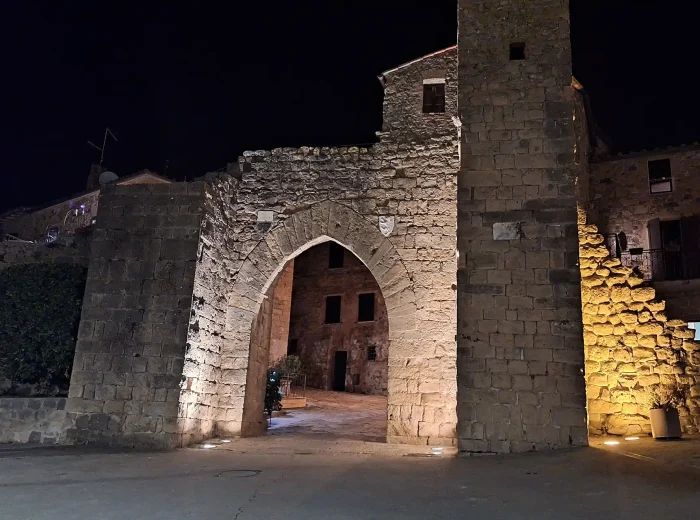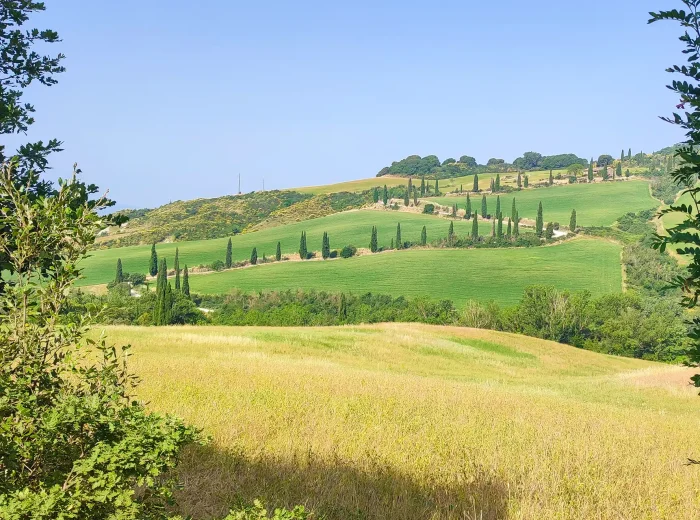
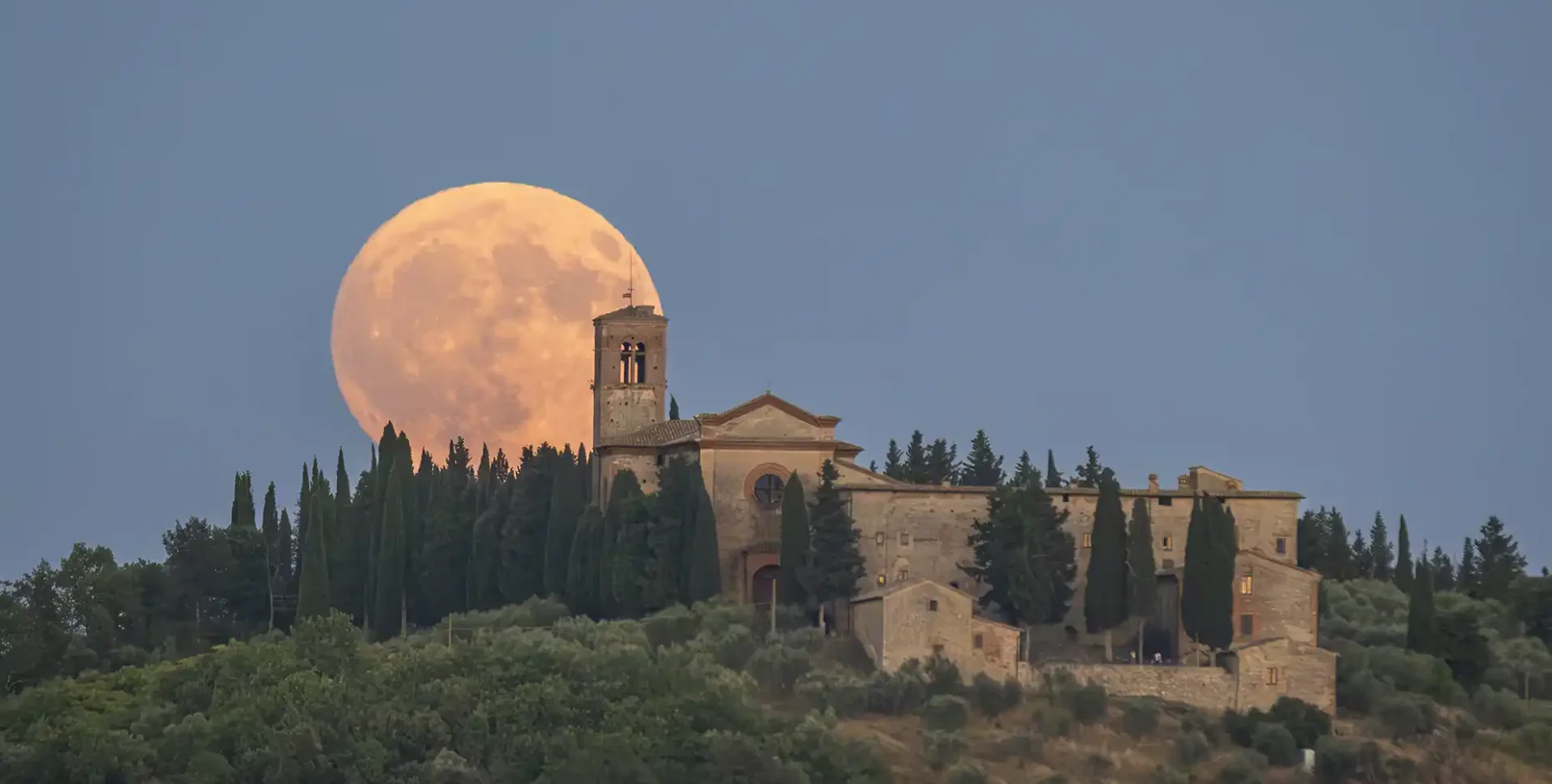
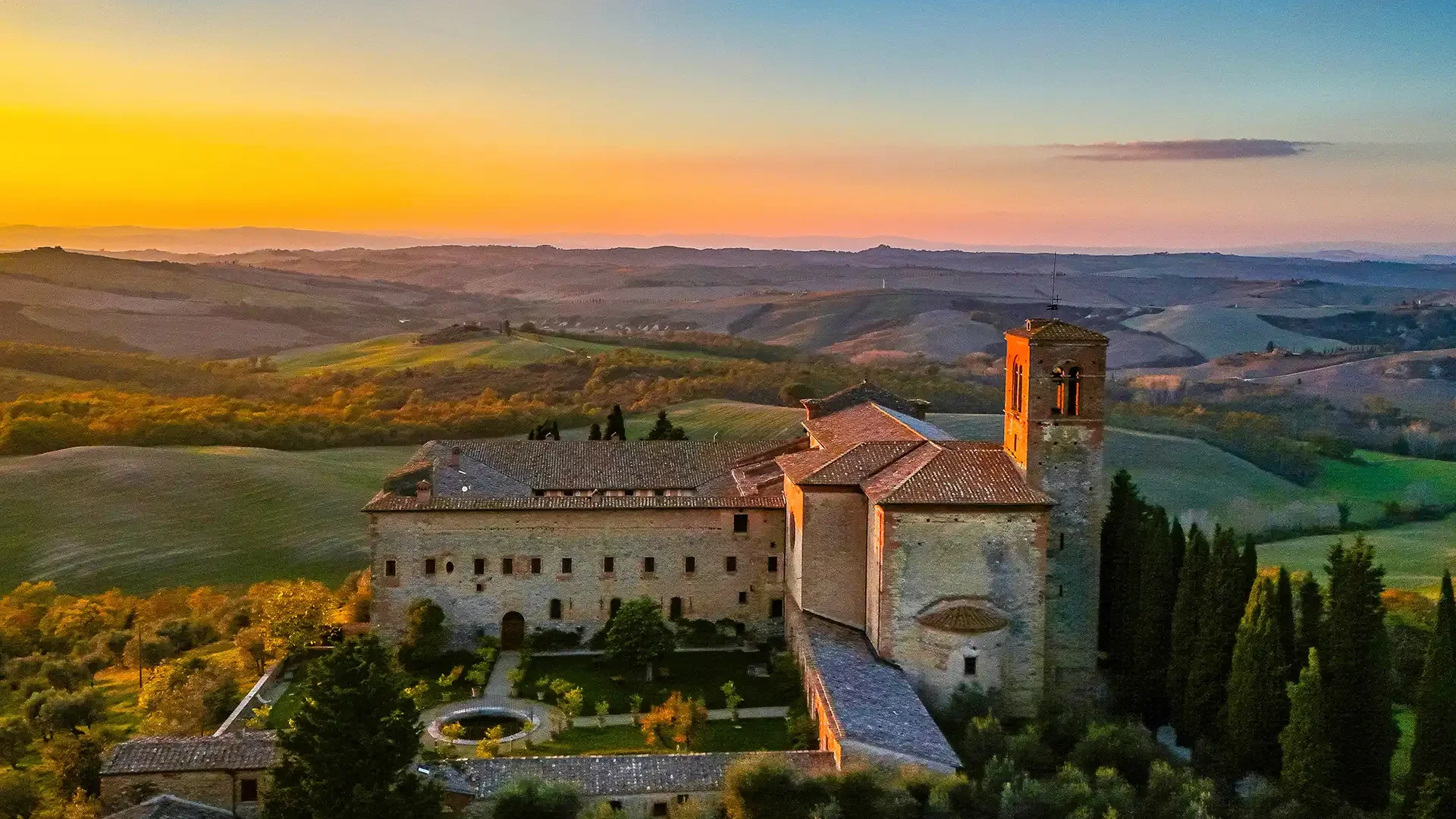
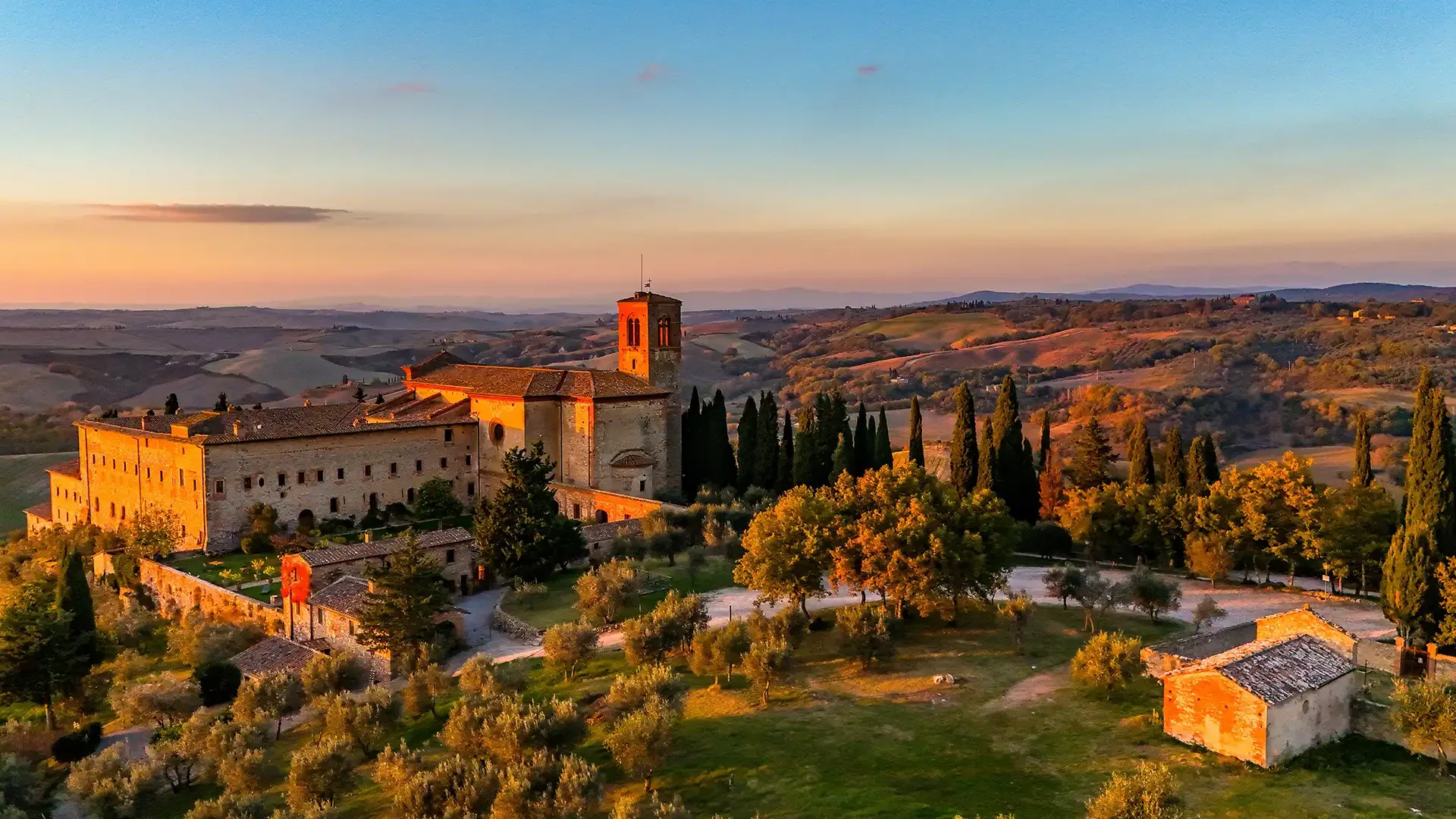
One of the most charming and poetic places in the Pienza area is the Olivetan Monastery of Sant’Anna in Camprena, a magical presence for the history, art and human experiences it has held within its walls for centuries.
The complex dates back to 1324, when a Sienese widow, Uguccia Ragnoni, donated a fortified farmhouse and surrounding land to the Olivetan Benedictine Order, so that they could found a monastery dedicated to Anna, mother of Mary. The name Camprena comes from the Latin campus arenae, meaning “field of clay or tufa”.
Things to see
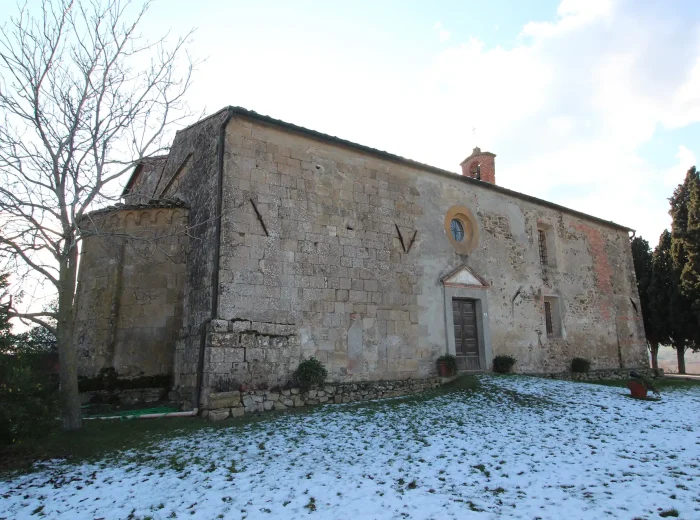
- Church: It has a Latin cross layout, a large single nave, a simple plastered brick façade with a prothyrum and a large rose window. The church was transformed in the 18th century and, inside it, you will find a 16th-century wooden choir and Baroque altars in the transept, as well as paintings depicting the life of Bernardo Tolomei, founder of the order.
- Refectory: Since 1503-1504, it has contained a series of frescoes by Giovanni Antonio Bazzi, known as Sodoma, including the “Miracle of the Multiplication of the Bread and Fish”, the Lamentation over the Dead Christ and the Virgin and Child with St Anne and two devout monks. Along the left wall, there are grotesques and perspective oculi with saints and small monochrome stories.
- Convent: A fortified structure with machicolations and pointed corbel arches; on the ground floor are the library, the chapter house, the kitchen and the refectory, while the monks’ cells are on the upper floor.
- Cloister and garden: There is a large cloister next to the church and a garden conceived as a hortus conclusus.
Interesting Facts
- The building rests on pre-existing medieval structures and was expanded in the 15th century, during a very prosperous period for the Olivetan order.
- The refectory of Sant’Anna is one of Sodoma’s first Italian projects and was commissioned by the monk Bartolomeo da Vercelli.
- Among the monastery’s illustrious visitors: Pius II, Cardinal Francesco Gonzaga and Giorgio Vasari, who was there between 1530 and 1531.
- Following its suppression in 1784, the monastery was turned into a holiday retreat for bishops and seminarians from Chiusi and Pienza.
- The monastery was the location for the filming of 9-time Oscar winning film: “The English Patient” directed by Anthony Minghella (1996)
 Useful information