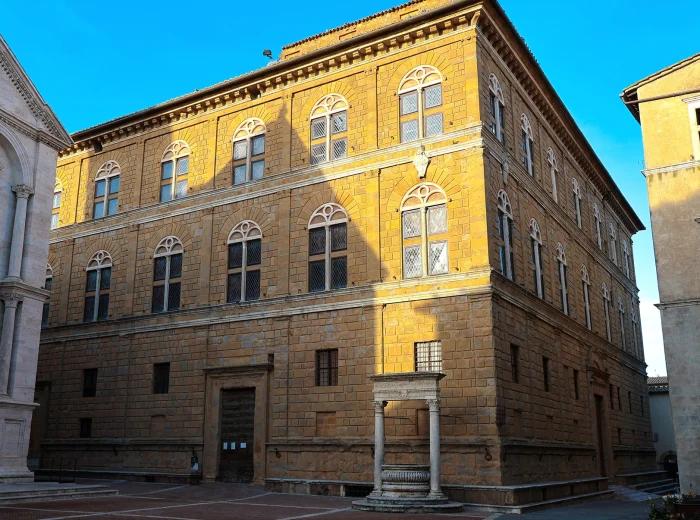
Thinking about Pienza immediately brings to mind the image of the “ideal town” and the magnificent views it offers.
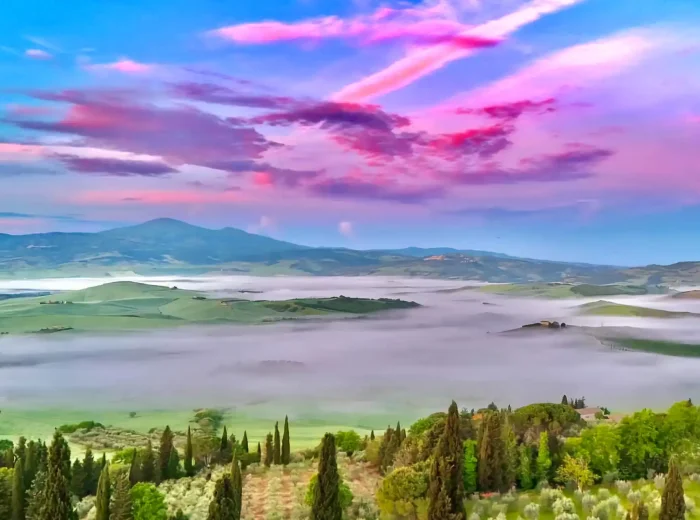
Its reputation is well-deserved, because all you need to do to enjoy the unique scenery, is let your eyes wander as you linger around the historic centre. The southern slope of the town overlooks the Val d’Orcia and offers an expanse of extraordinary and harmonious views in every season.
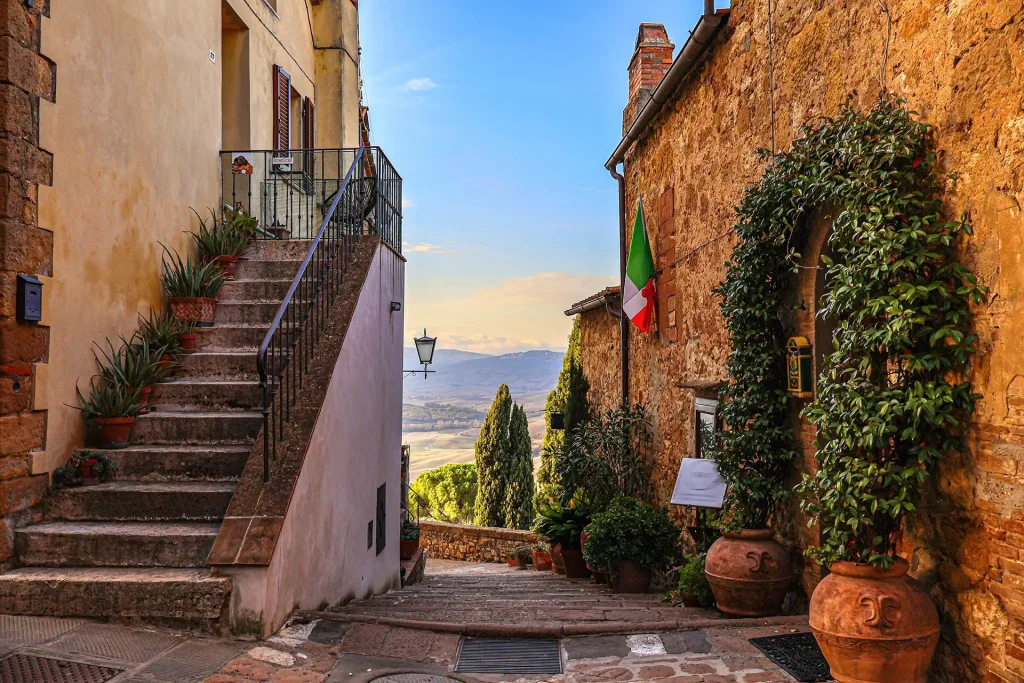
The panoramic viewpoints in the town centre
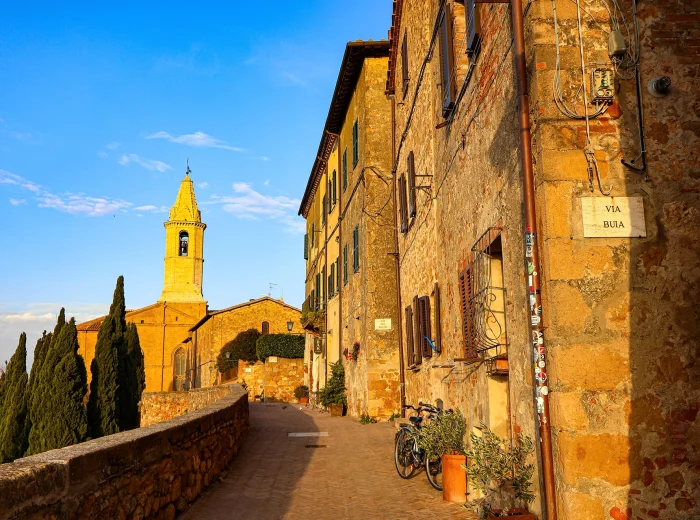
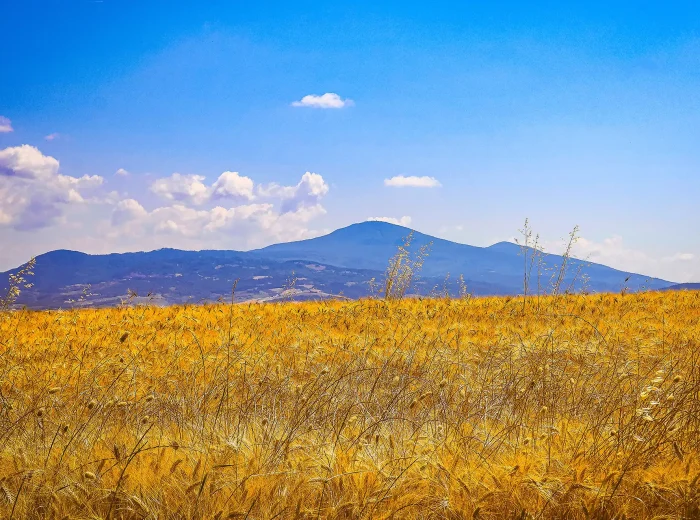
The Val d’Orcia opens up to an unparalleled view, from the panoramic viewpoints in the Gozzante district, of medieval origin, the most ancient in Pienza and recently restored, and, continuing along that side, from the terraces of Via del Casello, where you will also find the square dedicated to Mario Luzi. From the east, proceeding in order, you can see Monticchiello, Monte Cetona, Contignano, Radicofani, Campiglia d’Orcia, Monte Amiata, Castiglione d’Orcia, Rocca d’Orcia, Bagno Vignoni, Vignoni, San Quirico d’Orcia and Montalcino. This route can also be accessed from Corso Il Rossellino, the main street in the historic centre, entering secluded side streets with unforgettable names like Via della Fortuna (Street of Fortune), Via dell’Amore (Street of Love) and Via del Bacio (Street of the Kiss). As the view from these alleys, named this way as a tribute to peace, appears before your eyes, the sensation is that of the classic “heart skipping a beat”.
The magical sunsets, the enchantment and the natural fragrances of
Via S. Caterina
Everyone tries to experience the magic of the sunsets, which are different and more spectacular every time, by looking to the west, especially on summer evenings; thousands of visitors watch the sun go down while sipping an aperitif, like a ritual, in a state of total serenity. The same view is offered from Via Santa Caterina, a pedestrian path made even more evocative by the unpaved road, a stone’s throw from the historic centre, that starts from the public gardens and leads towards the parish church dedicated to the Saint and then to the cemetery, first like a balcony above the valley and then through thickets and olive groves filled with the fragrances of plants and fruit, making the experience even more complete and unforgettable. From Via Santa Caterina, the hills appear to be very close, as they alternate with white ravines and thermal waters, while the roads leading to the farms are dotted with cypresses. Everything is in order, or rather, in harmony, which is also an expression of the pride of those who live in these lands. The ravines, like the biancane (whitish mounds), are formations of clayey soil that have been given those fascinating shapes by the action of the wind, sun and rain.
The famous Lucciola Bella road
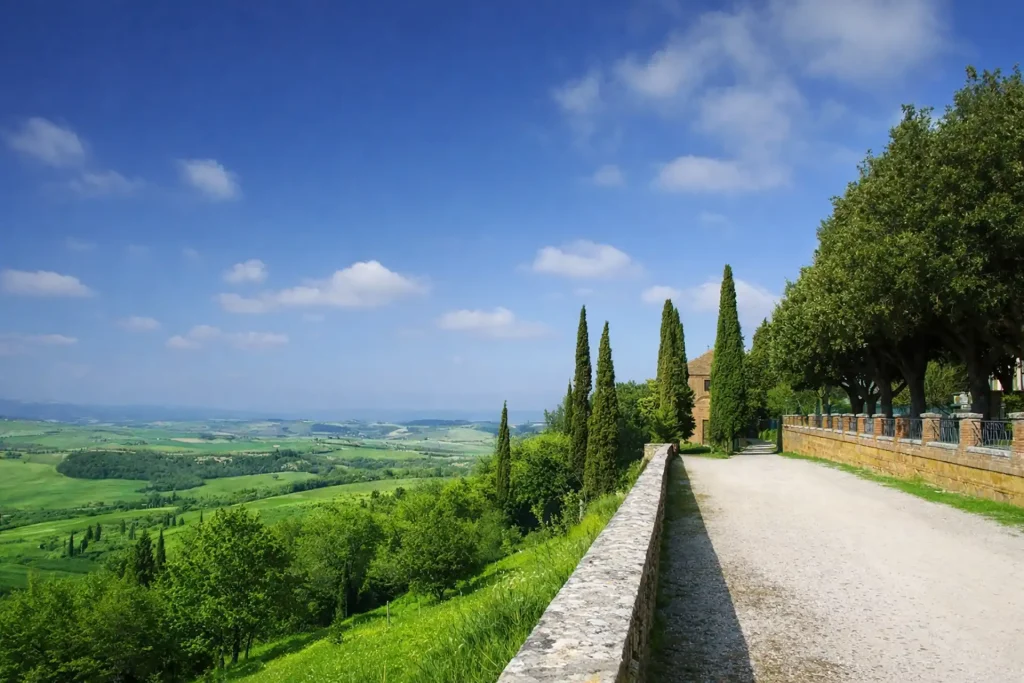
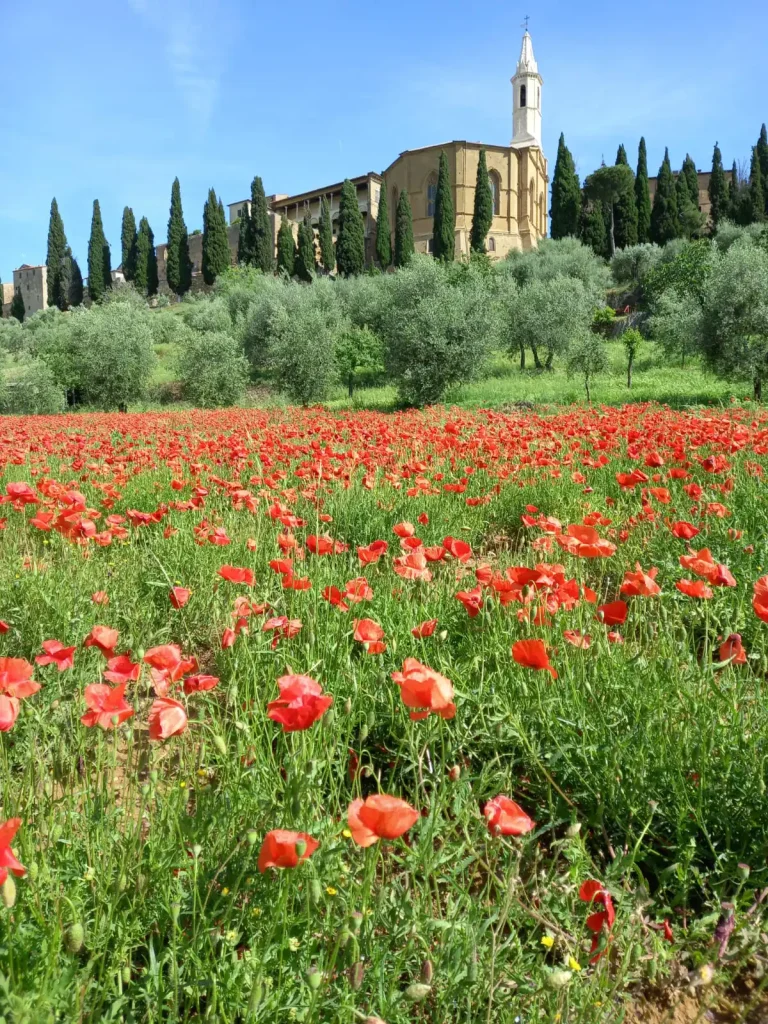
From the Parish Church of Corsignano, located about 500 metres from the town centre, at a lower level, you can admire the view of cultivated fields and cypresses immortalised by the film “Gladiator”, which is discussed more extensively in the “Cinema in Pienza” section. Another view not to be missed is the one you can enjoy from the Fattoria della Foce, an estate that was originally a hostel for pilgrims and merchants travelling along the Via Francigena in the late 15th century. We are at the intersection between the territories of Chianciano Teme, Sarteano and Pienza. The famous Lucciola Bella road belongs to Pienza and is the work of English architect and landscape designer Cecil Pinsent between the 1920s and 1930s. The route zigzags uphill, with wide hairpin bends, towards the top of the hill, giving your eyes the impression of harmony and, at the same time, energy. In the Lucciola Bella Nature Reserve, which has been a favourite location for advertisements for decades, the fossil of a dolphin was found, evidence of the presence of the sea in the Pliocene era.
The view from Monticchiello, the Quercia delle Checche
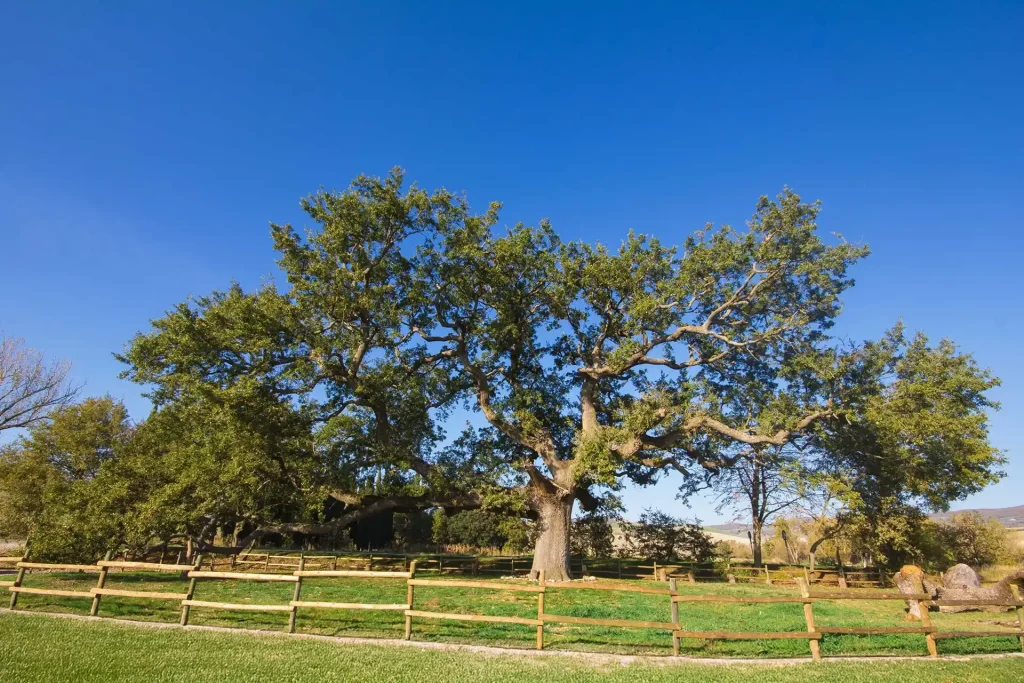
Another panoramic viewpoint not to be missed is that in Monticchiello: also in this case, everything is easy, given that the large square in front of Porta Sant’Agata, the only access to the fortified village since the 13th century, is like a balcony overlooking the Val d’Orcia. A must-see sight, albeit not strictly panoramic, is the Quercia delle Checche, a monumental oak tree located right next to the SP 53 provincial road, also known as the Val d’Orcia road, which leads from the Radicofani area to Bagno Vignoni. The tree is very ancient – it is estimated to be more than 400 years old and gets its name from the magpie, a bird called “cecca” or “checca” here. Its size is impressive: the trunk has a perimeter of 4 and a half metres, with two astonishing arms, parallel to the ground, that stretch out for about 20 metres. Over the years, “the great oak”, which offers an image of grandeur and stability, has unfortunately suffered both the effects of weather events and human vandalism. It has therefore been secured with special supports and, in 2017, it also obtained recognition from the Ministry of Culture as the first “Green Monument of Italy”, guaranteeing its non-stop protection.
Cross the Val d’Orcia, the castle of Spedaletto
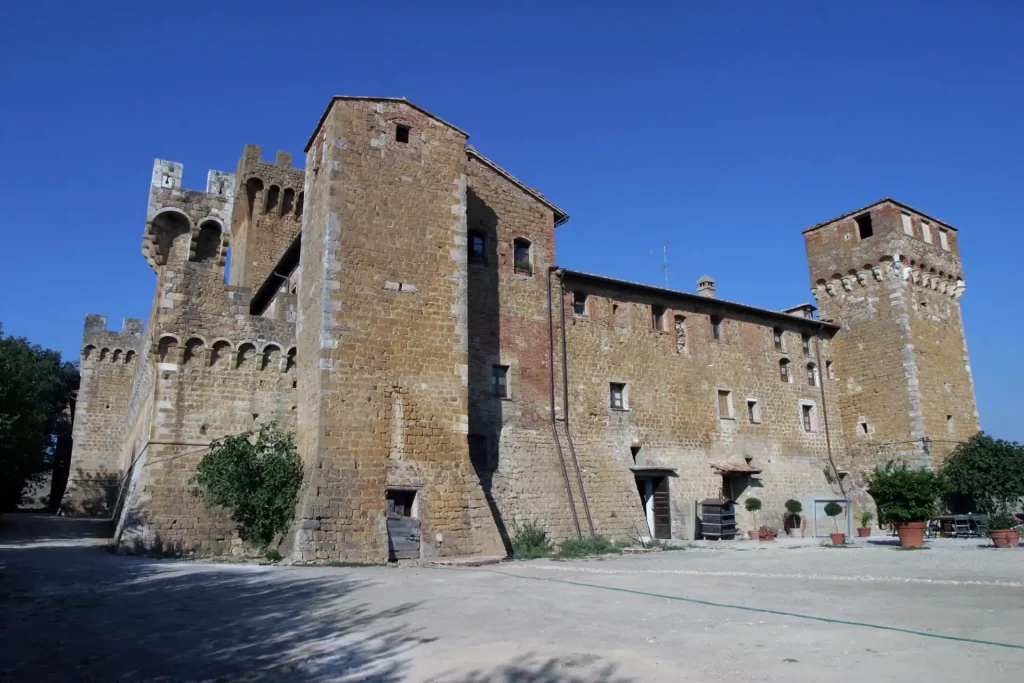
A visit to the Quercia delle Checche allows you to cross the Val d’Orcia, to admire its beauty and charm, and pass by the locality of Spedaletto, also in the territory of Pienza, a castle founded in the 12th century by the cleric Ugolino da Rocchione to give hospitality to pilgrims and wayfarers travelling along the Via Francigena and later fortified to store grain. Today, it contains tourist accommodation facilities.
Palazzo Massaini, an exemplary history
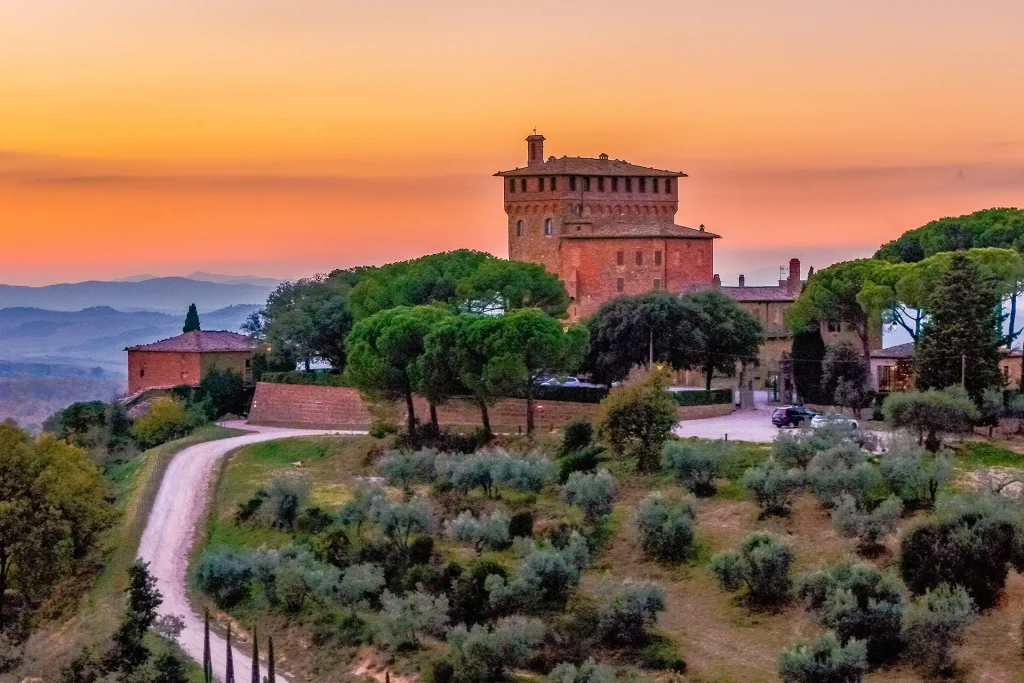
The protagonist of a phenomenon that tells us a great deal about the passion of tourists and visitors for scenery is Palazzo Massaini, an authentic village due to its size, located along the SP 146 provincial road, between Montepulciano and Pienza. Already an impressive and beautiful building, built on a hill on which there are also other buildings (including a rectory, a small church and annexes for farm work), Palazzo Massaini has become a favourite among travellers ever since a path surrounded by cypress trees that leads to the castle was opened along the road. From that moment on, in every season, cars and tourist coaches have been stopping to admire the view, especially when there are spectacular sunsets in the background, with the stone tower up above, which is the most important architectural element of the entire complex.
Thanks to the territory, the range of opportunities is endless
Of course, we don’t believe that this series of places has exhausted the topic of “Panoramas in Pienza”; because of the rolling conformation of the territory, surrounded by hills, the views multiply, also beyond the most popular routes. For example, you can walk or cycle along a multitude of paths within the territory, which we talk about in another section.