The Cathedral of Santa Maria Assunta
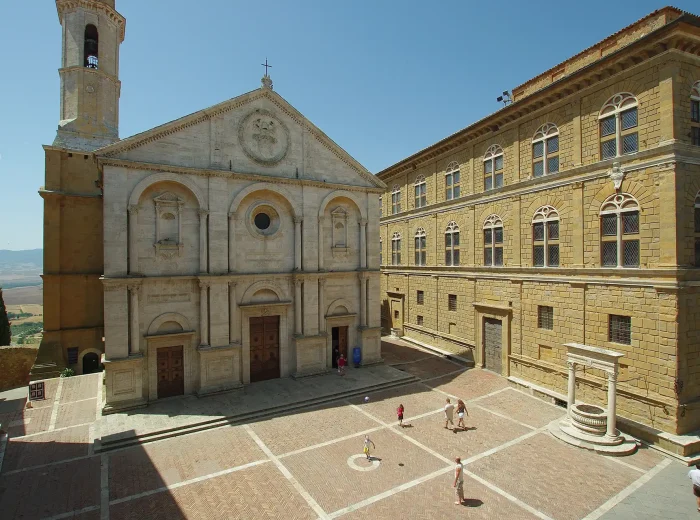
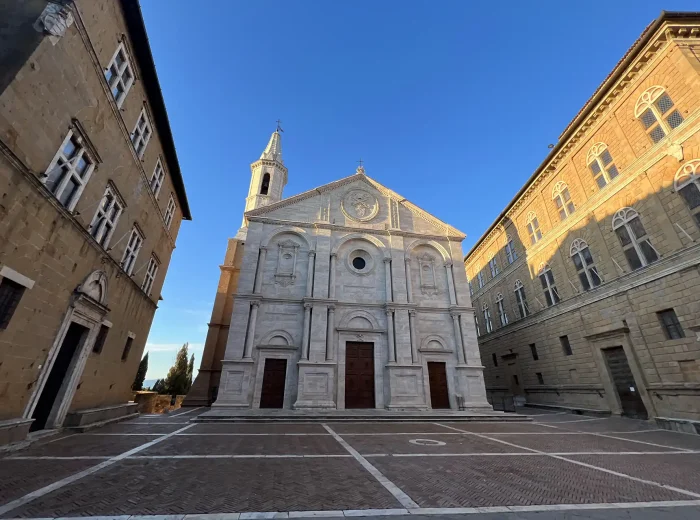
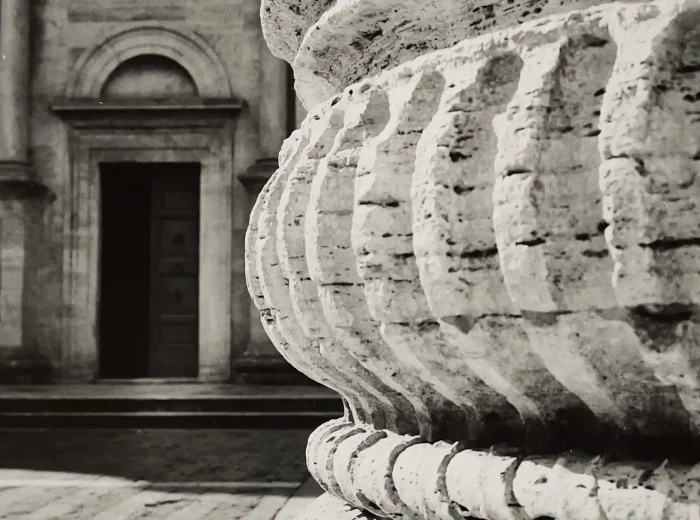
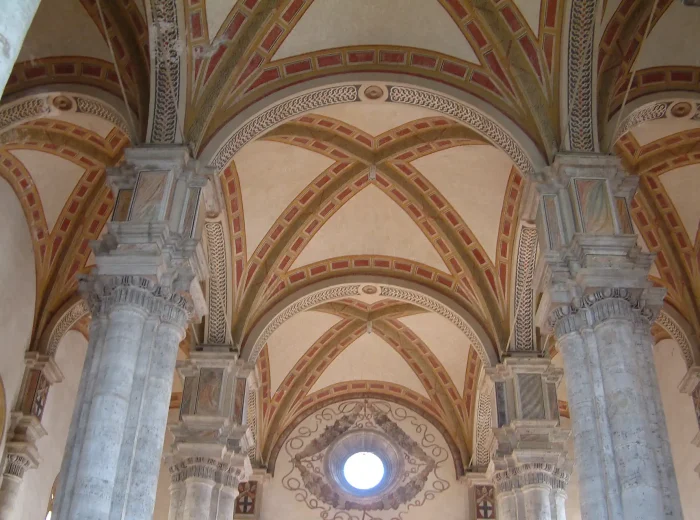
The Cathedral of Pienza, commissioned by Pius II and built between 1459 and 1462, is one of the monuments that best represents the Italian Renaissance.
Read more … “The Cathedral of Santa Maria Assunta”
A small gem standing on top one of the Val d’Orcia hills: the historic centre of Pienza is the Renaissance village commissioned by Pope Pius II, which still retains its original layout, featuring quiet squares, carefully designed perspectives and buildings that engage in a dialogue with the landscape.
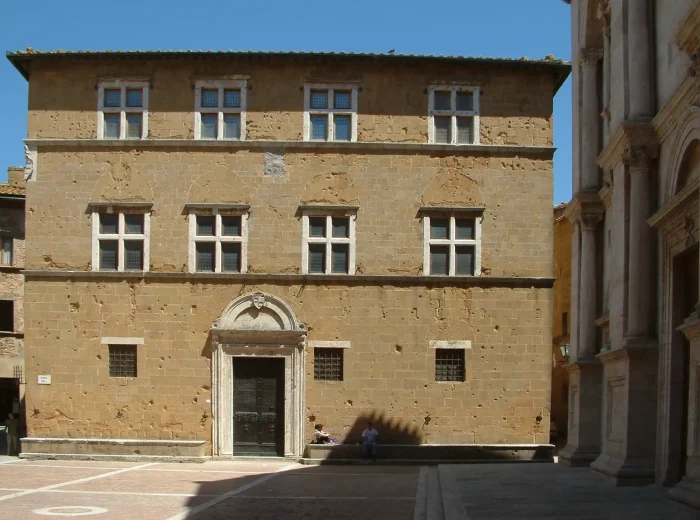
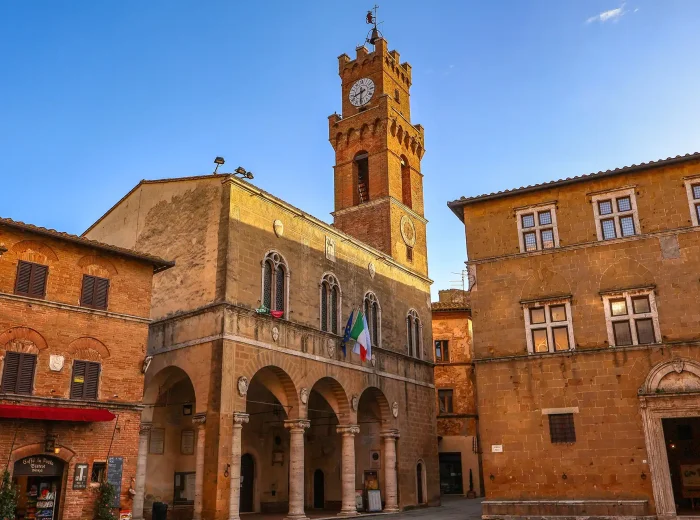
Recognised as a UNESCO World Heritage Site in 1996, the focal point of the historic centre is the beautiful central square dedicated to Pius II, from whom it gets its name. It is surrounded by the town’s iconic buildings, like the cathedral, Palazzo Piccolomini, Palazzo Borgia, the Presbytery, the Town Hall and Palazzo Ammannati.
The Cathedral of Pienza, commissioned by Pius II and built between 1459 and 1462, is one of the monuments that best represents the Italian Renaissance.
Read more … “The Cathedral of Santa Maria Assunta”Next to the Cathedral of Santa Maria Assunta, stands the majestic Palazzo Piccolomini, the private residence of Pope Pius II.
Read more … “Palazzo Piccolomini in Pienza”The Episcopal Palace of Pienza is a key architectural element in the Renaissance urban complex conceived by Pope Pius II; it stands to the left of the Cathedral and was intended for Cardinal Rodrigo Borgia, the future Pope Alexander VI.
Read more … “Palazzo Borgia Diocesan Museum”Piazza Pio II, trapezoidal in shape and featuring paving divided into large rectangles with white travertine borders, is surrounded by architecture that represents the powers of the new Renaissance town: the religious one being the cathedral, the political one Palazzo Comunale (town hall) and the private one Palazzo Piccolomini, residence of the pontiff and then of his nephews, to whom it was donated with the papal bull preserved in its library.
Read more … “Piazza Pio II”Visitors entering Piazza Pio II cannot help but be intrigued by the beautiful Palazzo Comunale (Town Hall), built based on a design by Rossellino and commissioned by the humanist Pope, Pius II.
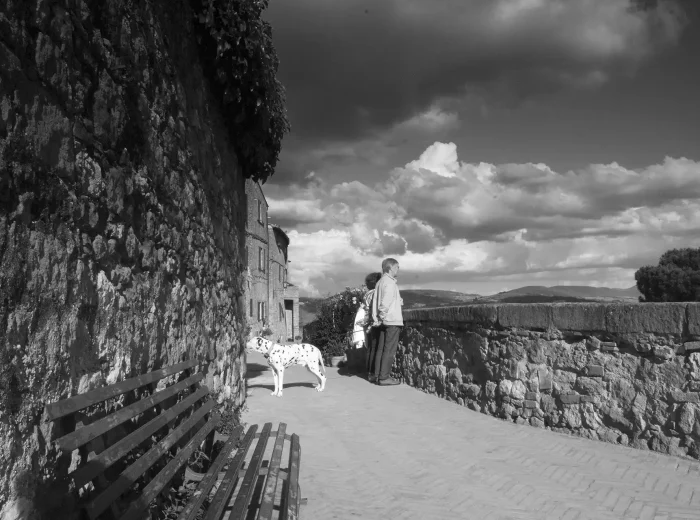
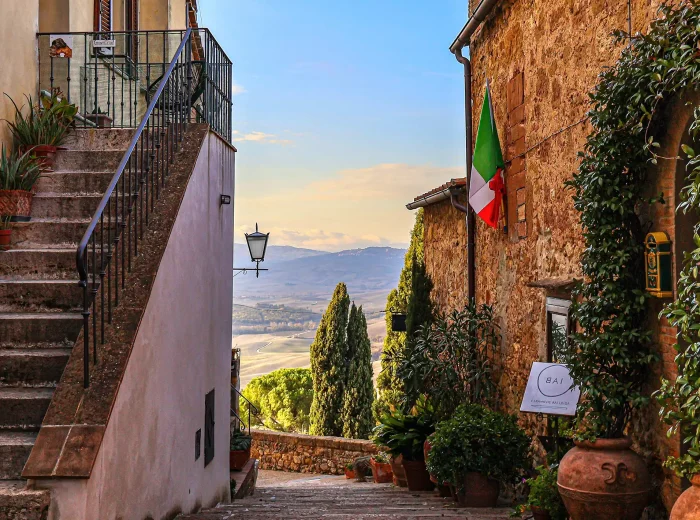
Read more … “Palazzo Comunale”In Via del Casello, which overlooks the breathtaking Val d’Orcia landscape, with views of Radicofani, Monte Amiata and Montalcino, Largo Mario Luzi was inaugurated in 2012
Read more … “The Casello Road and the Romantic Streets of Pienza.”The Pozzo dei Cani (Well of Dogs) is part of the Renaissance project commissioned by Pope Pius II.
Read more … “Pozzo dei cani”Located in the southwestern part of the town of Pienza, the Gozzante district has retained the ancient medieval atmosphere of what was once Corsignano.
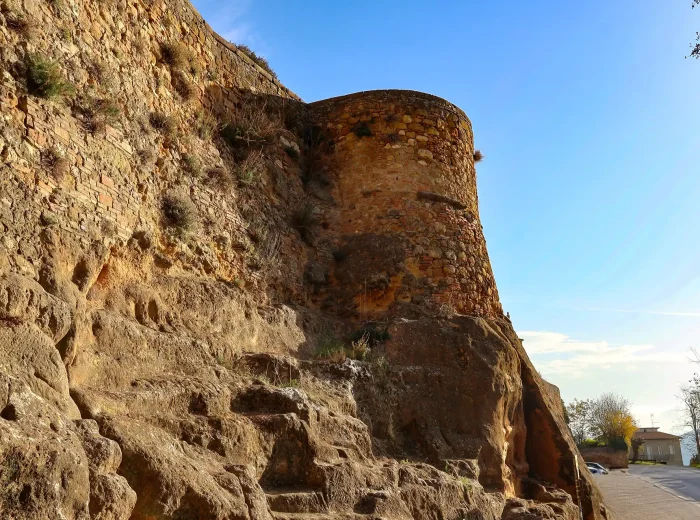
Read more … “Medieval atmosphere of Via Gozzante”If we observe the town of Pienza by looking at an aerial photo of it, we realise how the ancient medieval structure, Corsignano, has survived the ideal town created by Enea Silvio Piccolomini (1405-1465), who became Pope in 1458 with the name of Pius II.
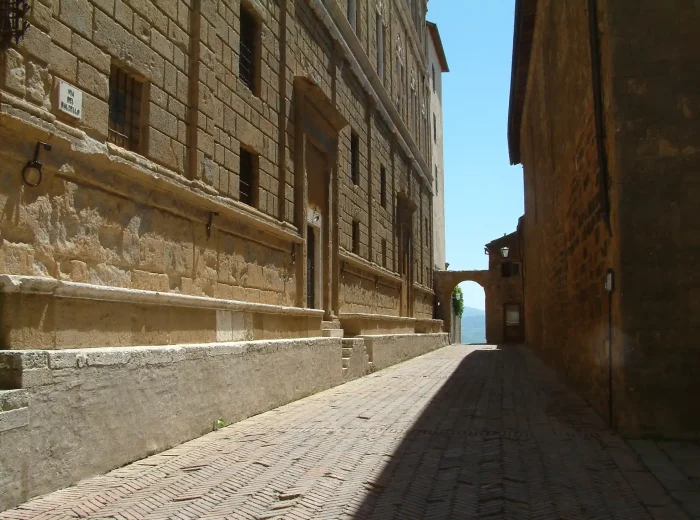
Read more … “Ancient walls and gateways”The transformation of the ancient village of Corsignano into the town of Pienza brought about a radical change to the internal structure of the town, which unfolded along the road axis running from the Porta al Prato to the Porta al Ciglio.
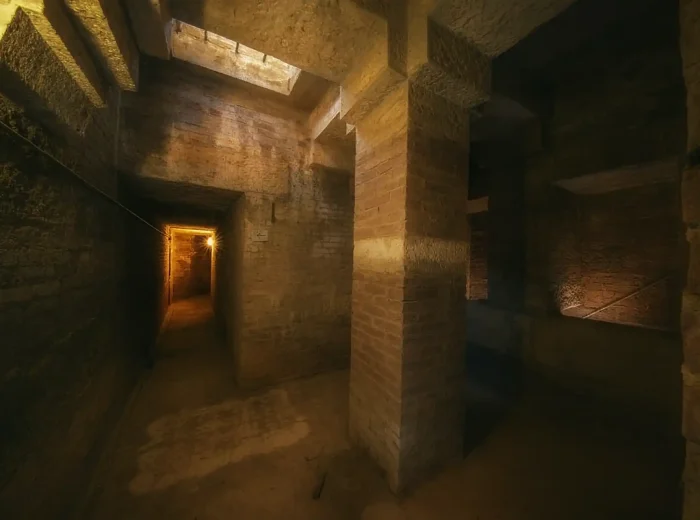
Read more … “Renaissance Palaces and Streets – Palazzo Ammannati and the Case Nuove”On the left-hand side of the Cathedral of Santa Maria Assunta is the entrance to what is now called the Cathedral Crypt. By going down two flights of steps, you come to the what remains of the medieval parish church dedicated to Saint Mary, in the Church of San Giovanni.
Read more … “The church of San Giovanni, known as the crypt and the Labyrinth”