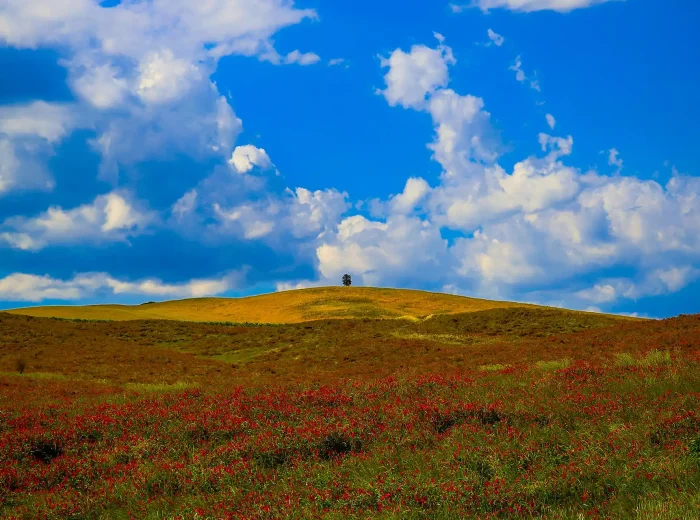
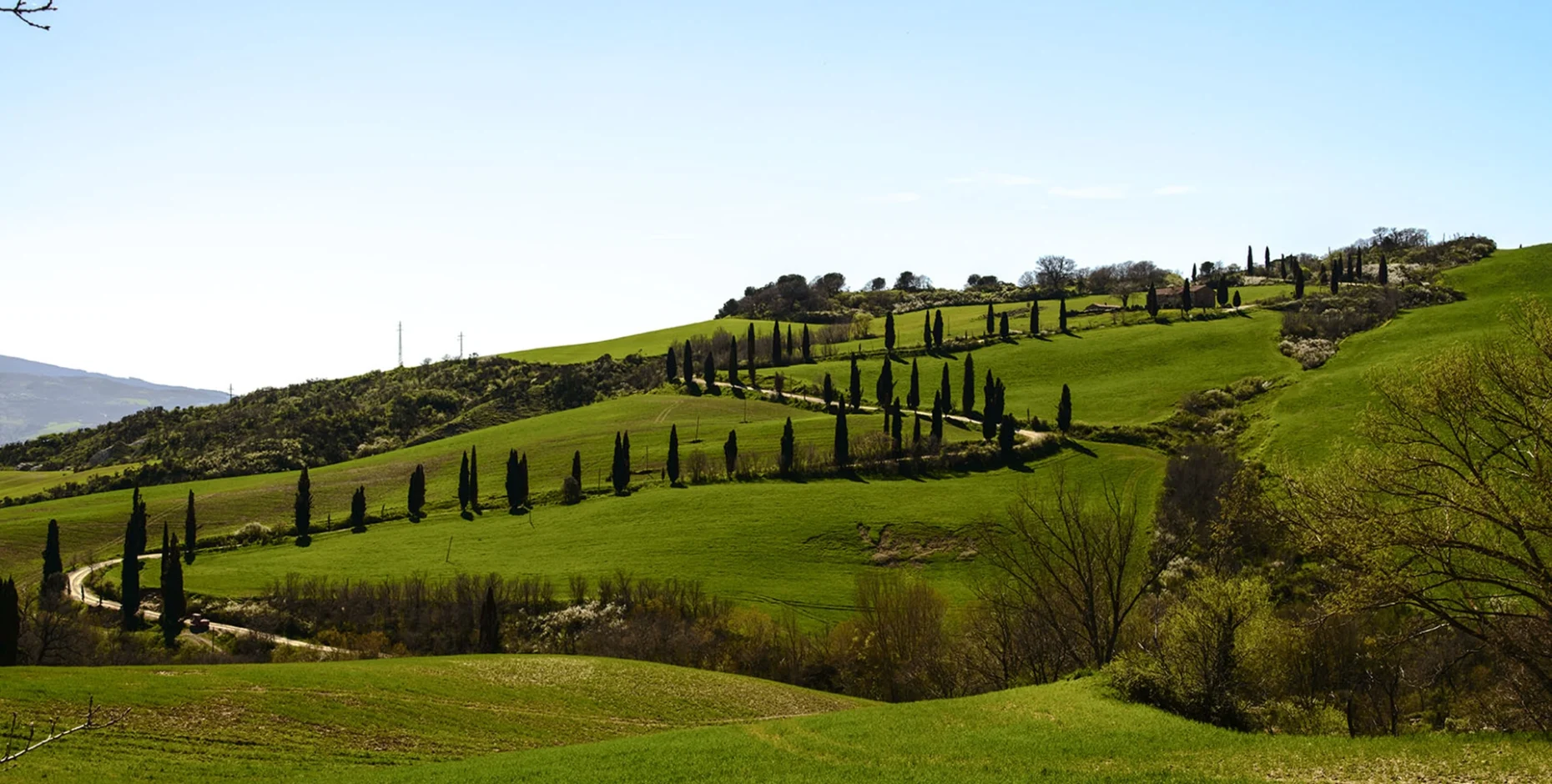
The Val d’Orcia was listed as a UNESCO World Heritage Site in 2004, due to the high cultural value of its landscape, which has remained true to itself over the centuries, thanks to the hard manual labour of farmers and shepherds, and has inspired and continues to inspire artists, poets and dreamers.
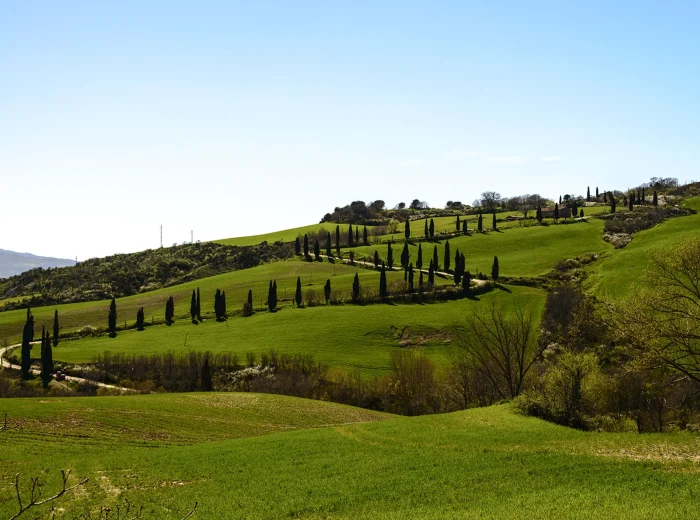
A rejuvenating landscape of rolling hills, dirt roads, wheat fields and cypress trees.
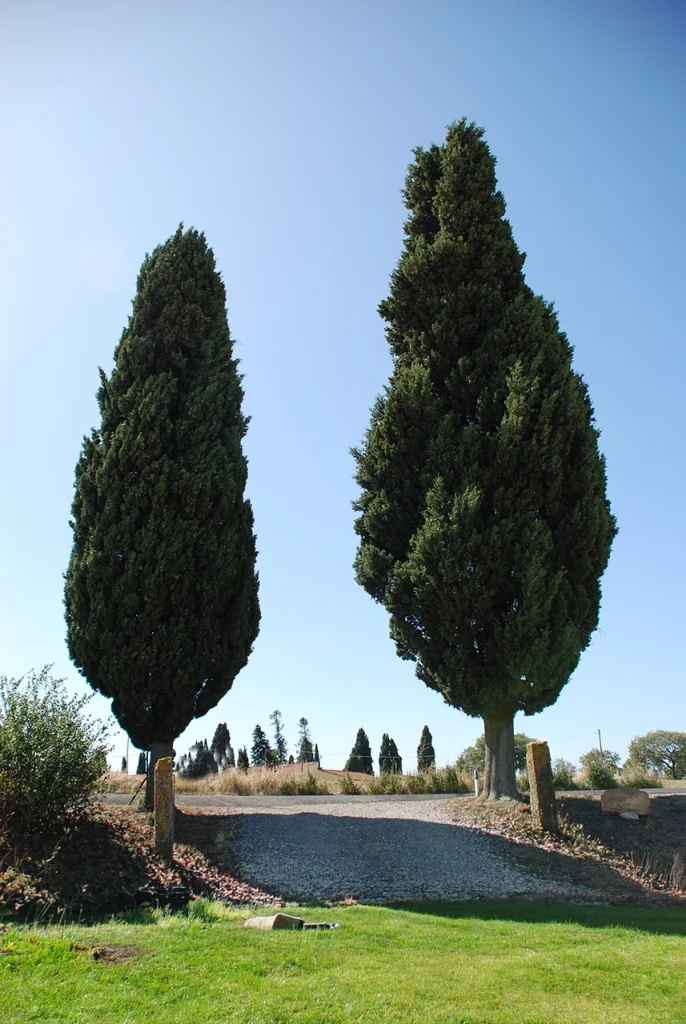
The cypress is the symbolic tree of southern Tuscany, although it is not native of the area. It was probably brought here by the Greeks, as its etymology, referring to the island of Cyprus, would suggest, and has become naturalised particularly well in Tuscany. Cypress trees were already seen on the Etruscan cinerary urns in the nearby town of Chiusi, standing as guardians beside the gates of Hades, and thus linked to the theme of death. Their limited root development and their slender, evergreen nature led to their being chosen as sentinels of cemeteries.
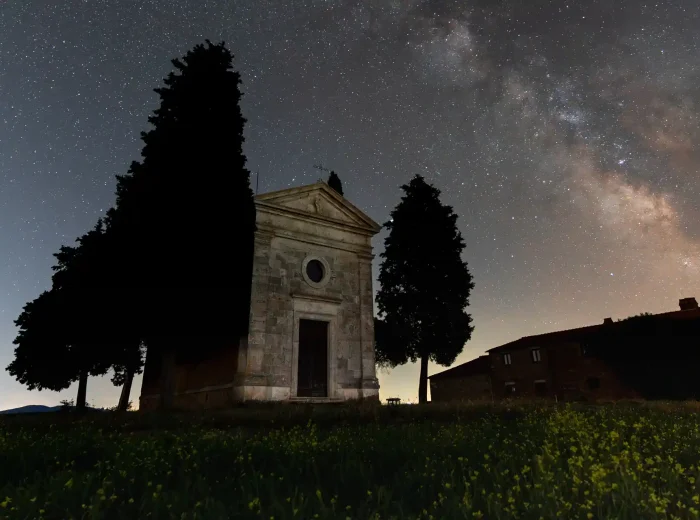
Over the centuries, however, the planting of cypress trees in Tuscany took on a completely different connotation. Rows of cypress trees were planted along the main driveway leading to a farmhouse, to make it visible from afar, or a single cypress tree was planted to mark the boundary of a property. Three cypress trees planted together on a hilltop could indicate a sacred site, or the proximity of a resting place for travellers.
The cypress tree is absent from the famous fresco that symbolises the Sienese Middle Ages, the Allegory of Good and Bad Government by Ambrogio Lorenzetti (Palazzo Pubblico, Siena, 1338), but appears in Renaissance paintings by Beato Angelico, Piero della Francesca and Benozzo Gazzoli. These very paintings are said to have inspired the English landscape architect Cecil Pinsent, on commission by Antonio and Iris Origo, to embellish the La Foce estate in the 1920s.
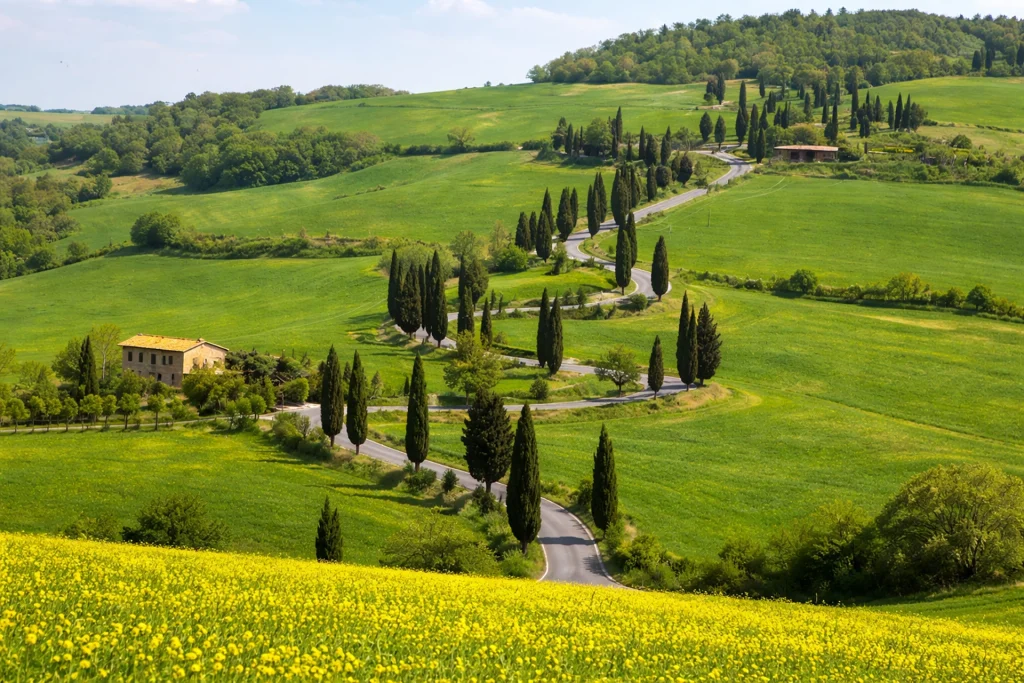
The zigzagging unpaved road that climbs through the Lucciola Bella reserve to the farm of the same name is a clear tribute to the Tuscan landscape portrayed by painters of centuries past. The most iconic cypress trees in the Val d’Orcia are found in the municipalities of Pienza and San Quirico d’Orcia. Along the Via Cassia SS2 state road, between San Quirico and Montalcino, there is a famous cypress grove, planted in the early 20th century, perhaps to intercept the flow of migratory birds for hunting purposes. Today, the beauty of the site has made it a regular stop for walkers, cyclists and even motorists.
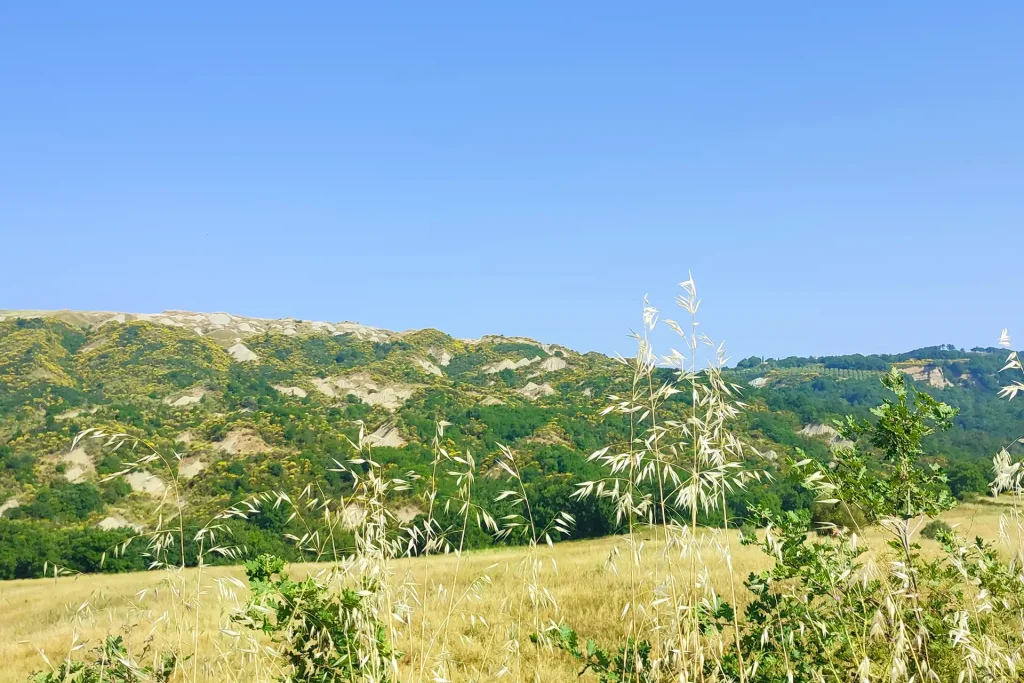
In the La Foce area, the erosive phenomena of the clay soil, known as calanchi (badlands) and biancane (small white mounds), can still be seen and are also present to the east of Siena, in the Asciano area, where they are known as the Crete Senesi. These arid clay hillocks, sometimes reminiscent of a lunar landscape, were shaped by rain and wind and, for centuries, have provided shelter and pasture for flocks of sheep, which are now increasingly sparse. In the months of May and June, they are covered in incredibly fragrant broom bushes. During the 20th century, many of these calanchi badlands were artificially levelled to obtain new land for planting, thus making them rare and worthy of protection. They can be found in the more inland areas of the Val d’Orcia along the road between the La Rimbecca farm and Castelvecchio, or along the SP478 provincial road that leads from the Via Cassia to Radicofani.
Other noteworthy plant species in the area are the holm oak and the oak. The first is a variety of evergreen oak and is very long-lived, capable of surviving for many centuries. Montalcino gets its name from this tree, which is ilex in Latin. In Tuscany, holm oak groves were planted along the northern side of country villas, to serve as a ragnaia, similar to a trammel-net, that, like a spider’s web, would catch small birds. These trees also served as a barrier against the cold north winds in winter and, conversely, offered coolness on hot summer days.
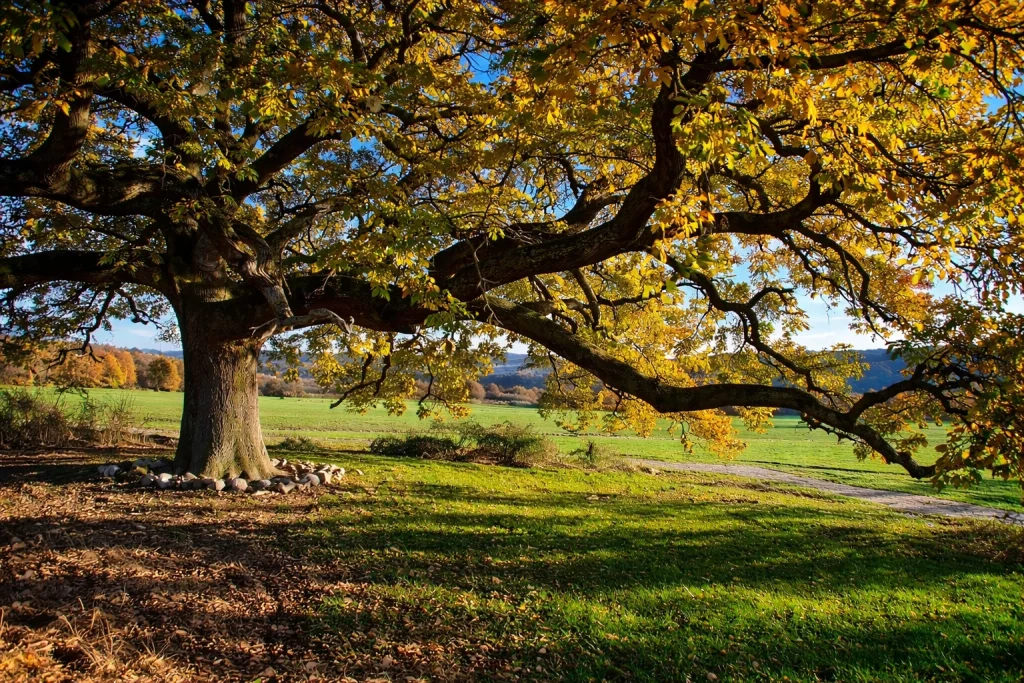
Among the oak trees, the majestic Quercia delle Checche is a must-see. It is easy to get to along the SP53 provincial road and gets its name from the nearby farmhouse, which in turn was named using the Tuscan word for magpies, which is checche or cecche. This oak is the sole survivor of a forest that was felled in the second half of the 19th century, to use the wood to make railway sleepers for the newly-formed Kingdom of Italy. The remaining tree has stood for over three hundred and fifty years and has become a symbol of the Val d’Orcia. Under its mighty branches, armies once stopped, weddings were celebrated and children from the nearby country school would have lessons there. Its preservation is due to the sensitivity of the Origo family. In 2017, it was designated Italy’s first green monument and is now the subject of renewed protection and attention.
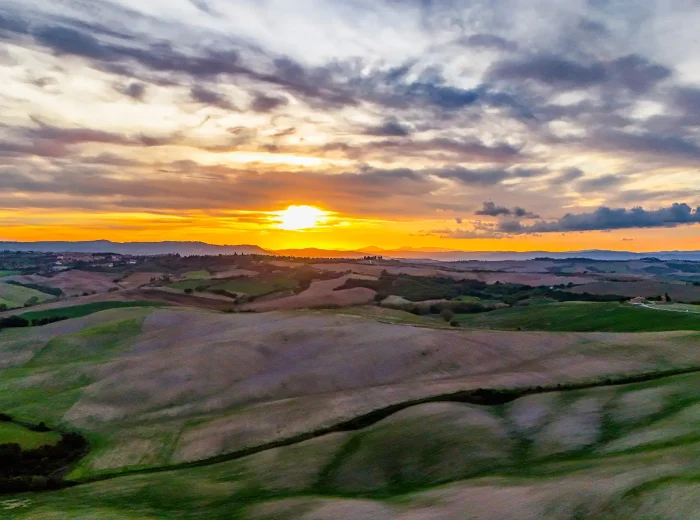
The landscape of the Val d’Orcia offers a palette of colours that changes with the seasons and echoes our moods, as several artists have observed. The brown bareness of winter is followed by a burst of colour in the springtime, with sulla flowers in the fields and along the roadsides and broom across the badlands. Wild poppies make way for the golden harvest, which sometimes gives the fields a blindingly golden colour. Autumn colours the leaves of the woods with red, orange and yellow, before the winter hibernation period. Snow, which traditionally covered at least the rounded peak of Monte Amiata throughout the winter, is increasingly rare. The painter who, more than any other, was able to capture and depict the colours of his land, the activities of the rural world and the theatre of human actions was Aleardo Paolucci (1927-2013) from Pienza. The beauty of these landscapes inspires tourists to have their photographs taken against these backgrounds, sometimes without considering the consequences. During the spring and summer months, it’s common to see cars parked along the roadside in dangerous spots and people trampling on planted fields, solely for photographic purposes. It’s important to remember that every crop is the result of a farmer’s hard labour and every plant must be respected, not picked or trampled on.
To admire and actively experience the Val d’Orcia landscape, there are trails mapped by the CAI (Italian Alpine Club), as well as paper and digital maps available on various apps, allowing you to find individual routes of varying lengths and difficulty levels. It’s advisable to use qualified environmental guides, who can suggest the best routes based on each user’s needs and accompany them safely, optimising their time and providing information about the area.