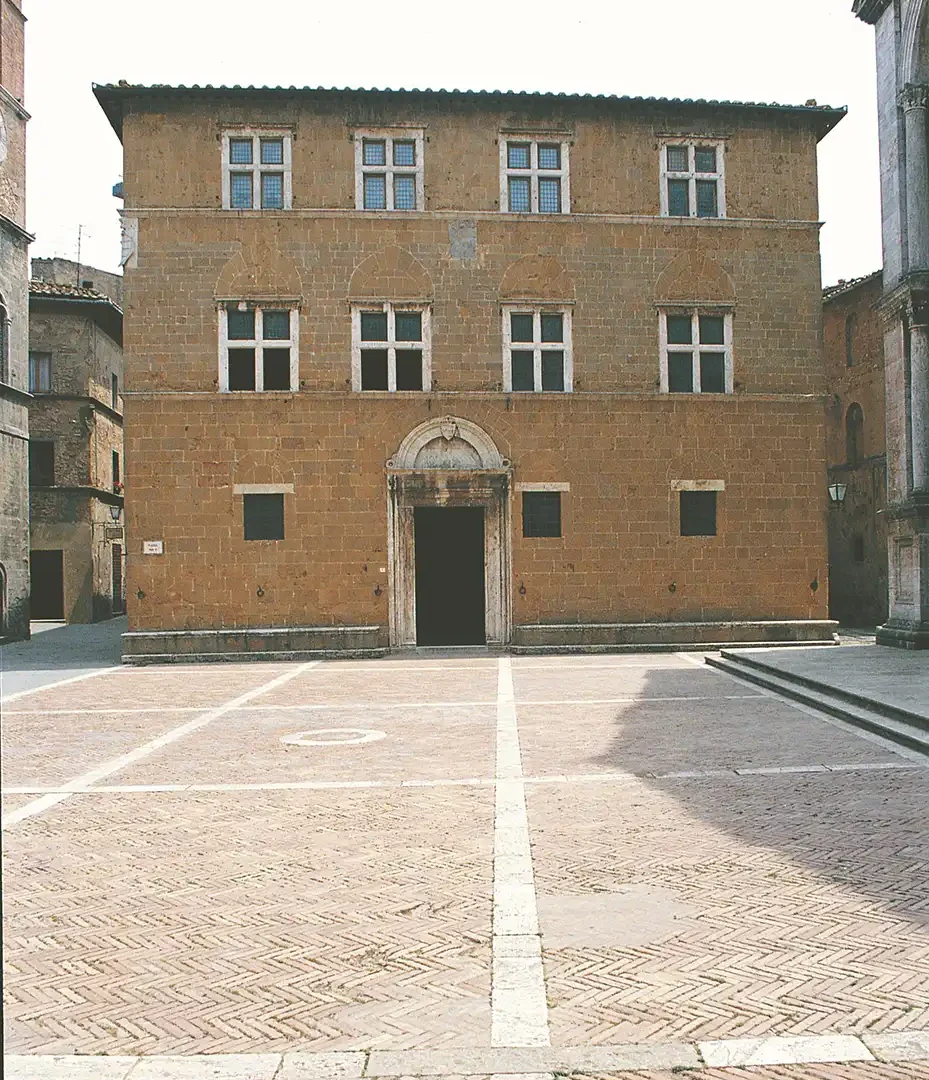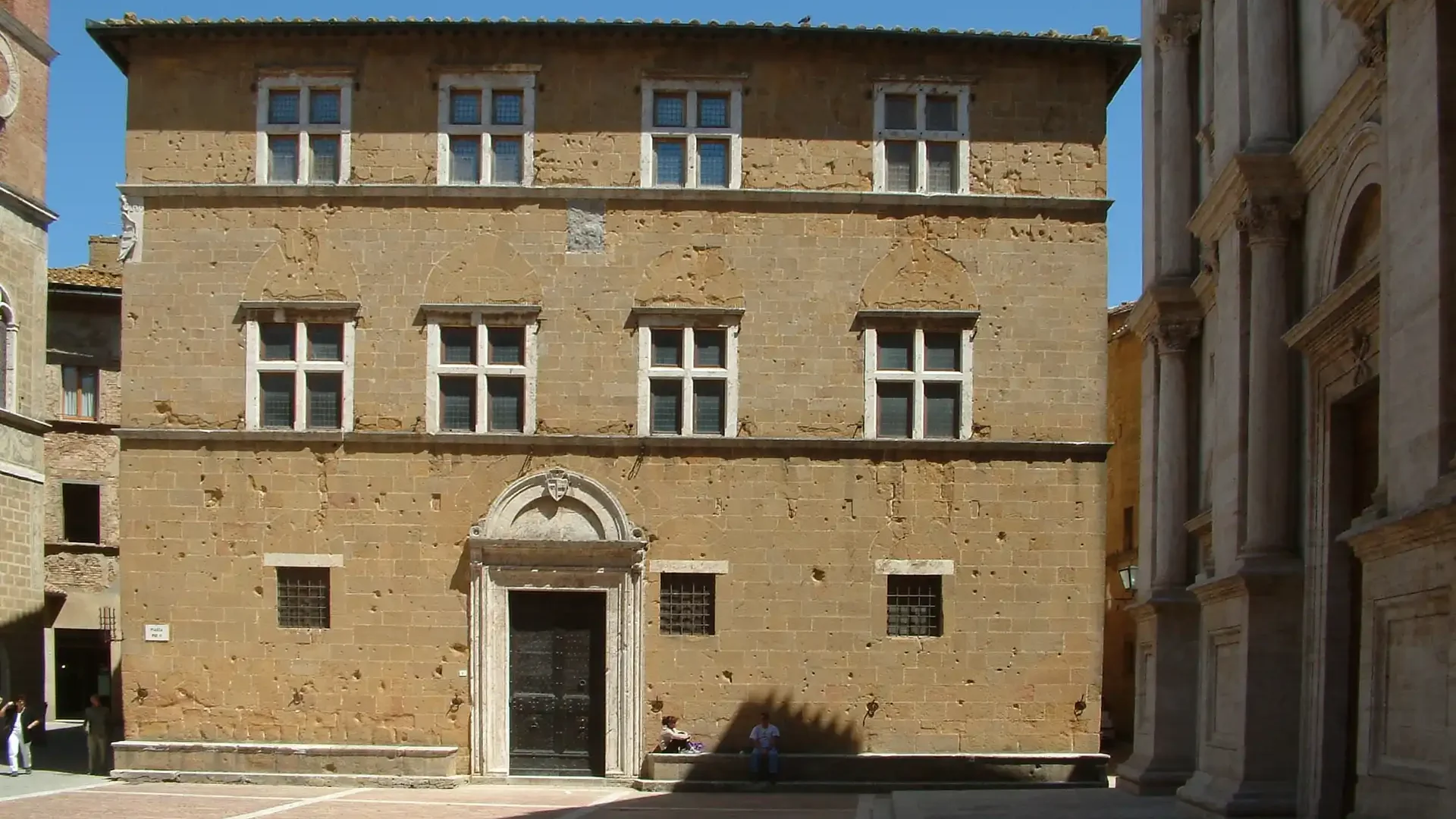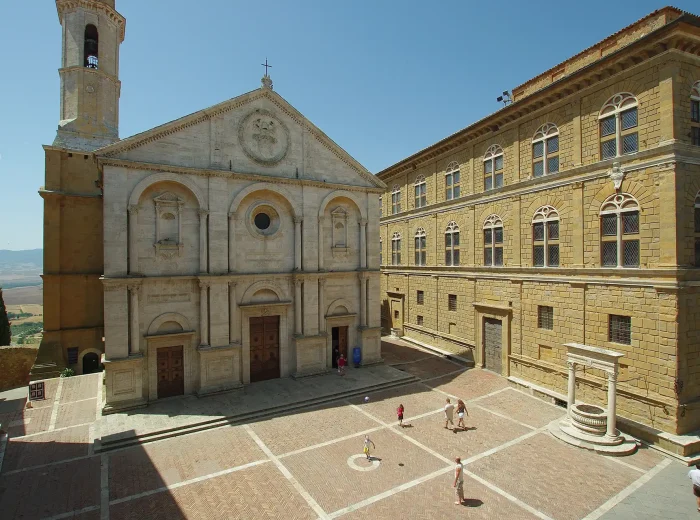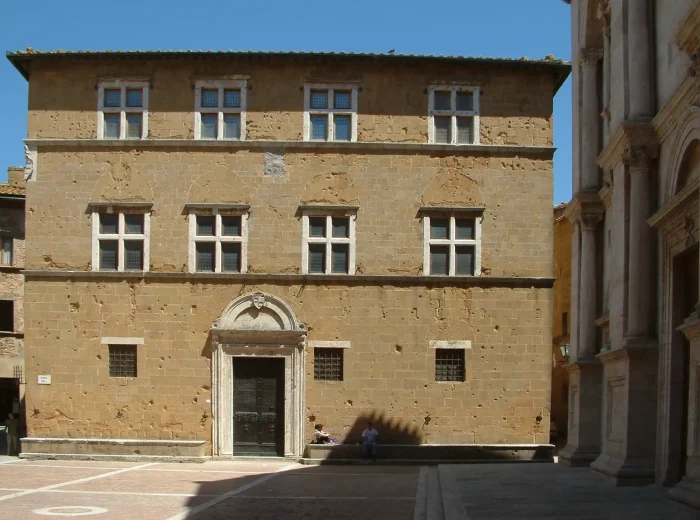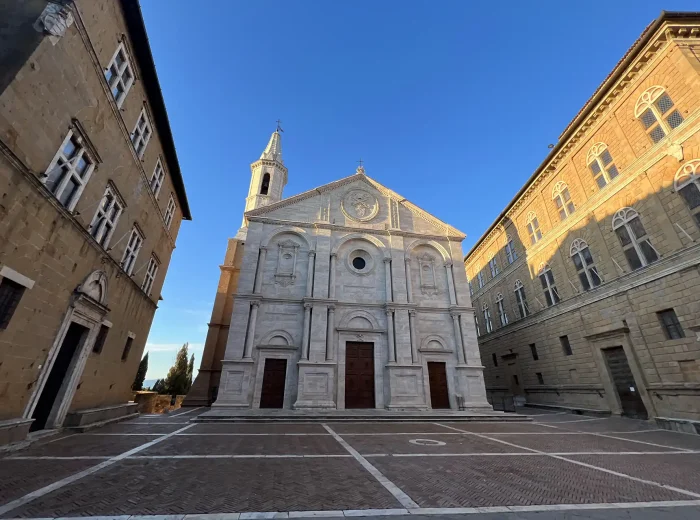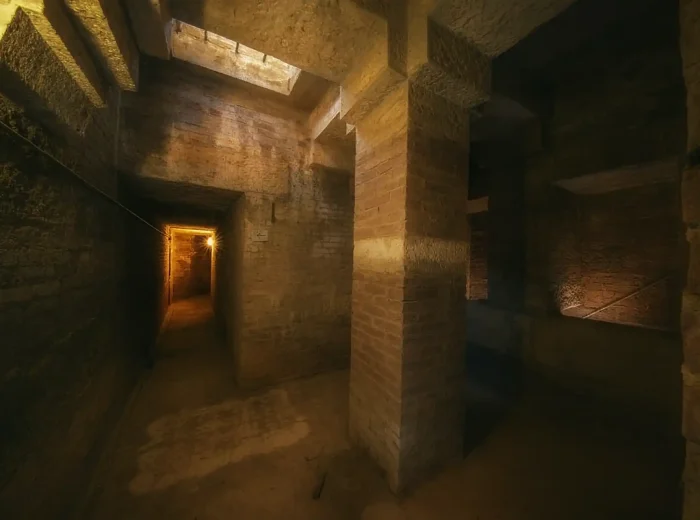
The Episcopal Palace of Pienza is a key architectural element in the Renaissance urban complex conceived by Pope Pius II; it stands to the left of the Cathedral and was intended for Cardinal Rodrigo Borgia, the future Pope Alexander VI.
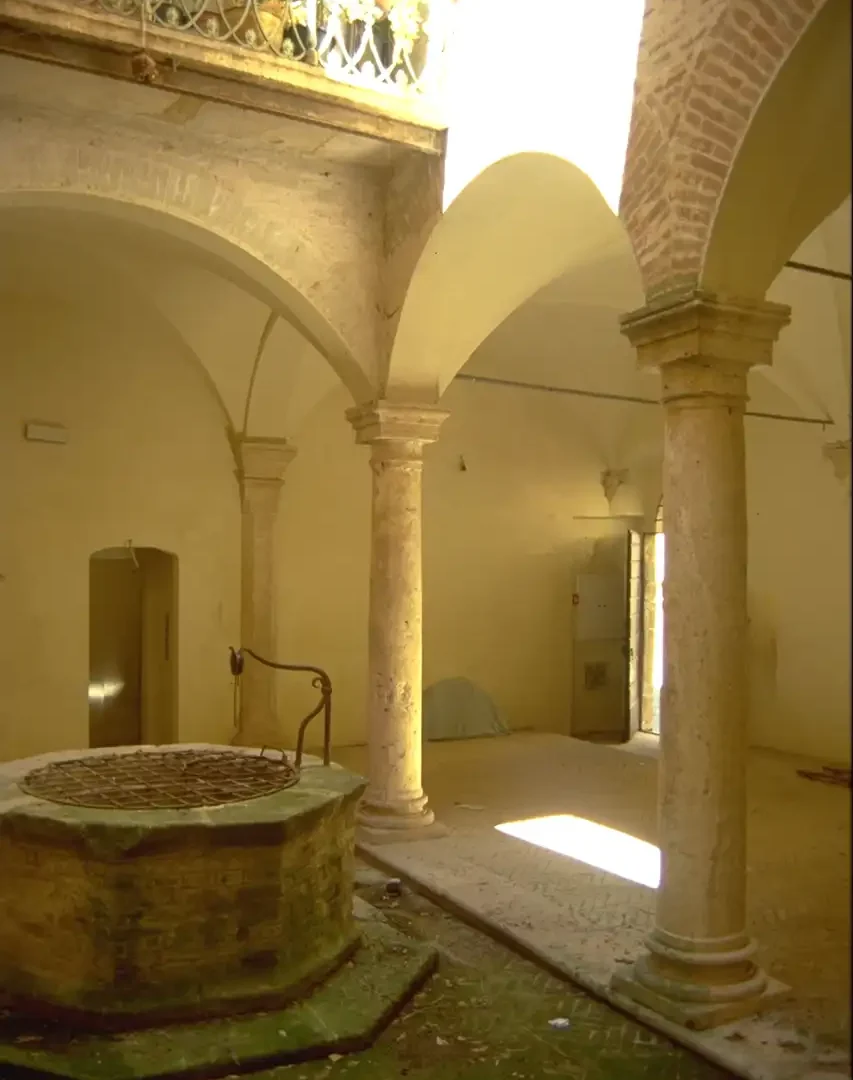
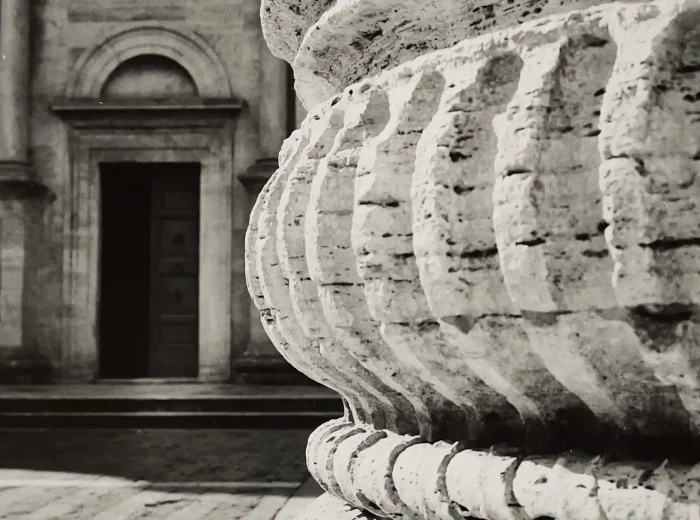
The pope’s humanistic project called for the cardinals in his entourage to reside in the city of Pienza. The plan was to demolish and rebuild the existing building, but the work was limited to a major renovation: the interior was remodelled into a residence that was modern for the time and the exterior was given a Renaissance-style façade, simple yet elegant and punctuated by string courses and Guelph cross windows. Above the central portal, there is a lunette, a recurring motif in Pienza’s buildings commissioned by Pius II.
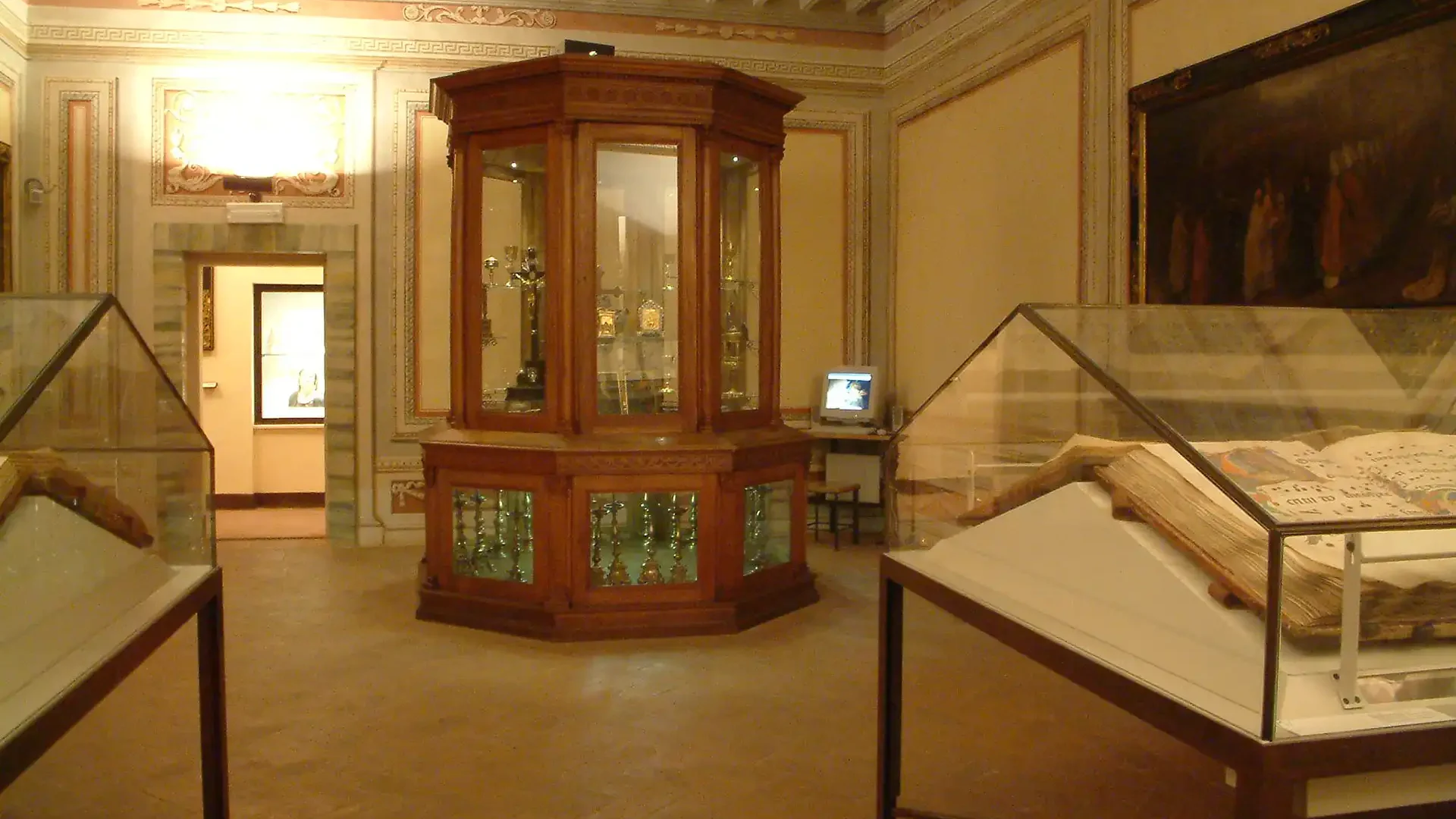
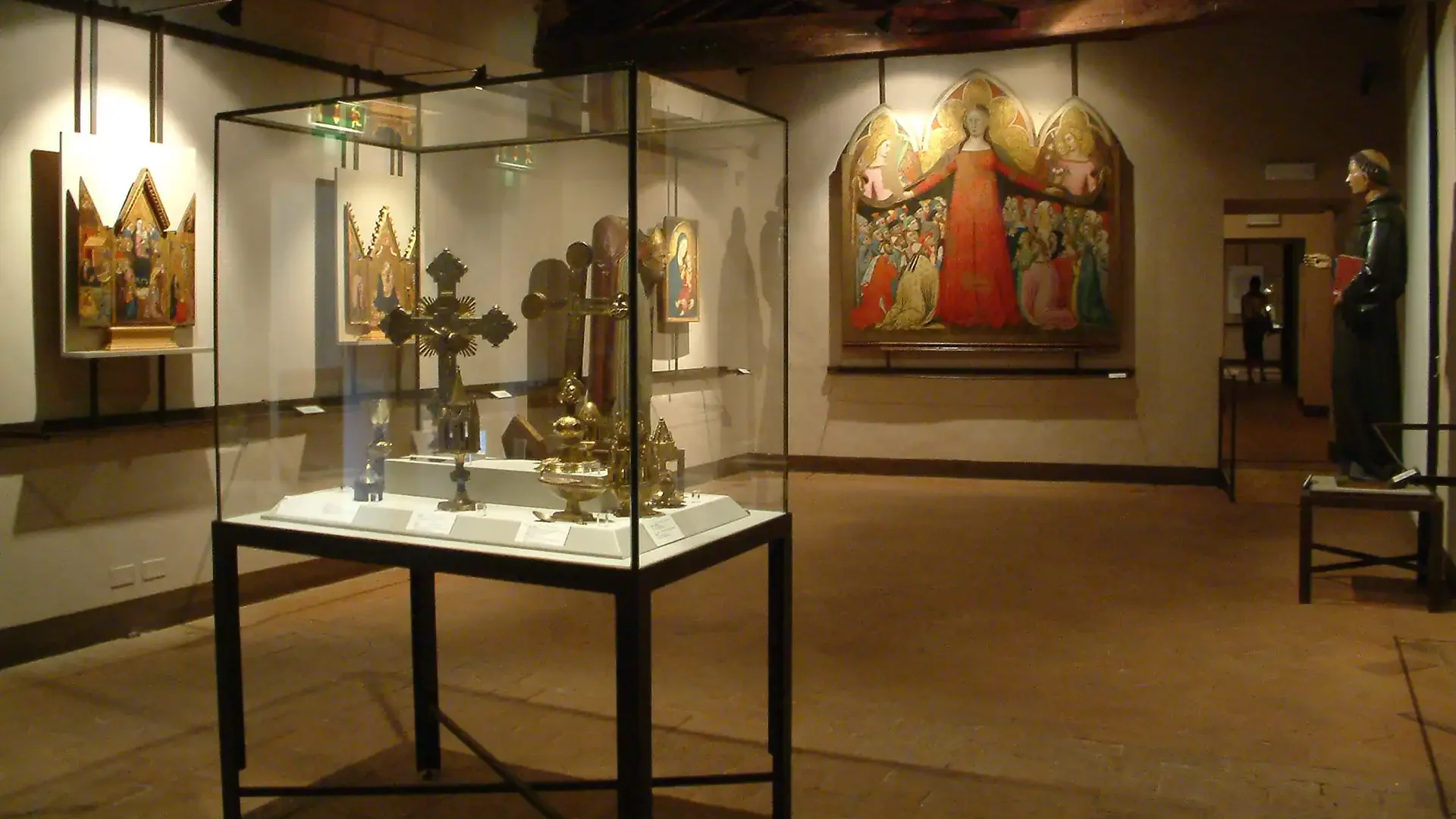
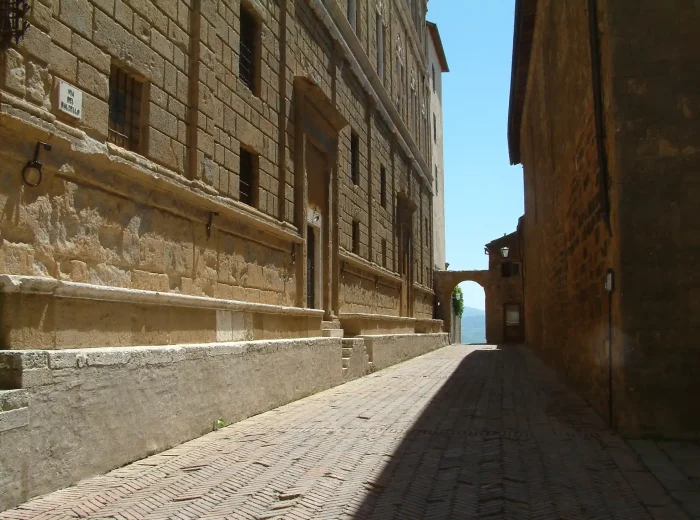
After the death of Pius II, the palace was donated to the diocese by Cardinal Borgia, becoming the bishopric. In 1998, the building was chosen as the new home of the Diocesan Museum of Pienza, which had been located in Palazzo dei Canonici since 1901. The building integrates two Renaissance residences: that of Cardinal Rodrigo Borgia and that of Cardinal Jean Jouffroy of Arras. Its location in Corso Rossellino places it along one of the town’s major routes, overlooking both the monumental square and its main road axis.
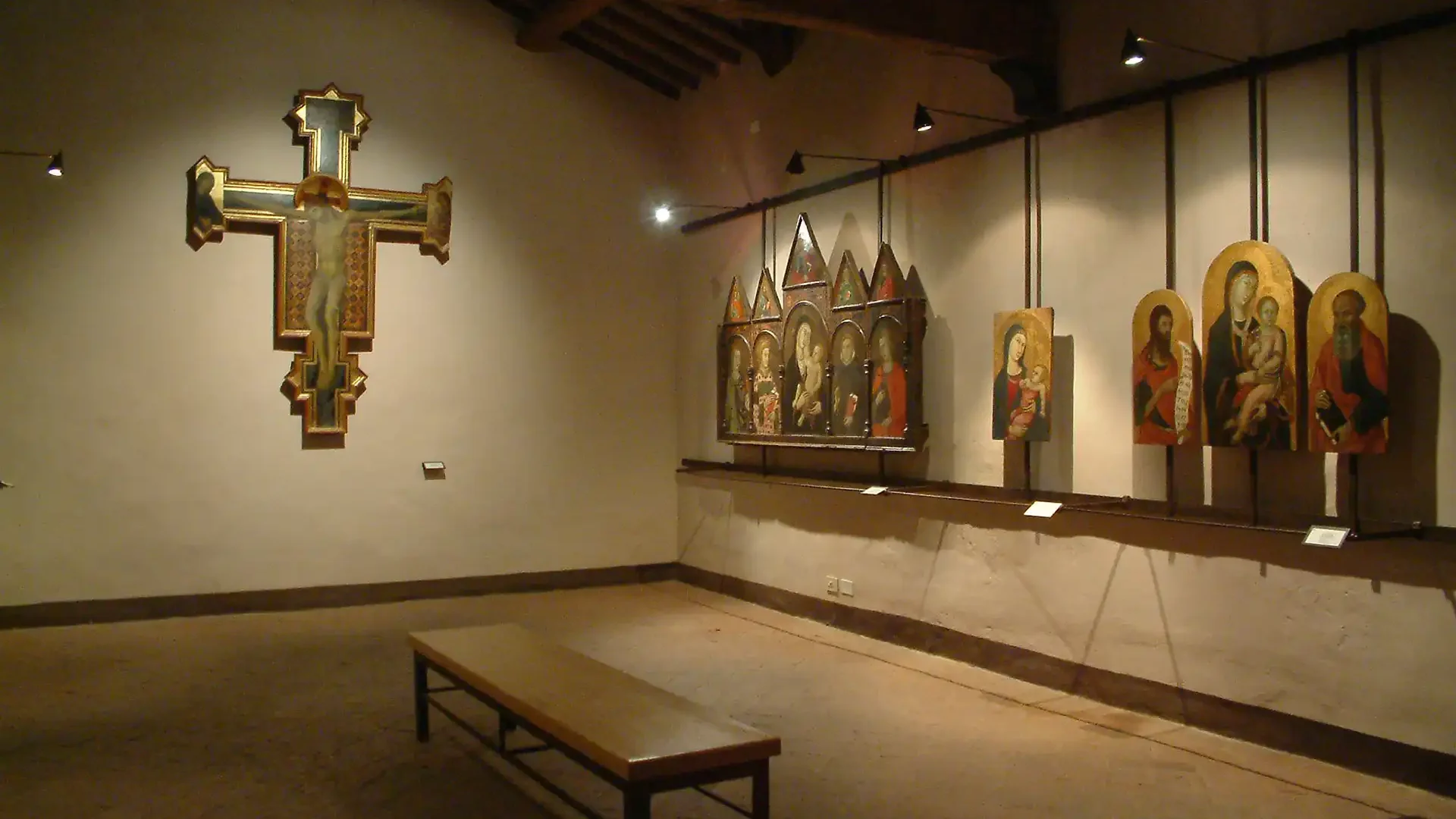
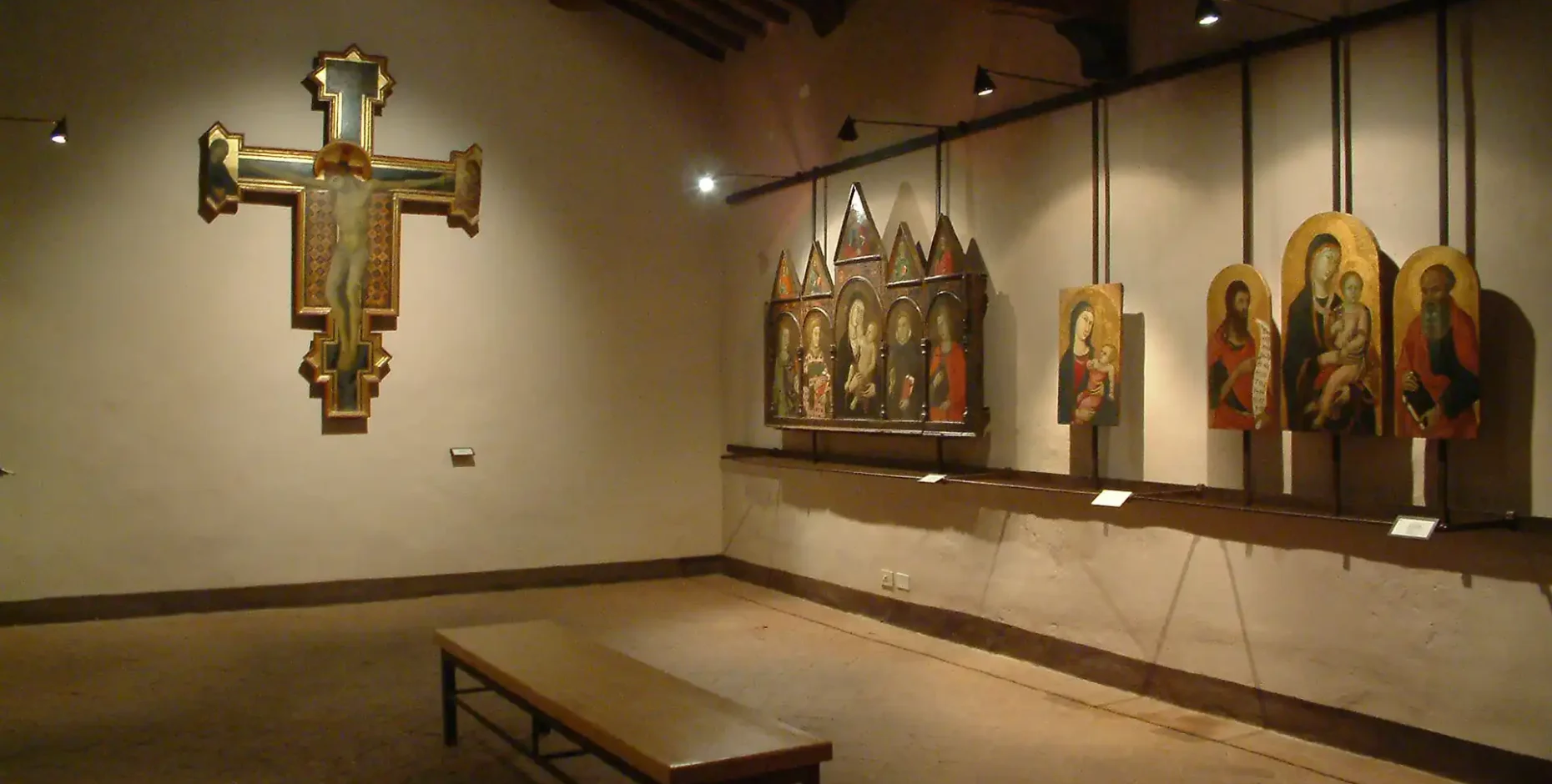
The museum contains a rich collection of sacred works of art, including paintings, altarpieces, wooden sculptures, tapestries and goldsmith’s objects, which come from the Cathedral of Pienza and the territory of the ancient diocese.