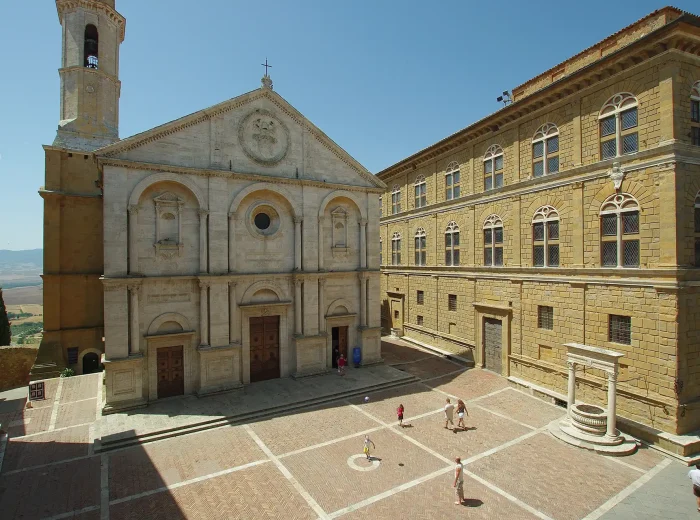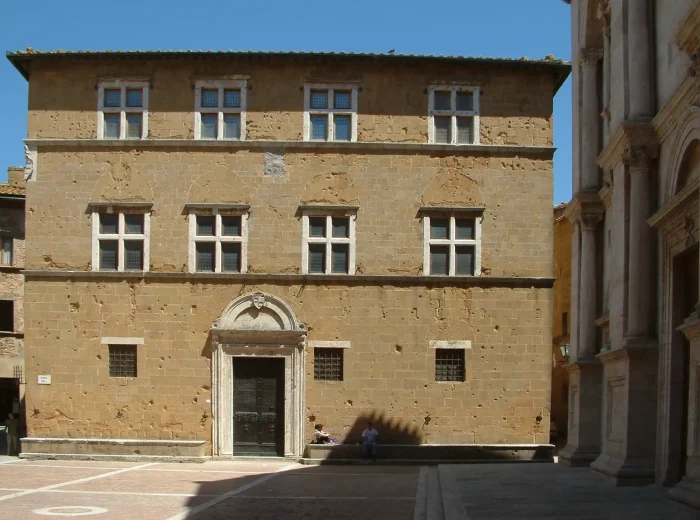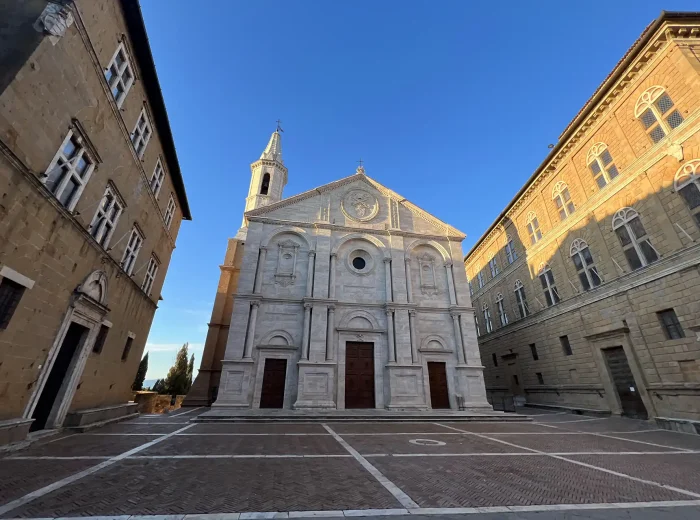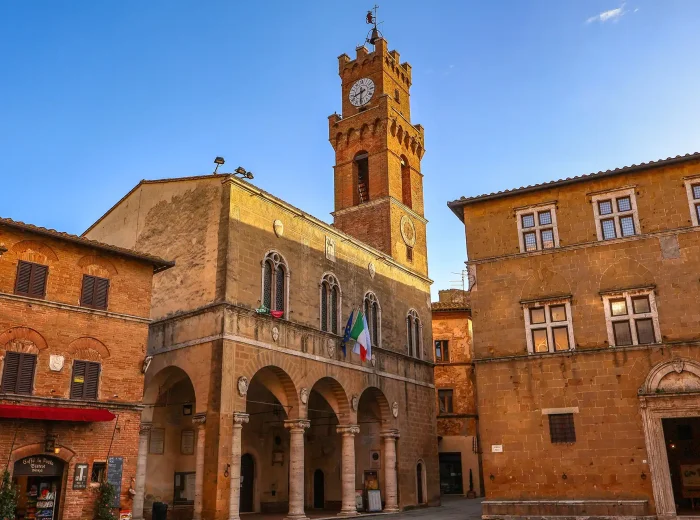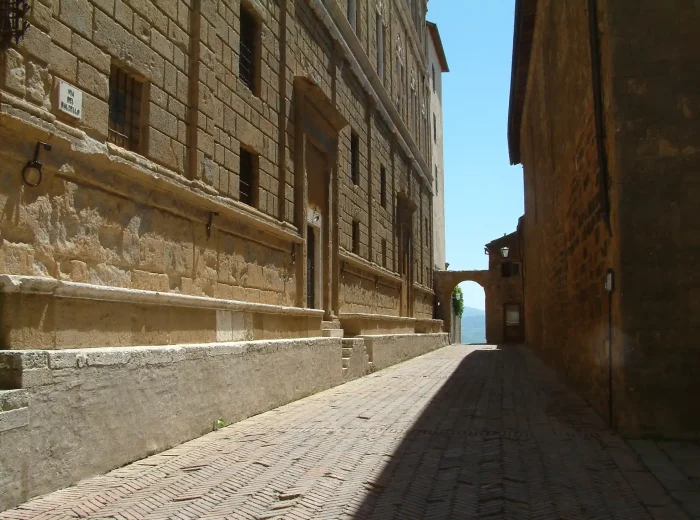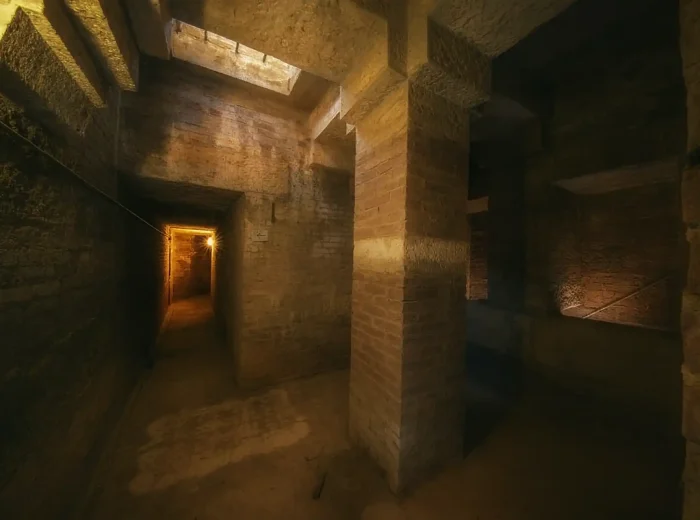
If we observe the town of Pienza by looking at an aerial photo of it, we realise how the ancient medieval structure, Corsignano, has survived the ideal town created by Enea Silvio Piccolomini (1405-1465), who became Pope in 1458 with the name of Pius II.
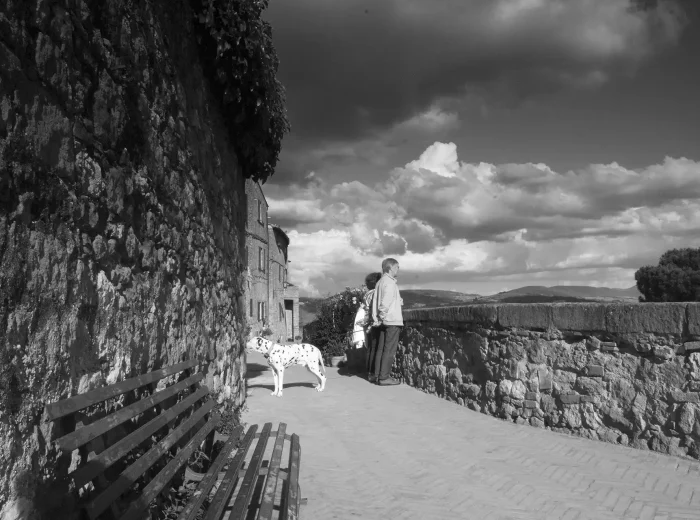
Despite the renovations and the new construction of the Renaissance town, Bernardo Rossellino’s project did not envisage the dismantling of the ancient walls, which still bear witness to the ancient origins of the village. Pienza was contained within a system of walls featuring the presence of three gateways, which still exist.
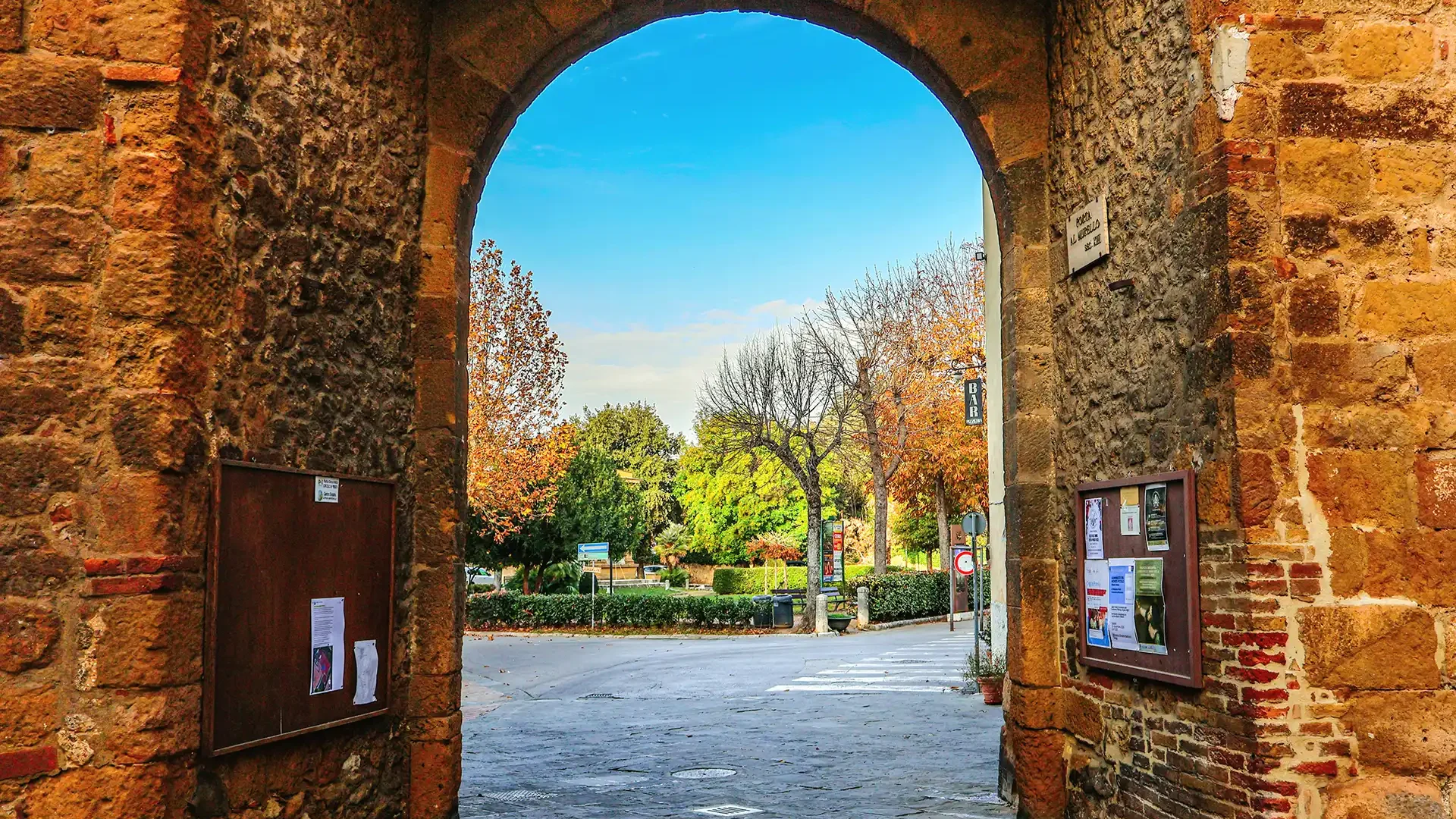
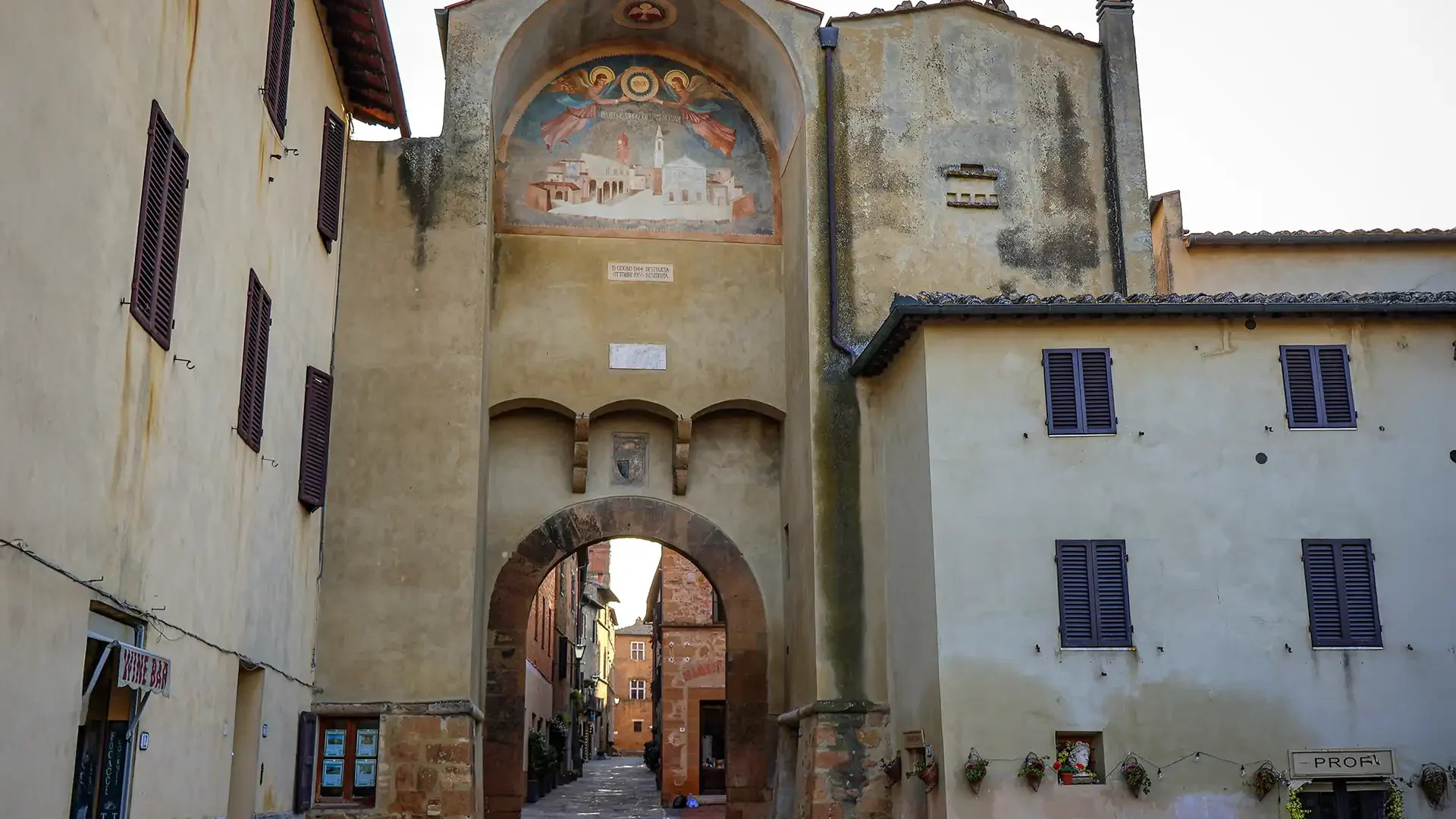
To the west, stands Porta al Murello, also called Porta al Prato, today’s main entrance to the historic centre. The upper part of Porta al Murello features a fresco by Pienza-born painter Aleardo Paolucci (1927–2013), depicting Piazza Pio II and other buildings. The gateway bears an inscription commemorating its destruction in 1944, along with the entire medieval district of Gozzante, caused by Allied bombing, in which 21 civilians lost their lives. The modern square inside the gate, rebuilt in 1955, is dedicated to them. The Pienza-born painter, Paolucci, was also injured in the bombings that occurred during those fateful hours in the summer of 1944.
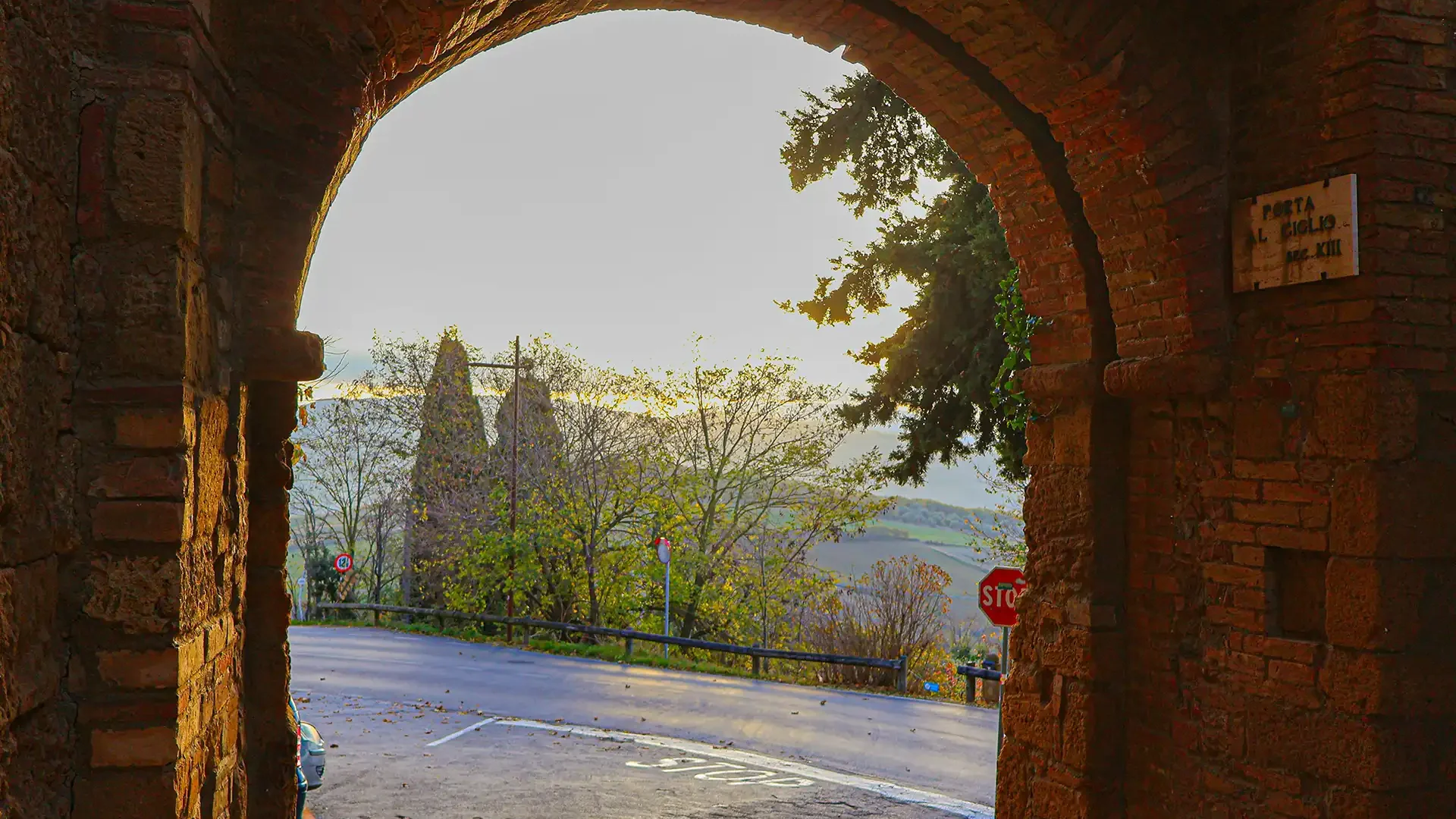
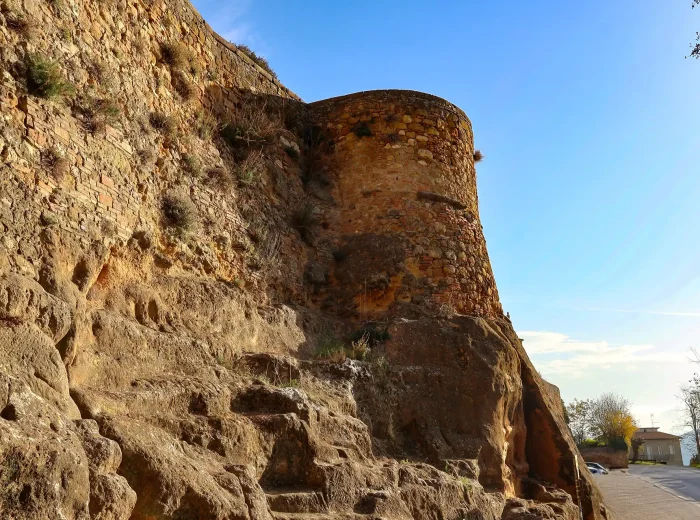
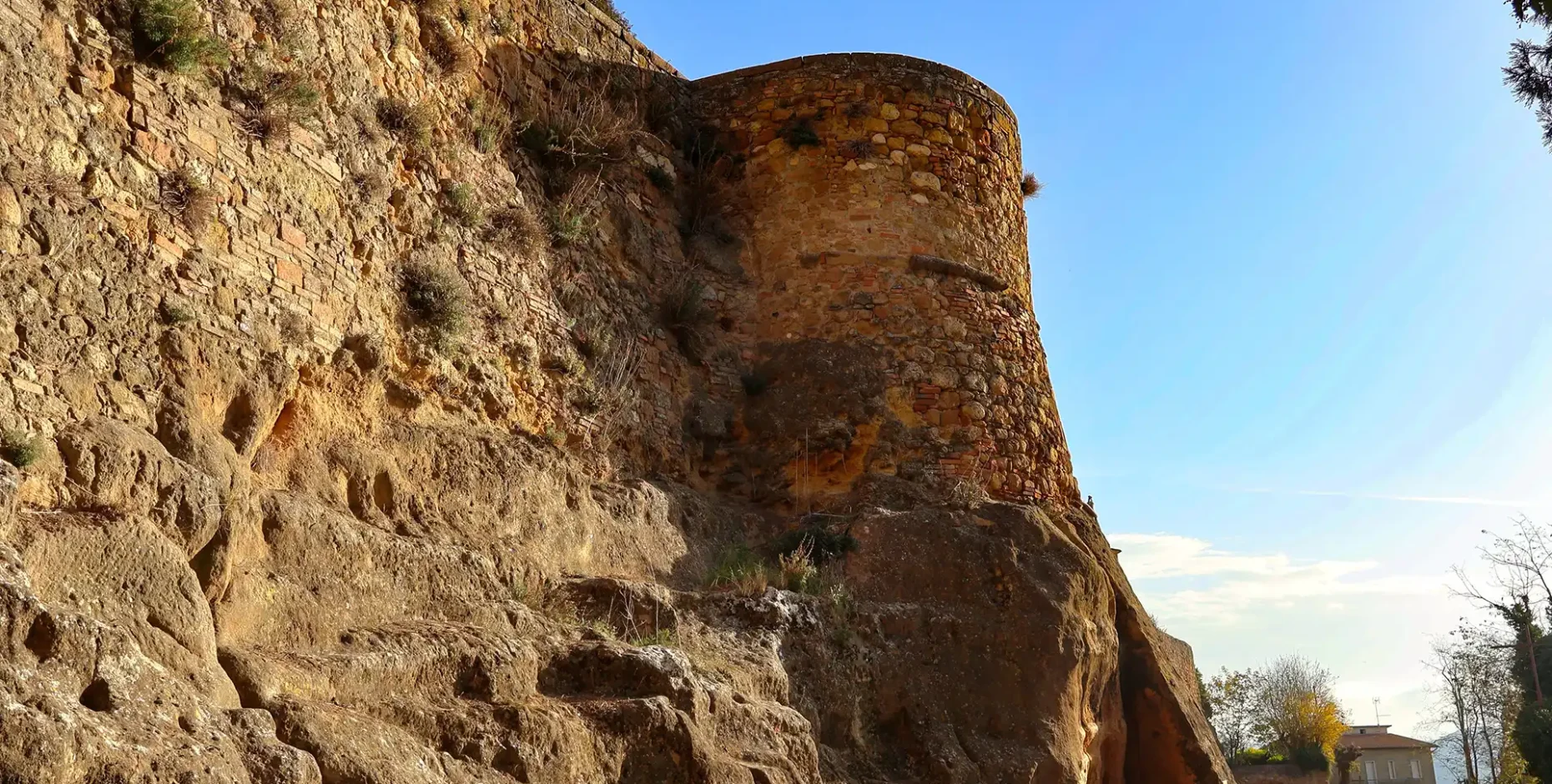
To the south of the town of Pienza is Porta al Santo, through which, according to tradition, the relic of the head of Saint Andrew, patron saint of Pienza, arrived from Rome. Saint Andrew is celebrated by the community every year on 30 November. To the east, stands Porta al Ciglio, which opens onto the ancient village of Monticchiello. The northern side, facing Montepulciano, was preserved intact and free of openings to ensure better defence. Currently, only the southern section of the walls still remains, located on the rocky spur and featuring several fortified towers.
The northern section was completely demolished in the 19th century and is remembered today only in the street name, Via delle Mura. Overlooking Largo Roma, there is a medieval tower that once rose up above the town walls.
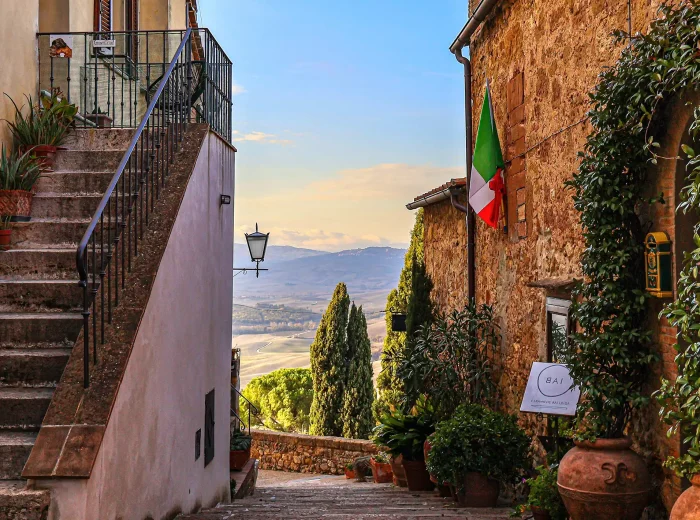
In this way, old and new blend together in an extraordinary combination typical of this town, the pearl of the Val d’Orcia.