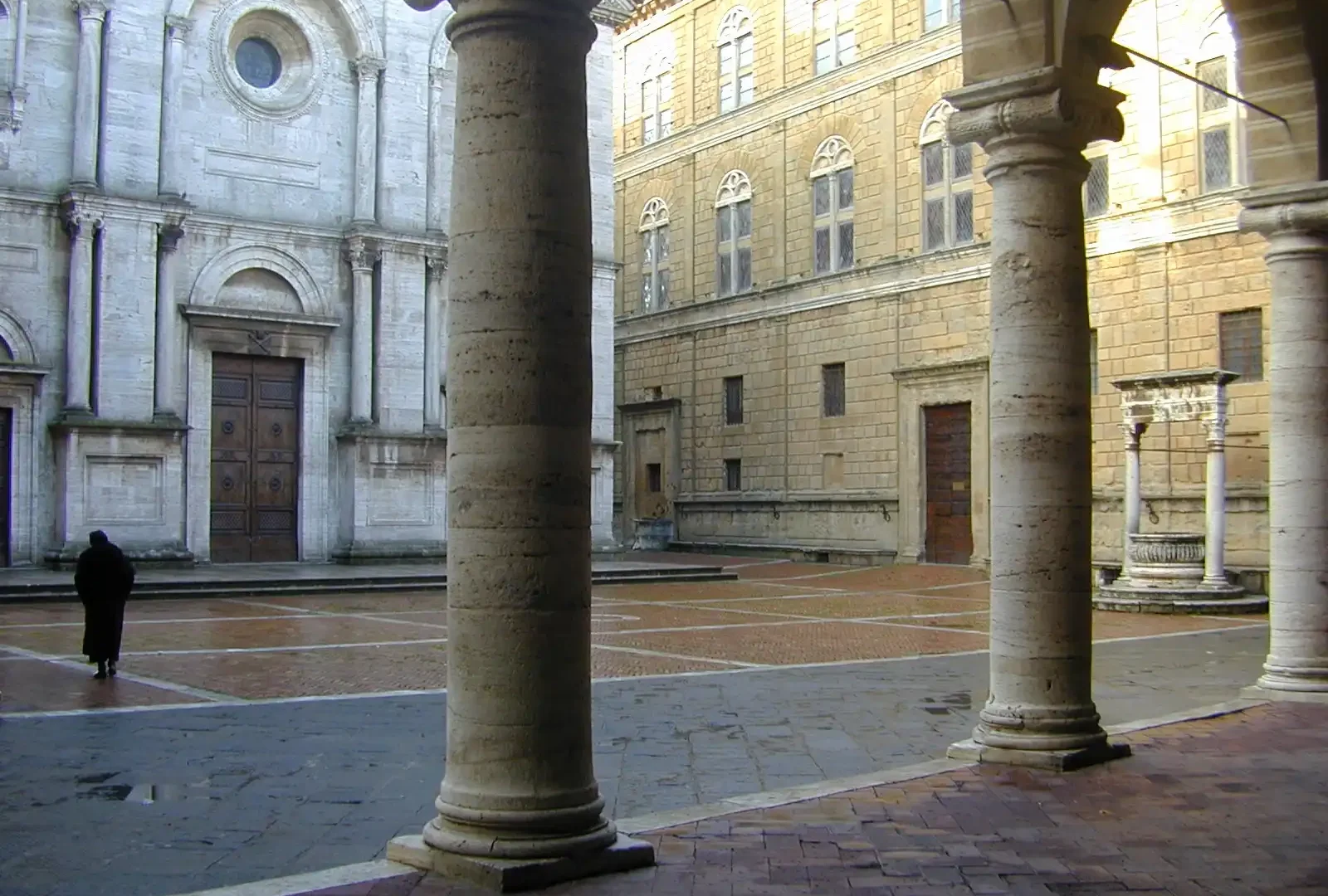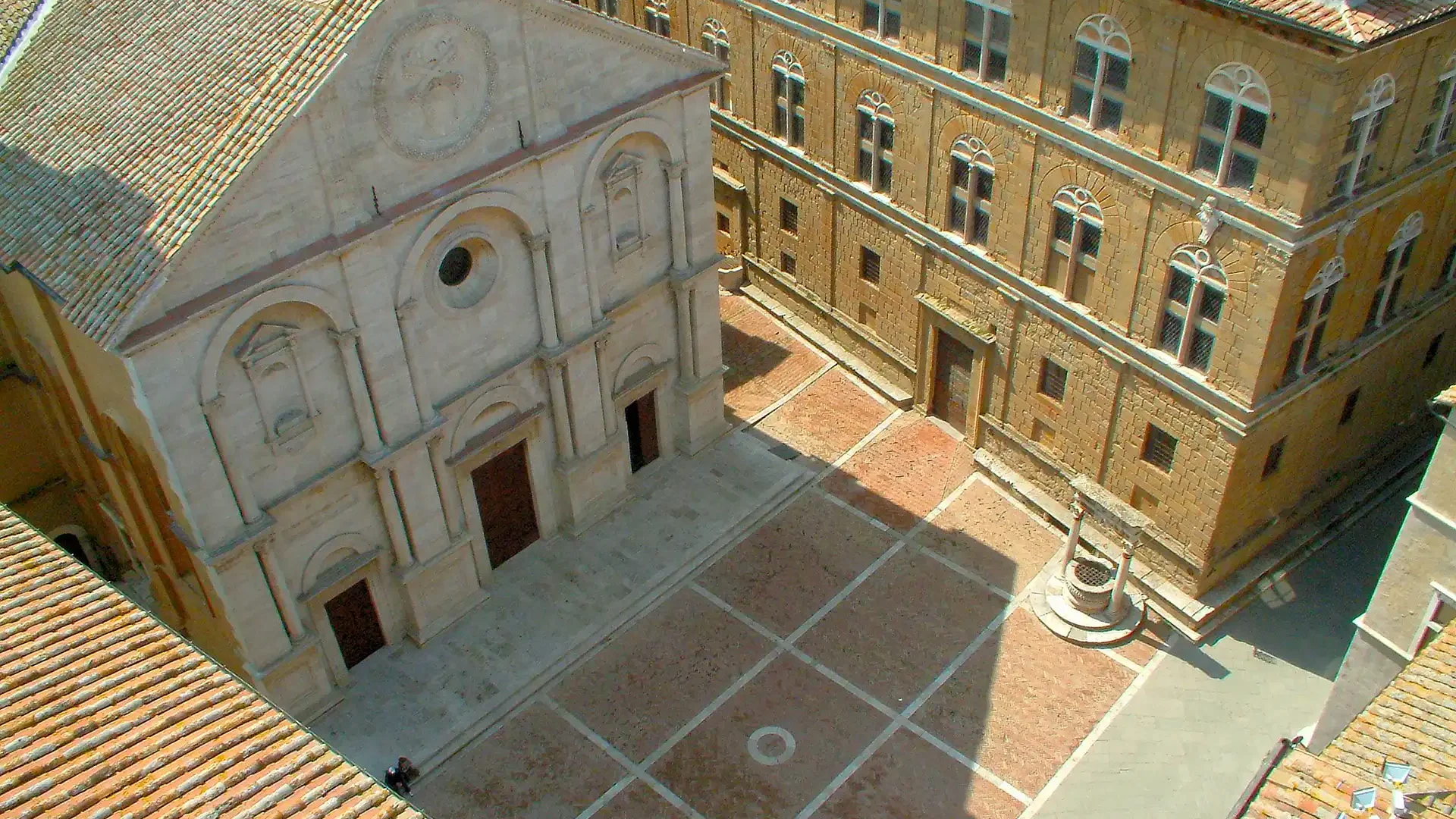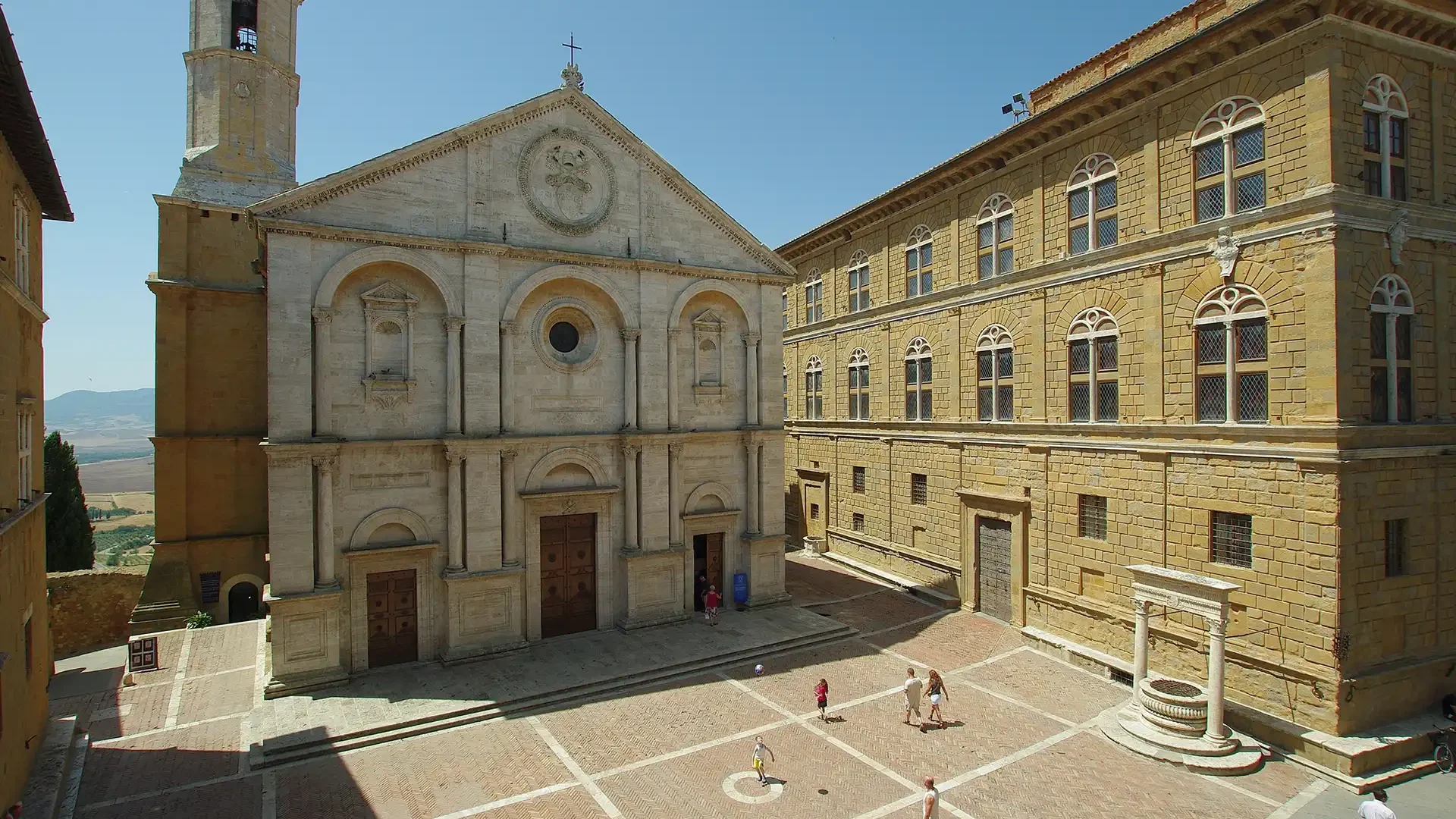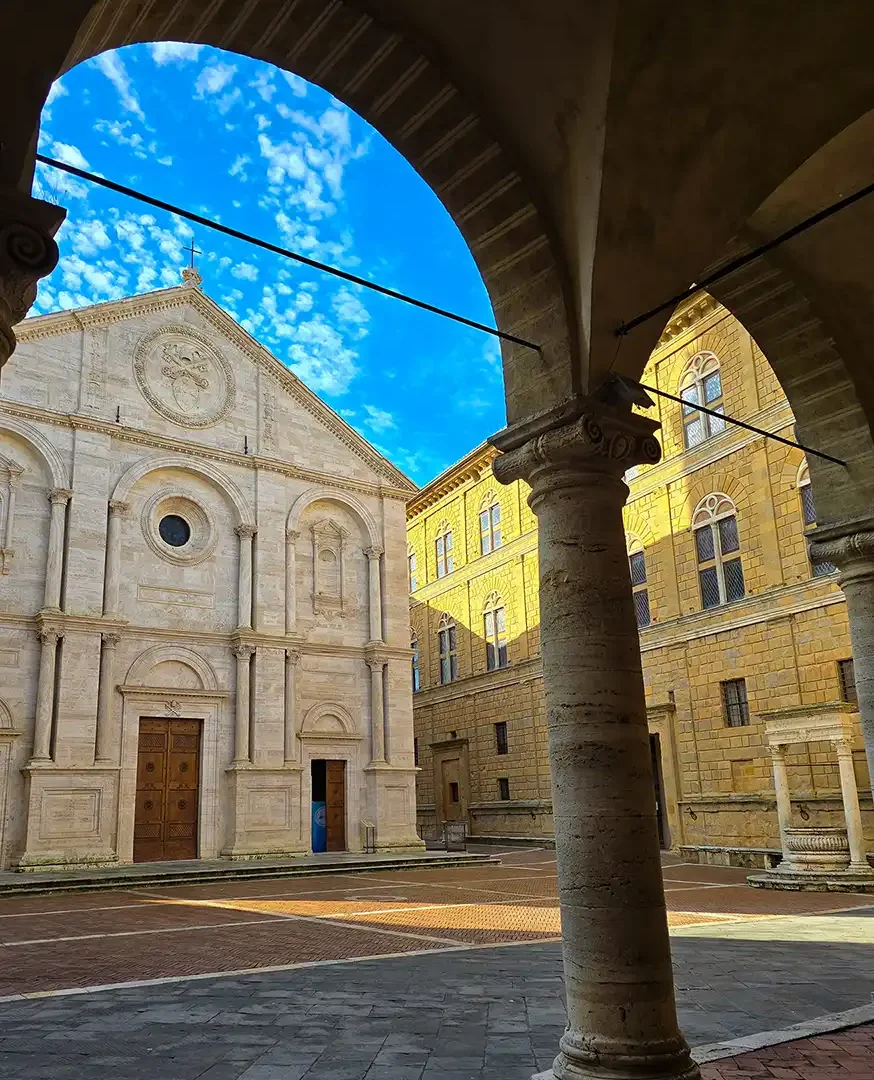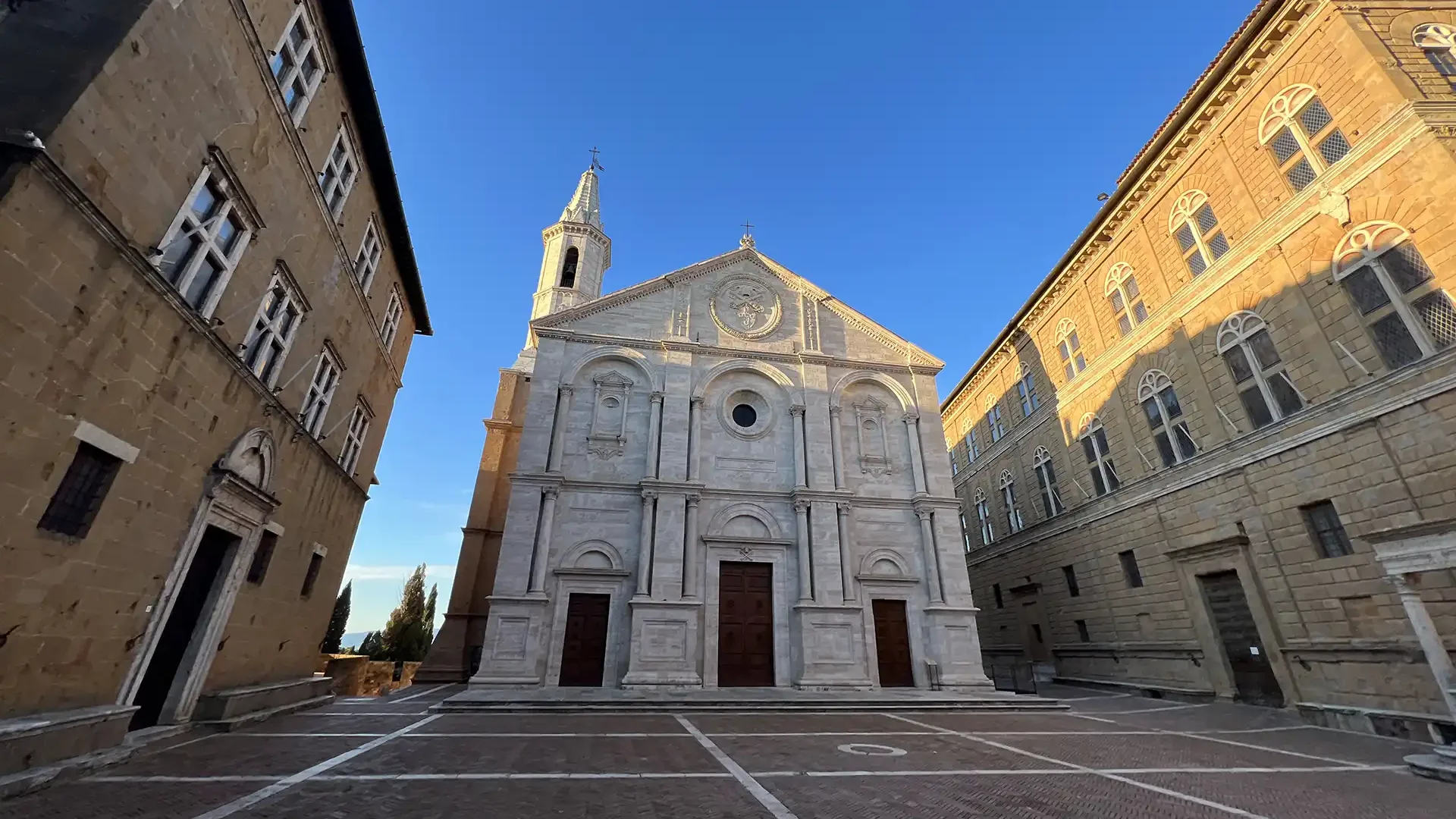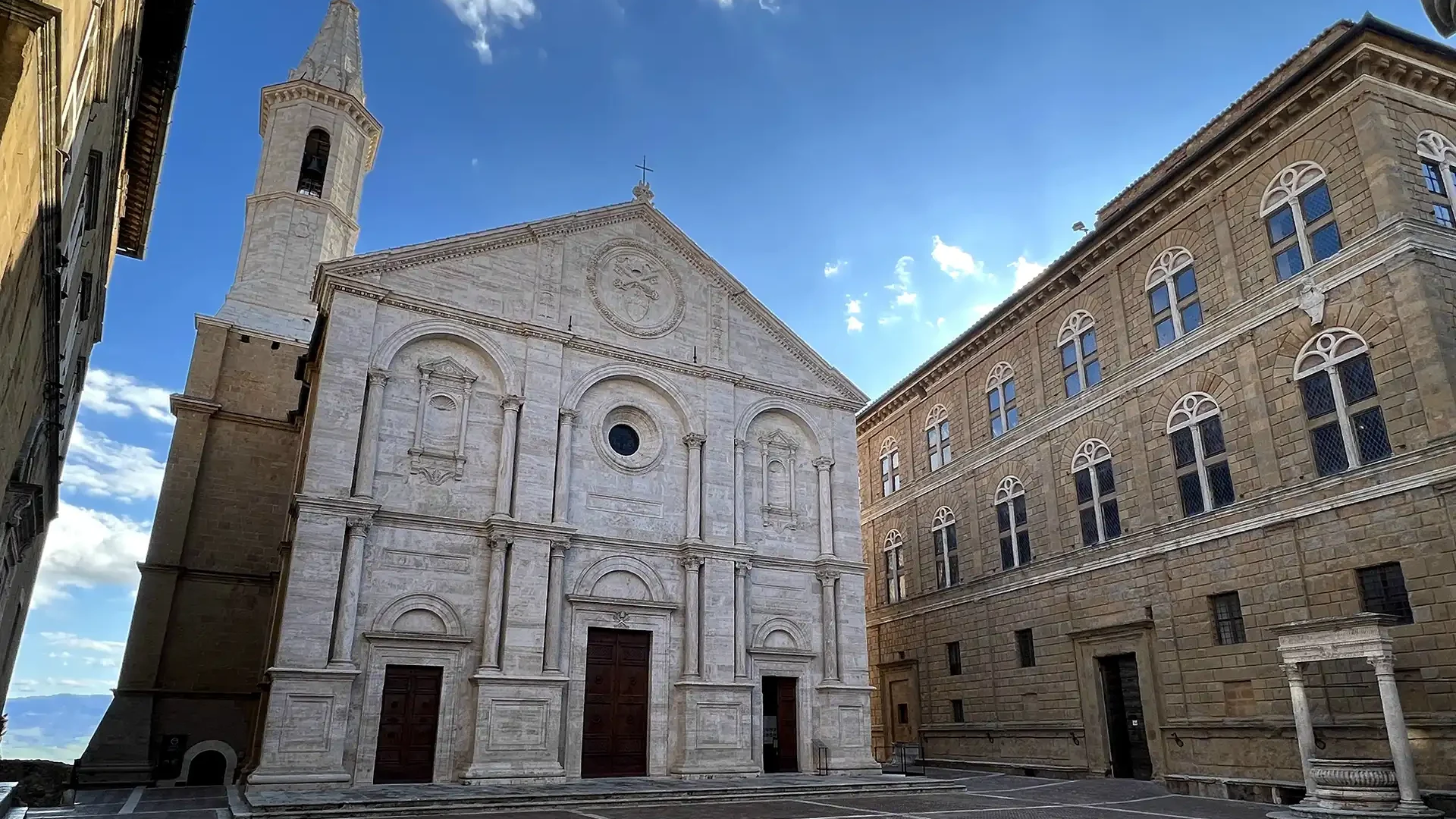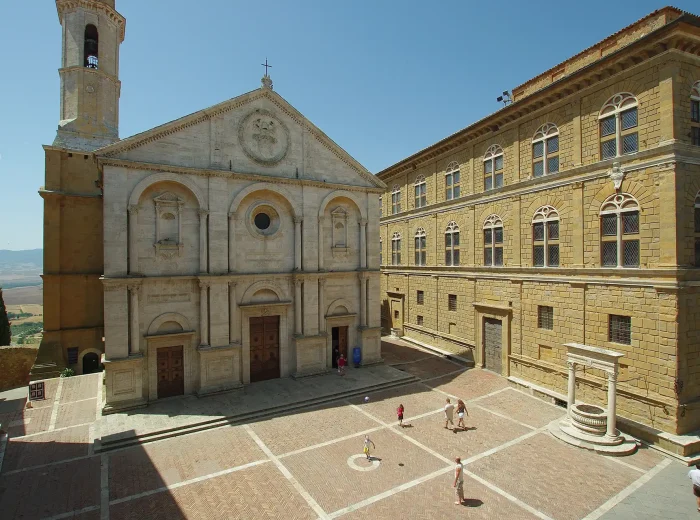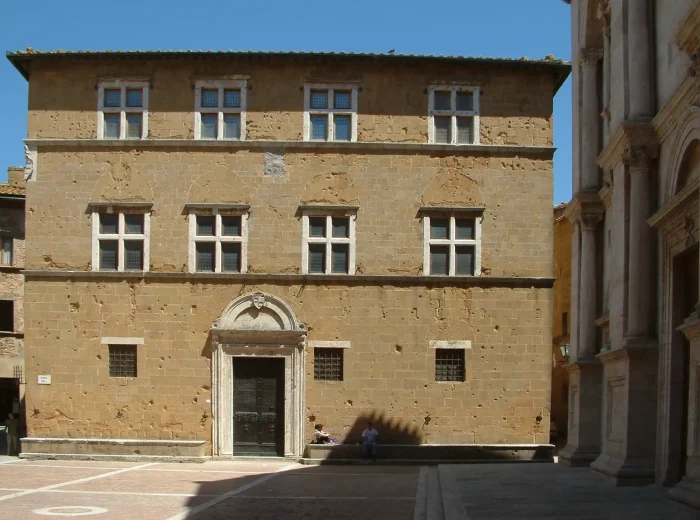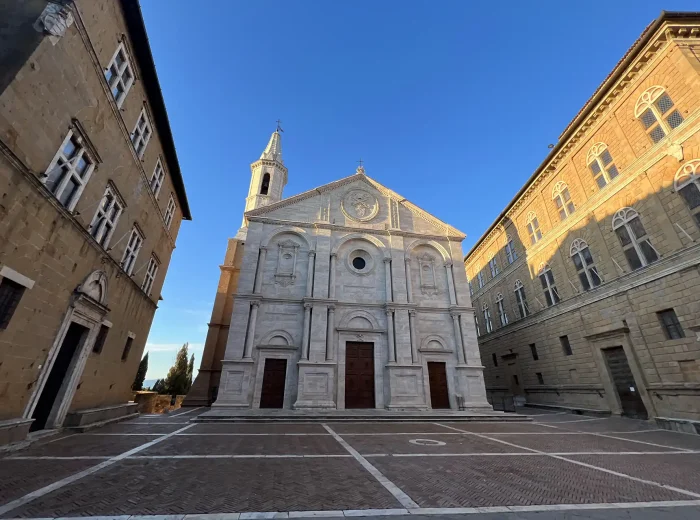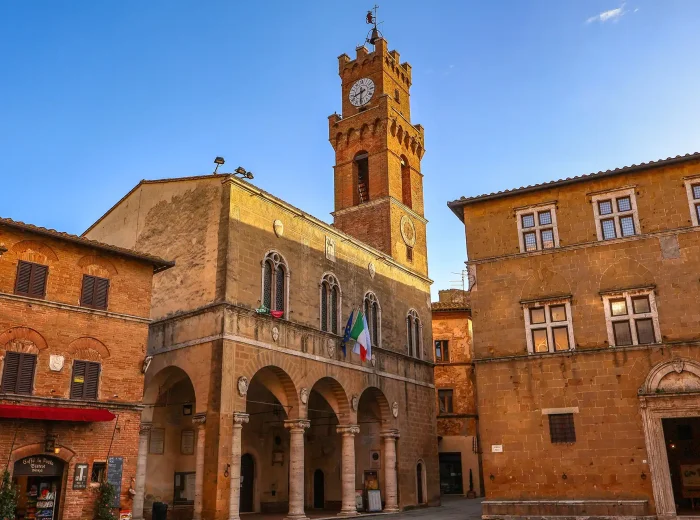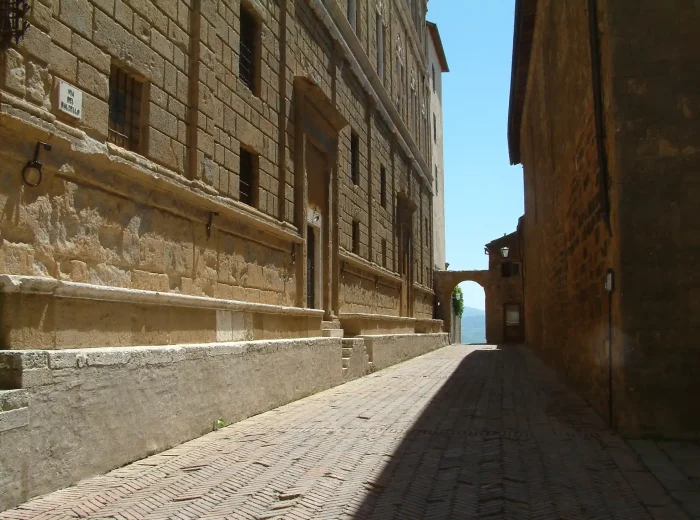
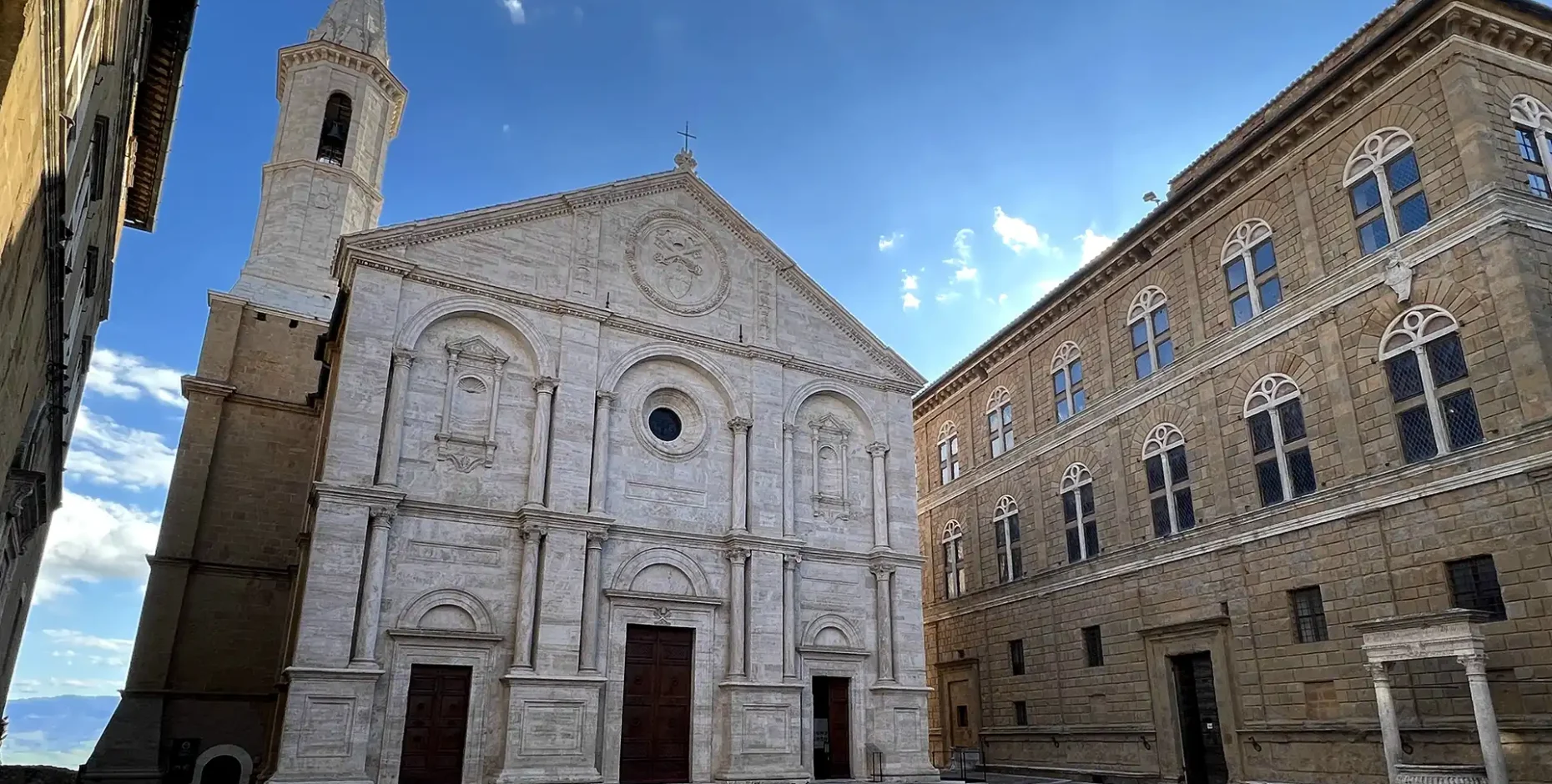
Piazza Pio II, trapezoidal in shape and featuring paving divided into large rectangles with white travertine borders, is surrounded by architecture that represents the powers of the new Renaissance town: the religious one being the cathedral, the political one Palazzo Comunale (town hall) and the private one Palazzo Piccolomini, residence of the pontiff and then of his nephews, to whom it was donated with the papal bull preserved in its library.
The cardinals and court officials who were part of Pius II’s entourage were invited by the pope to build a palace in the new town. Thus, in just a few years, from 1459 to 1462, the new urban project was completed by Bernardo di Matto Gamberelli, known as Rossellino (1409-1464), a follower of Leon Battista Alberti (1404-1472).
The square was meant to bring to mind the views of the ideal towns designed by Piero della Francesca and had been built using the new rules of scientific perspective.
As the central point of the new town, the square, with the splendid Val d’Orcia landscape, together represented, and still represent, a perfect and harmonious combination of architecture and landscape in which man is the creator and fundamental element of reference for the town’s perfect proportions. In addition: Renaissance man studied humanistic and scientific subjects like astronomy and the movements of the stars, which were reflected in the design of the square, characterised by an extraordinary phenomenon that repeats during the spring equinox and the summer solstice: the shadow of the cathedral’s façade fits perfectly within the square in these two specific moments in time. This phenomenon reflects the humanistic studies of which Enea Silvio Piccolomini is an example and a source of pride for the history of our civilization.
Since 1996, the historic centre of Pienza and Piazza Pio II have been a UNESCO World Heritage Site, as motivated by the criteria of the Italian National Commission for UNESCO below:
“Criterion I: The application of the principle of the “ideal” Renaissance “town” to Pienza, in particular to the group of buildings around the central square, has given rise to a masterpiece of human creative genius.
Criterion II: The historic centre of Pienza, as the first application of the Renaissance humanist concept of urban design, played a significant role in subsequent urban development in Italy and beyond.
Criterion IV: The buildings surrounding Pienza’s central square are an exceptional example of humanistic Renaissance design.” (UNESCO, Italian National Commission for UNESCO).
With the new management of Opera Laboratori, visitors can use a single ticket, the Pienza città di luce (Pienza city of light) Pass and admire the most important architecture overlooking the UNESCO World Heritage Site square. The introduction of this new ticket, purchasable online or at the museums, accompanied by the use of a free audio guide with an explanation of the Renaissance town in 8 languages, gives everyone the opportunity to understand and gain thorough knowledge of the complete project for the new Renaissance town.