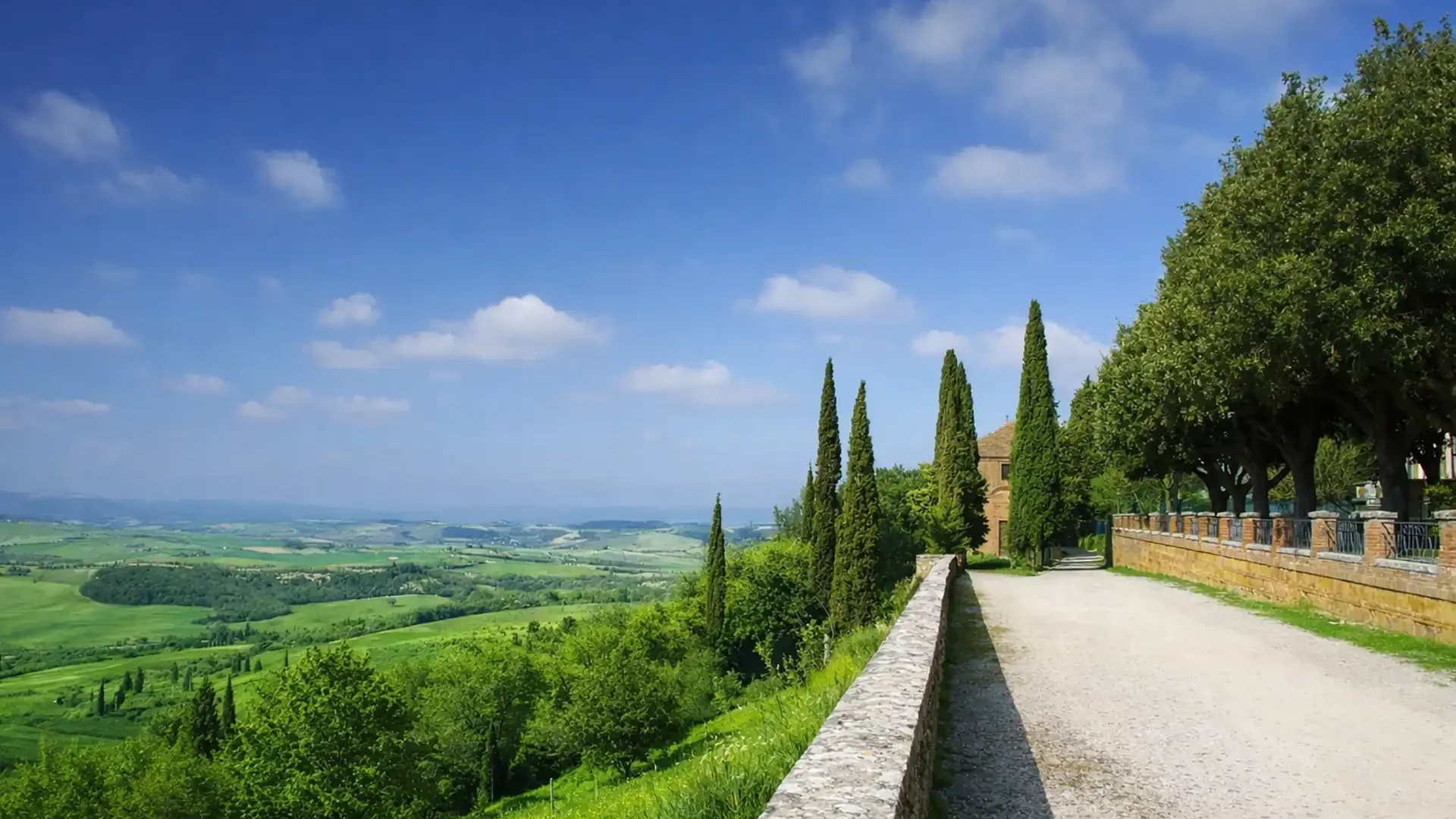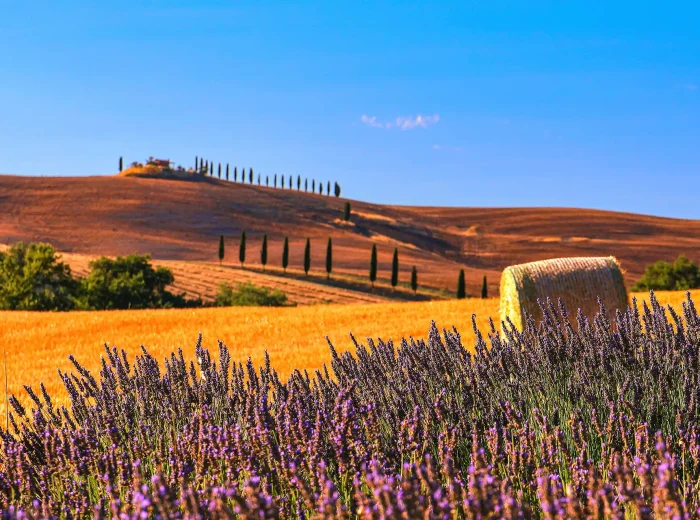
Around Pienza, just a few metres from the historic centre, you can take your pick of trekking trails and peaceful walks, by choosing several sites and places of extraordinary interest.
For example, by exiting from Porta a Prato, you can follow the path along Viale Santa Caterina, who died in 1380 and was made a saint by Pope Pius II in 1461. She was declared the patron saint of Rome in 1866 by Pope Pius IX, the patron saint of Italy along with St Francis of Assisi by Pope Pius XII in 1939, and co-patron saint of Europe by Pope John Paul II in 1999.
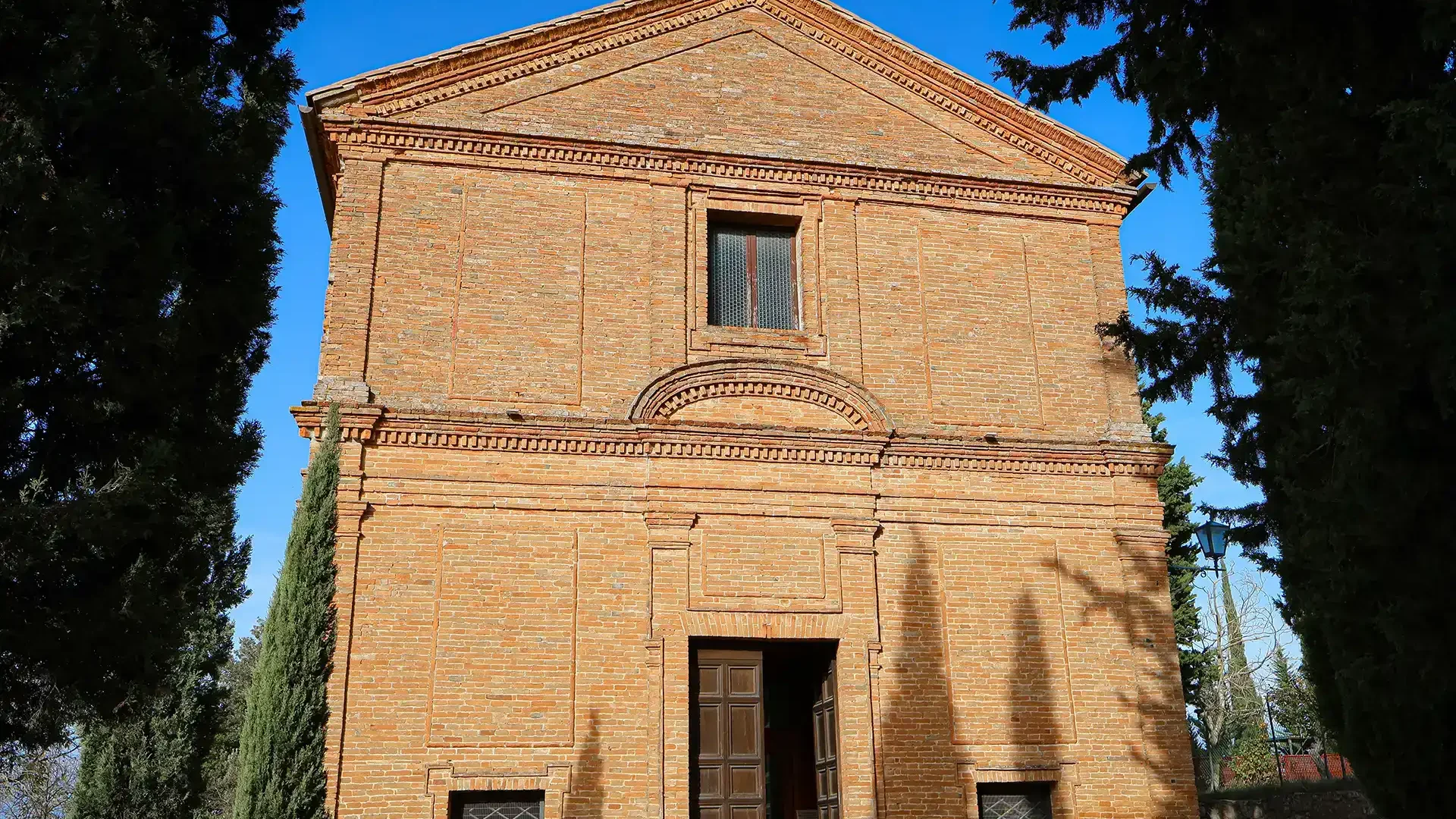
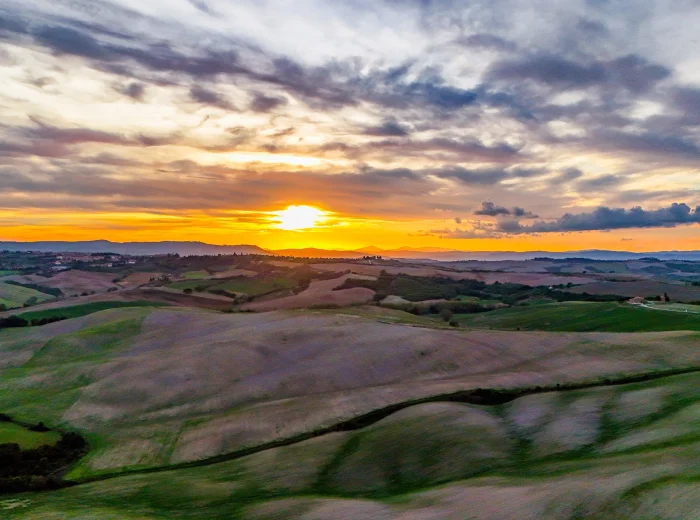
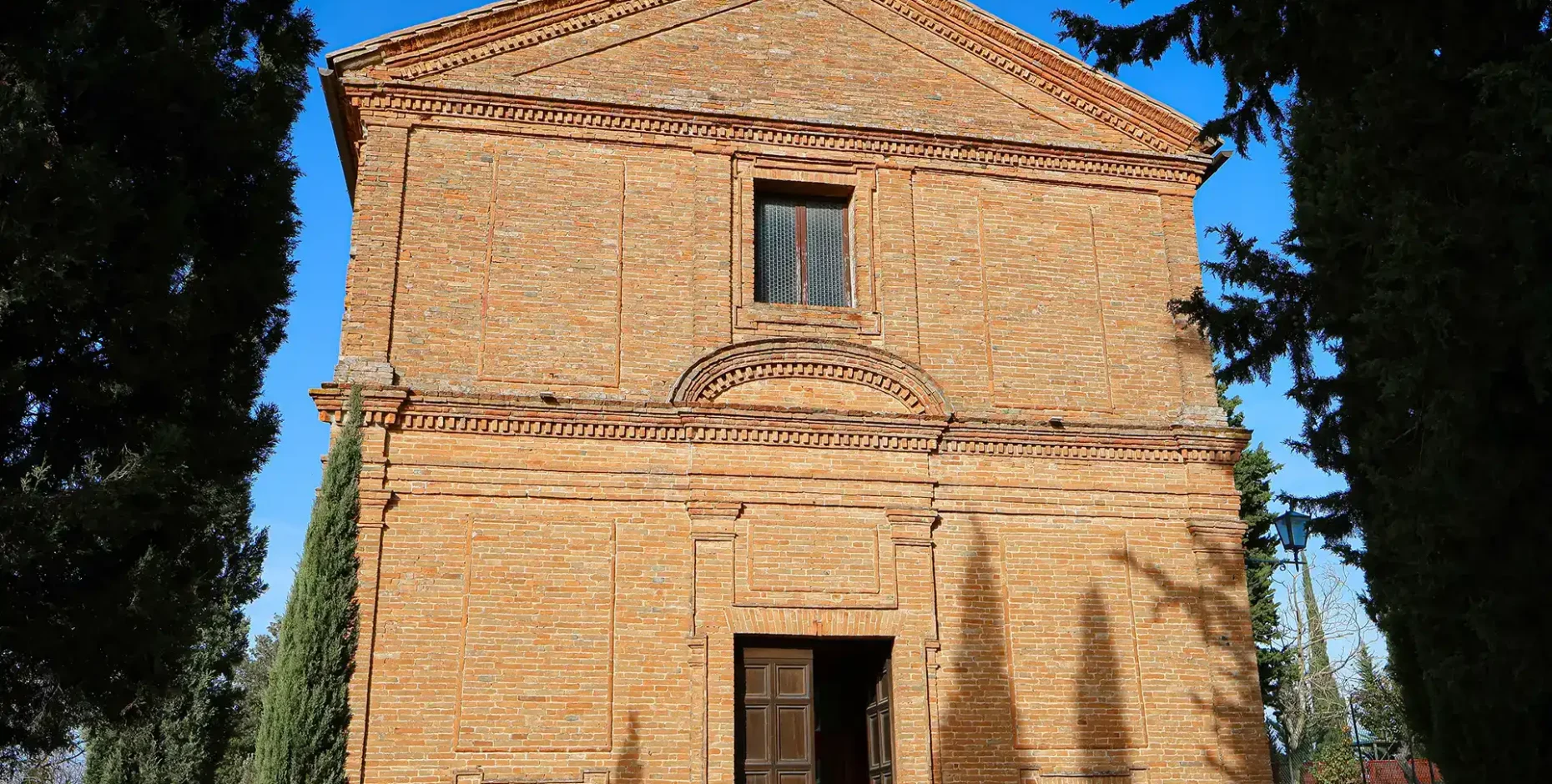
After walking about two hundred metres along this avenue, while gazing out at the Val d’Orcia and warmed by the southern sun, you will come to the Church of Santa Caterina, built in the second half of the 17th century.
The building features a brick façade with small rectangular windows and featuring a single nave. The interior decoration, completely clad with stucco work, dates back to 1650. On the main altar, a more ancient fresco was discovered behind a 17th-century painting depicting the two saints, both named Catherine – the martyr of Alexandria and the Dominican nun of Siena. The fresco was created by the Sienese school in the second half of the 15th century, in a style similar to that of Matteo di Giovanni (around 1428-1495).
The work portrays the Virgin Mary and Child, surrounded by roses and lilies, and is accompanied by four small winged angels with halos and white tunics, probably a reference to the Holy Innocents killed by Herod. On the side altars, there are two 17th-century canvases by the painter Bartolomeo Bailani from Montepulciano, illustrating the Birth and Martyrdom of St John the Baptist.
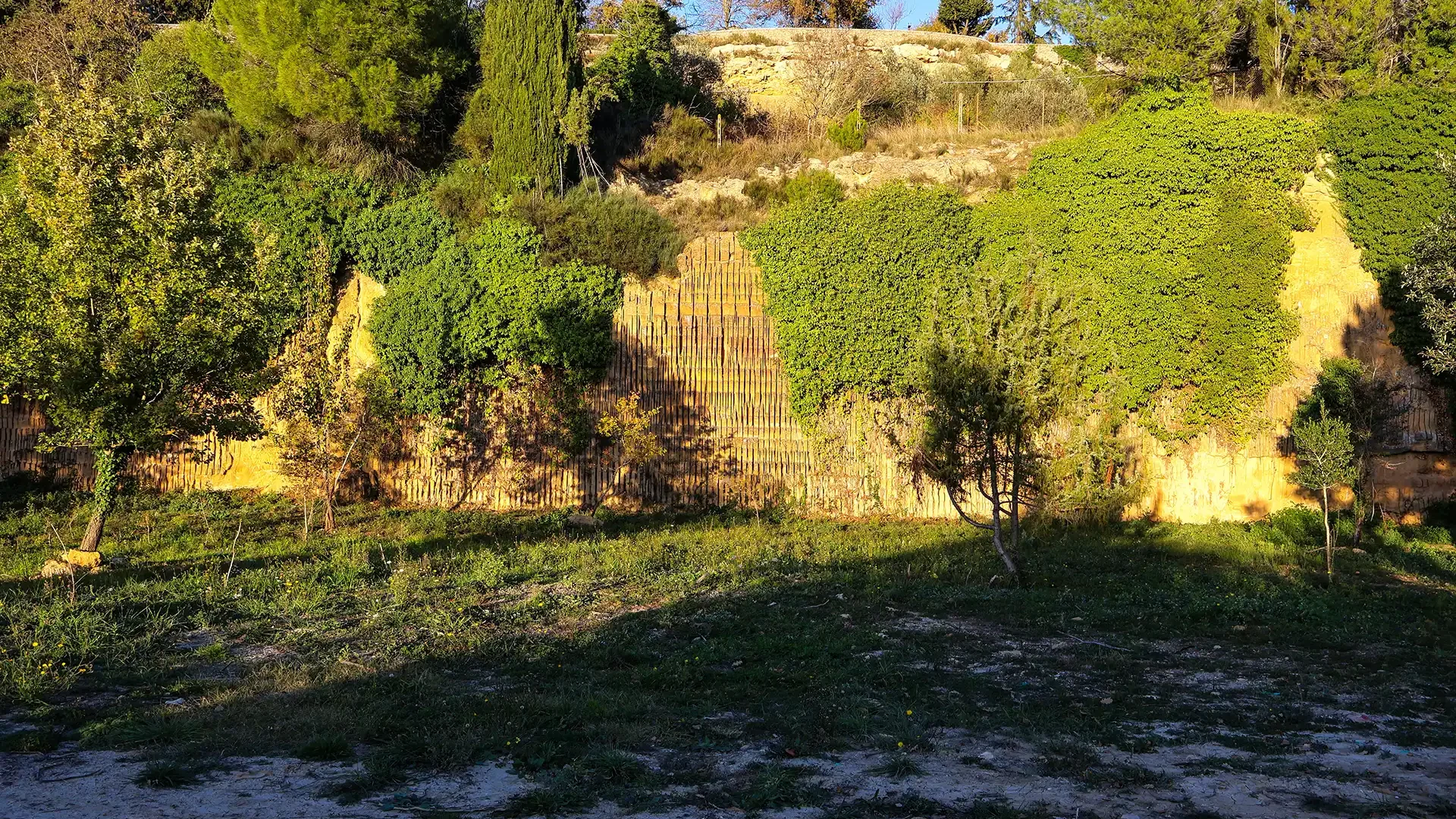
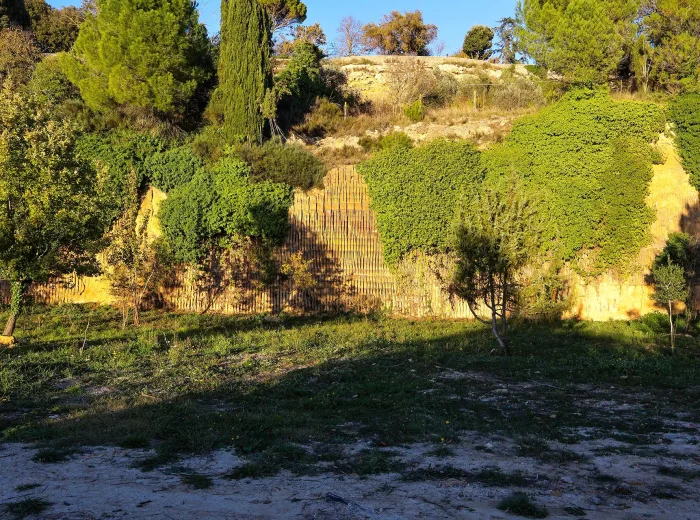
The church is built on an ancient rocky site, now privately owned and open to visitors on request, known as the Romitorio (Hermitage). It is near the so-called Cava Barbieri, which over the centuries has yielded a series of stratified archaeological deposits dating back to the Neolithic period. These deposits shed light on the ancient history of the village of Corsignano, the ancient name of the town of Pienza before its rebirth under Pope Pius II. This quarry is located at the foot of a sandstone ridge and is in a perfect place in which to live, sheltered from the cold wind, bathed in sunlight until sunset and characterised by freshwater springs and vegetation. Pottery artefacts and human bones have been found at this extraordinary site. Even kitchen utensils and flint blades, discovered in the early 20th century and dating back to the 5th millennium BC, have been preserved here over the centuries.
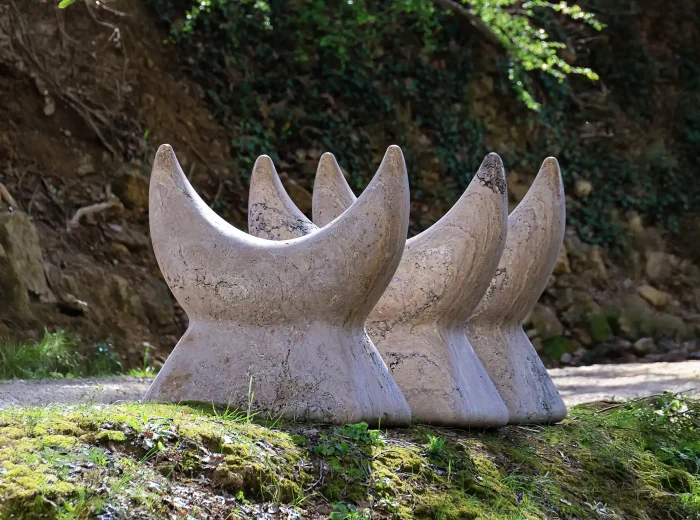
Returning to Viale Santa Caterina, after passing the Church and alongside the Sports ground on the right, you get to a point where the road splits into two smaller roads; keeping to the left, you enter the Porciano forest, while to the right, you can climb up to the Pienza cemetery. In both directions, you’ll find some artistic benches, which are part of the permanent exhibition of the Path of Art and Soul.
The path to the left is very picturesque, cutting through the cool forest, perfect for summer walks, and crossing fields of vines and olive trees, finally reaching the beautiful Parish Church of Corsignano, one of the few Romanesque buildings to have survived the town’s rapid changes. Between 2020 and 2024, archaeological excavations were carried out here, in the external apse area, uncovering traces of three apses, along with several tombs located at different heights.