Introduction
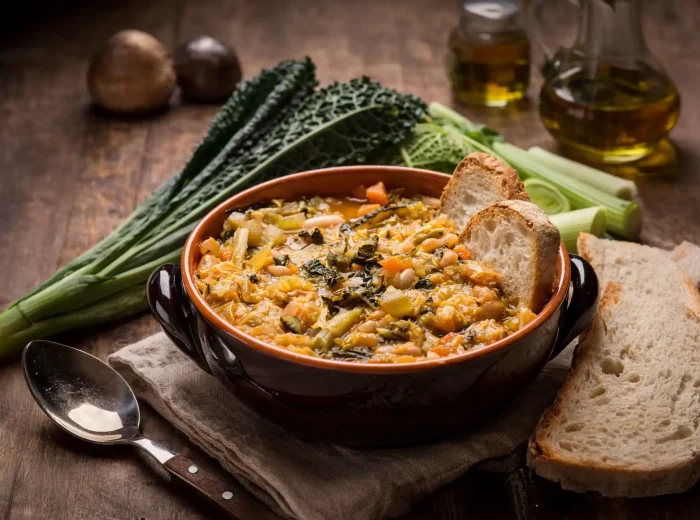
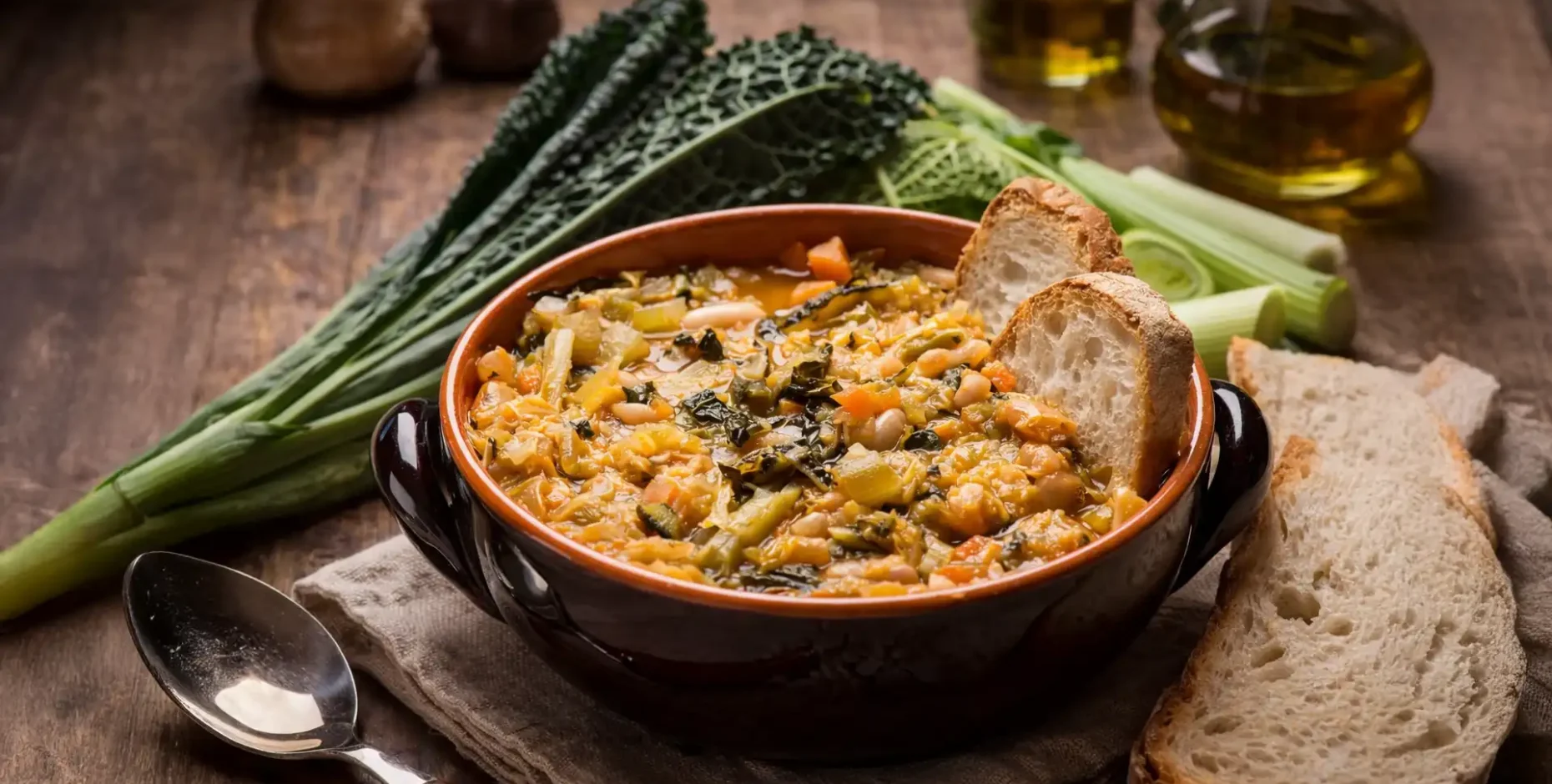
Ribollita is the signature dish of rural Tuscan cuisine, known as cucina povera, and the version made in the Pienza and Val d’Orcia area enhances the local ingredients. It isn’t a simple vegetable soup, but a thick and hearty comfort food. Its name comes from the fact that it is traditionally re-boiled the following day, to enhance its flavour.
History and Interesting Facts
Ribollita emerged from the need to reuse stale bread (with a preference for unsalted Tuscan bread, known as “sciocco”) and winter vegetables such as Tuscan kale and beans. It’s a traditional recipe passed down from generation to generation. The secret to its flavour is the generous use of Tuscan kale (which must be “frost-kissed” to be more tender) and the fact that, once ready, it has to “rest” to allow the ingredients to blend together.
 Ingredients (for 6 people)
- 200 g dried cannellini beans
- 300 g Tuscan kale
- 300 g savoy cabbage
- 200 g chard
- 150 g potatoes
- 1 carrot, 1 celery stick, 1 onion (sautéed)
- 400 g stale Tuscan bread
- Extra virgin olive oil, salt, pepper
- Vegetable broth to taste
 Recipe
- Beans: Boil the previously soaked cannellini beans. Put half of them through a food mill to create a cream. Leave the other half whole and set them aside.
- Sautéed base: In a large pot, sauté the chopped carrot, celery and onion in olive oil.
- Vegetables: Add the diced potatoes, cabbage, Tuscan kale (with the central stalk removed), and the chard, all roughly chopped. Season with salt and pepper and simmer.
- Cooking: Combine the creamed beans and the whole beans, cover with the broth and cook slowly for at least 1 hour.
- Ribollita: In a soup tureen, alternate layers of sliced stale bread with soup. Let it rest for a few hours (or overnight). Before serving, re-boil (reheat) the soup in the pan and serve with a drizzle of raw extra virgin olive oil.
 Accompaniments
- Wine: It is perfect with a young, medium-bodied red wine, like a typical local Orcia Rosso DOC.
- Seasoning: Adding a generous drizzle of raw, high-quality Tuscan extra virgin olive oil to the dish, perhaps from a local mill, is essential.