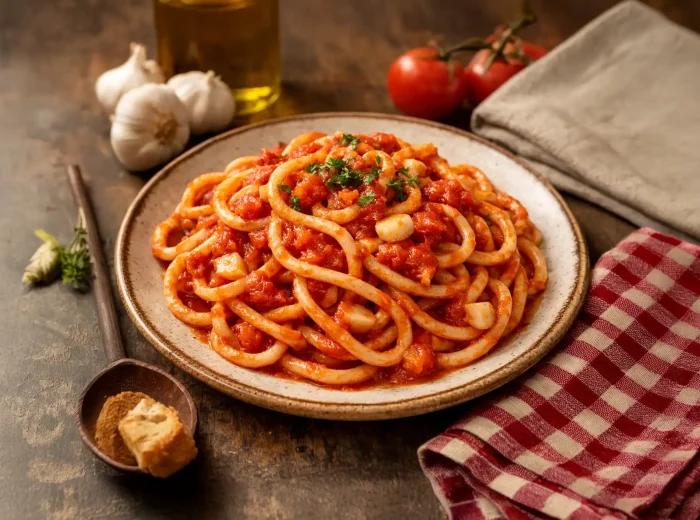
Pici are long, thick, irregular-shaped spaghetti made of water, flour and oil, ingredients to which an egg is added, depending on the “school of thought”.
It is the “king” of the most widely-consumed first courses in Pienza. However, this pasta was discovered by the general public in the mid-1960s, after having been the classic local Sunday dish for centuries and a symbol of poor rural cuisine. Its place in local tradition is demonstrated by traces identified in images painted in Etruscan tombs.
“Pici are made with memory”
It is no coincidence that the journalist and writer Marco Brogi said “pici are made with memory”, a brilliant definition, if you consider the fact that they belong to the family of home-made pasta but that “appiciare” (hand-rolling) is a technique and an art that is passed down and even shared. In fact, the “appiciare” hand-rolling can also be done during the “vegliatura”, an evening gathering, to get a head start for the following day, perhaps in a group, in company, in a sort of ceremony that breaks down age barriers between generations.
Ideal seasonings
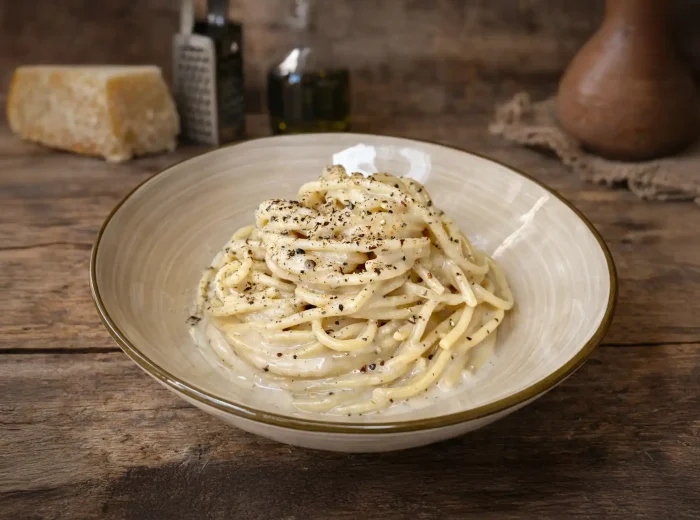
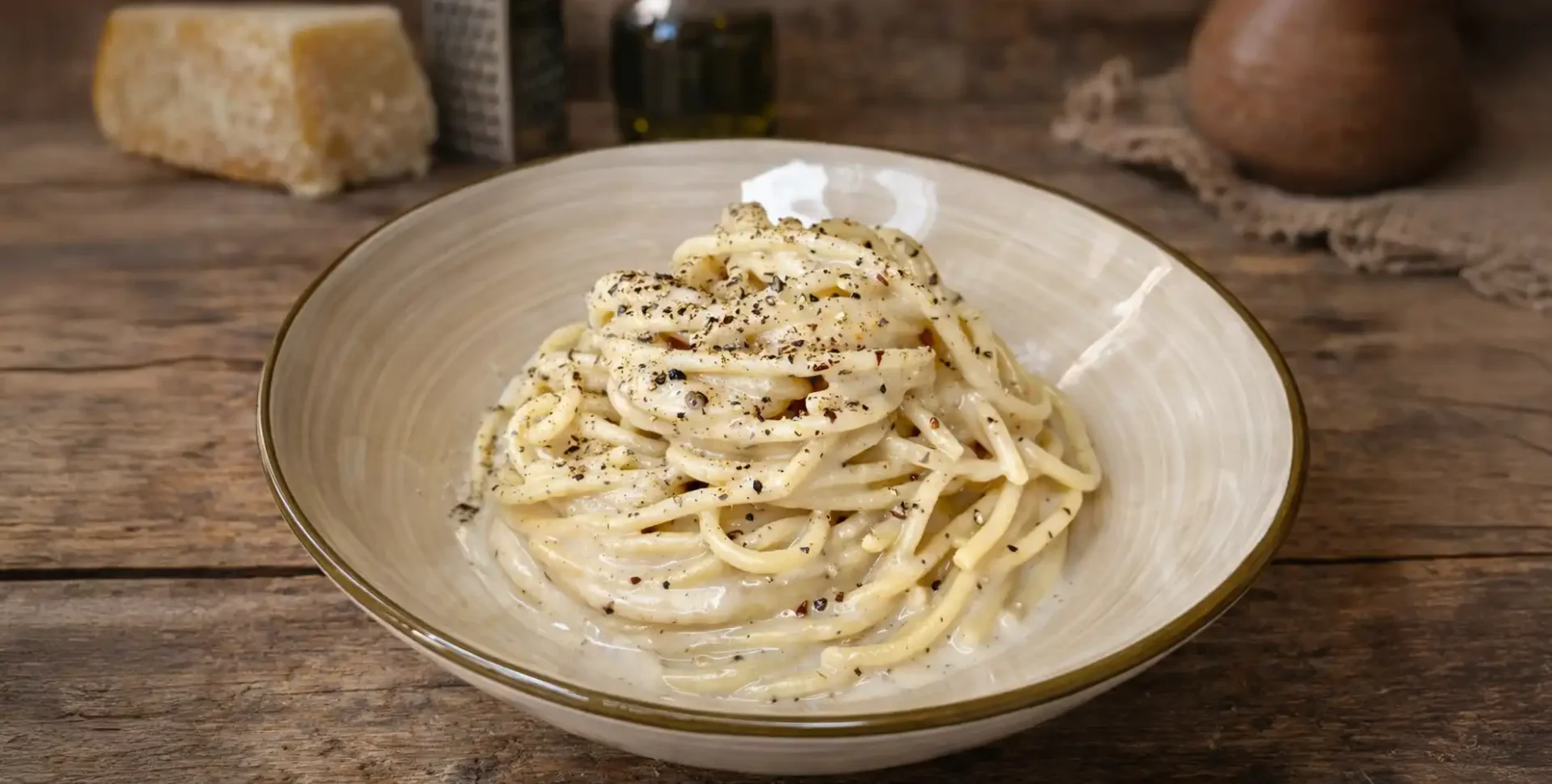
Pici pasta goes well with any condiment, including aglione garlic-tomato sauce, briciole (small pieces of coarsely crushed bread), meat sauces, from the classic sauce with beef and pork, to those with “nana” (duck), wild boar or venison. We propose an imported variant: “cacio e pepe”. However, thanks to the versatility of the “picio” and its ability to retain condiments, this quickly became a popular dish that allows the use of the delicious local pecorino, or cacio, cheese of Pienza.
The recipe
 Pici for 6 people:
- 1 kg of flour (600 g of stone-ground ancient grain flour and 400 g of type 0 plain flour);
- 1 egg;
- 50 ml extra virgin olive oil;
- 0.5 l of water;
- salt to taste.

Put the flour on a pastry board and pour the water, oil and egg into the centre. Add salt and knead well to obtain a very smooth mixture, which should be left to rest for 30 minutes. Then the “hand-rolling” begins, obtaining the big spaghetti from each slice of dough, cut into strips, using the typical “back and forth” movement of the palms of the hands on the pastry board. The strands of pasta obtained must be laid out in durum wheat semolina until they are ready to be cooked in abundant salted water.
 Seasoning
Grate 100 g of Pienza pecorino cheese and grind the black peppercorns in a wooden grinder or with a mortar and pestle. Melt the pecorino cheese in a pan, keeping the temperature below 65° and using the pici cooking water, not yet salted, taking care not to form lumps. Toss the pici in another pan with the ground pepper, adding water to finish cooking. Add the creamy pecorino sauce to the pasta, mixing gently, and serve with more ground pepper.