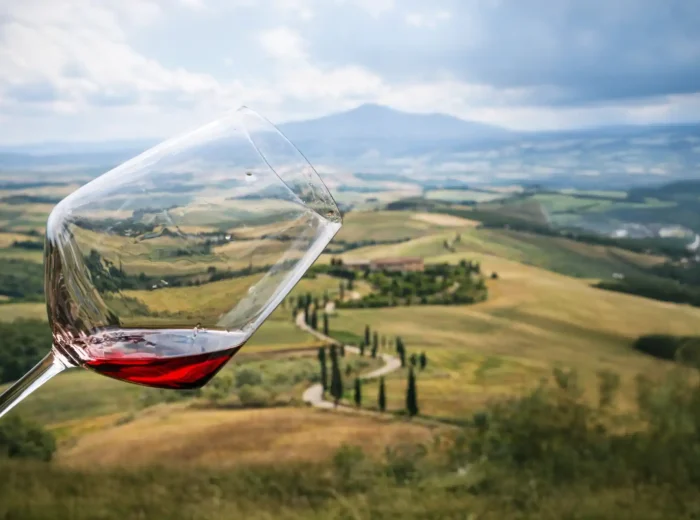
The ancient grains of the Val d’Orcia tell the story of centuries of Tuscan agriculture. These grains have been cultivated since the Middle Ages and have developed in harmony with the rural landscape, thanks to traditional techniques, natural crop rotations and the experience of the valley’s farmers.
A history that dates back to the Etruscans
In fact, it seems that the Etruscans were the first to protect their grains in fortified storehouses and this was later imitated by the monks of the numerous monasteries in the Val d’Orcia, who built “granges”, or fortified granaries. Since the Middle Ages, grain cultivation has developed in harmony with the environment, thanks to a form of agriculture governed by the rhythm of the seasons, crop rotation and traditional techniques handed down through generations of sharecroppers and farmers.
The Grand Duke’s “granary”
During the Medici era, between the 16th and 18th centuries, the Val d’Orcia also bore the nickname “Grand Duke’s granary”, identifying the area as the main grain reserve of the Tuscan State. This specialisation encompasses both soft and durum wheat and today, especially with the latter, modern, environmentally-friendly cultivation techniques are applied, in order to produce the highest-quality flours that distinguish the pasta production – still often made by hand – in this area.
Ancient grain species
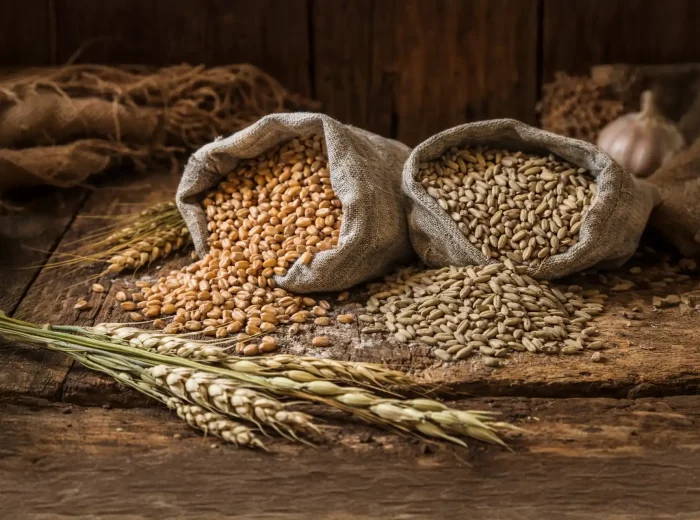
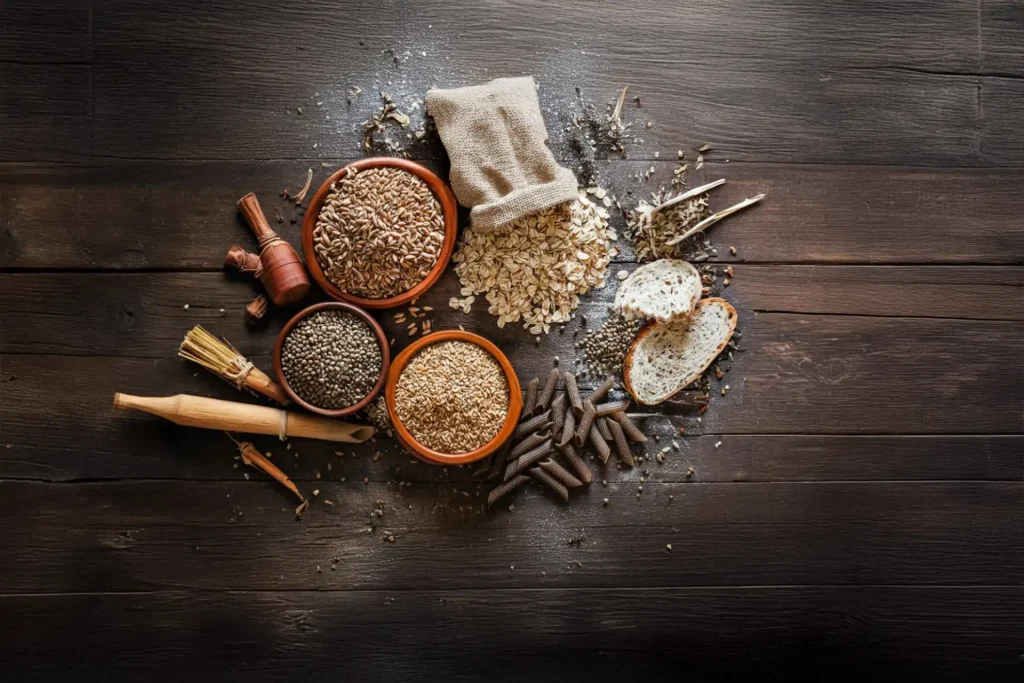
It is often the same skilled farmers who use ancient techniques to cultivate ancient grains like Verna, Senatore Cappelli, Gentil Rosso or Etrusco; these are varieties that were cultivated for centuries before the advent of intensive agriculture in the 20th century. The arrival of modern varieties in the 1960s and 1970s, more productive but often less nutritious, led to a reduction in ancient grains; however, since the 2000s, thanks to the return to agricultural biodiversity and growing interest in high-quality products, these varieties have returned to the forefront.
Organic production and the characteristics of ancient grains
Attention focused on the local area has resulted in numerous organic production initiatives, with the rediscovery and sowing of ancient grains; consequently, artisan pasta makers have developed and can be visited throughout the Val d’Orcia. For consumers, this is a guarantee that local Tuscan grains are free from toxic substances. The ancient grains of the Val d’Orcia are primarily distinguished by their adaptation to the territory. They are rustic varieties, capable of growing in poor, hilly soils and are drought-resistant thanks to their deep roots and longer growing cycles. Another distinctive feature is their natural height: many species exceed 140–160 cm, unlike the shorter modern varieties. This favours reduced use of herbicides (the plant itself shades the weeds), resulting in a greater ecological balance in the fields. It results in low-impact cultivation that requires little fertilisation and no intensive chemical treatments, making these grains ideal for organic farming, which is widespread in the Val d’Orcia.
Unique aromas and flavours, nutritional qualities
Ancient grains are celebrated for their more intense aroma and flavour; bread, pasta and baked goods feature hints of hazelnut, straw and almond, along with a more pronounced natural sweetness. The gluten structure is “weaker” than modern cultivars, making the dough lighter and easier to digest for people with sensitivities (not for coeliacs). The mineral and antioxidant content is also higher. Many ancient grains have more fibre, more B vitamins, more micro-nutrients, carotenoids and naturally occurring polyphenols.
Artisanal processing
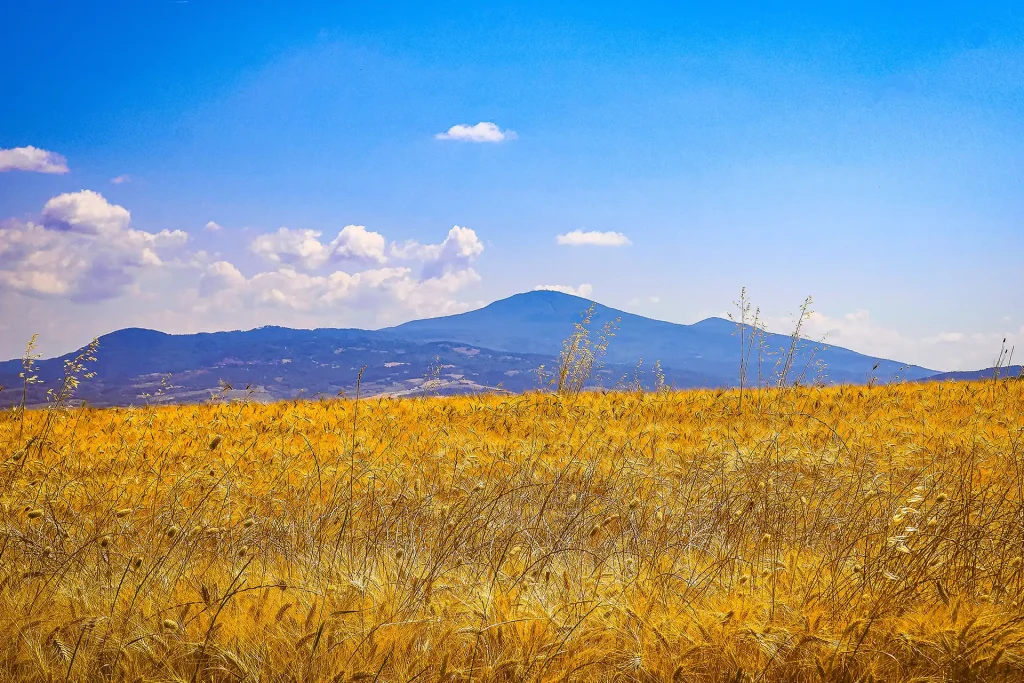
The processing of ancient grains in the Val d’Orcia is often based on artisanal methods: stone milling preserves the germ and the bran, enhancing their fragrance, amber colour and nutritional value. Bronze-die extrusion and slow drying makes the pasta more porous, rougher and more flavourful; the bread and other naturally-leavened products have a complex aroma, a longer shelf life and a crispier crust.
Why the Val d’Orcia is the “cradle” of grains
Research has also revealed the reason behind the Val d’Orcia being an ideal place for growing wheat: the breezy climate reduces fungal diseases; the clayey and calcareous soils are perfect for rustic varieties; organic farming is widespread, along with a focus on biodiversity; a strong rural tradition has allowed the preservation of several rare cultivars.