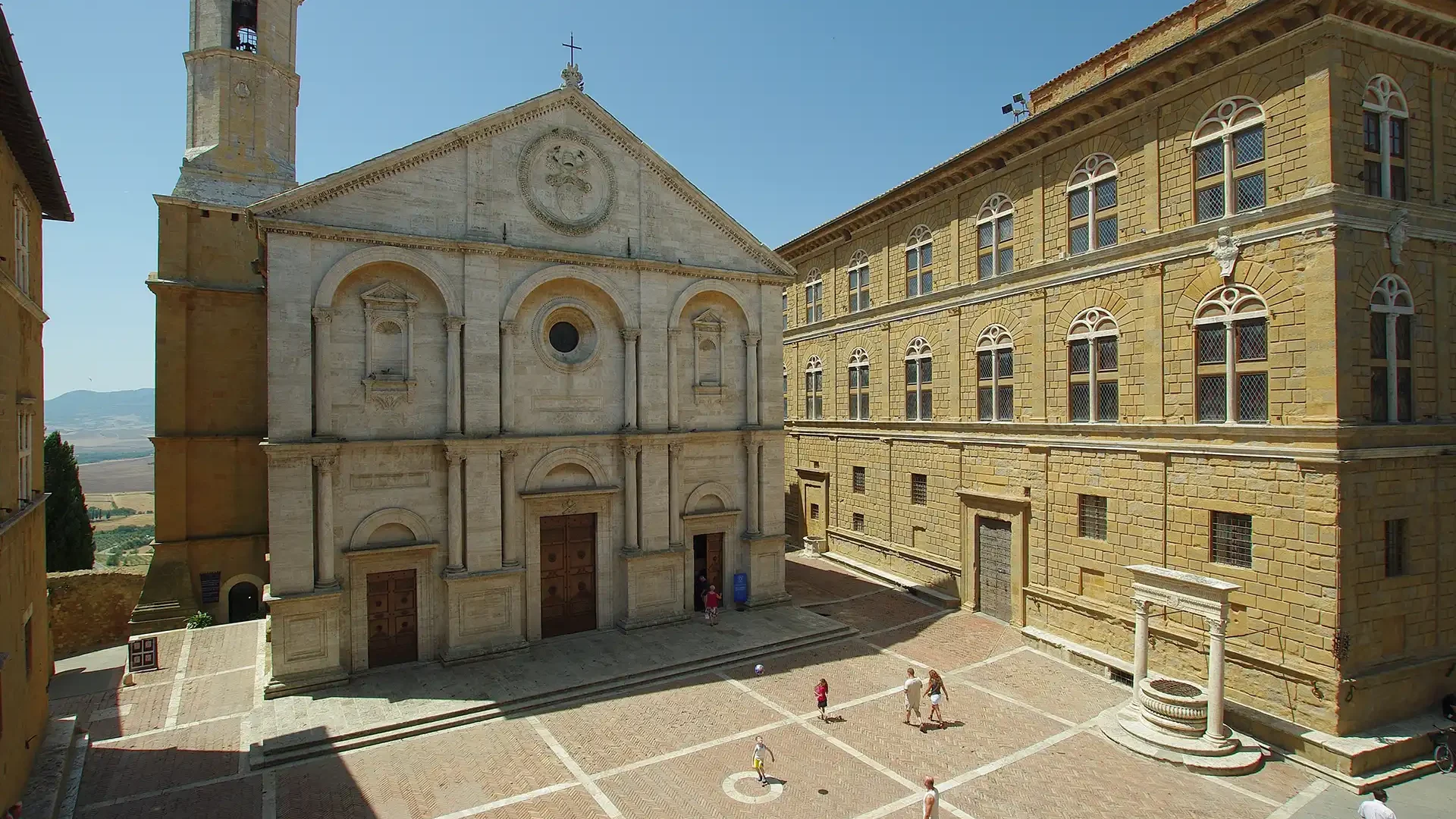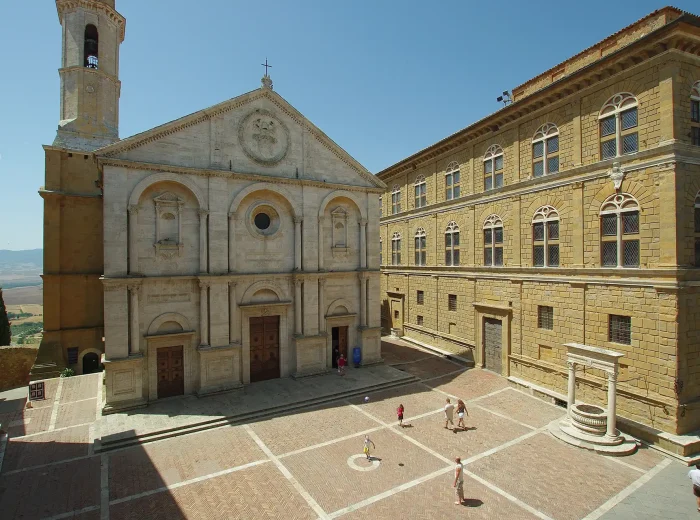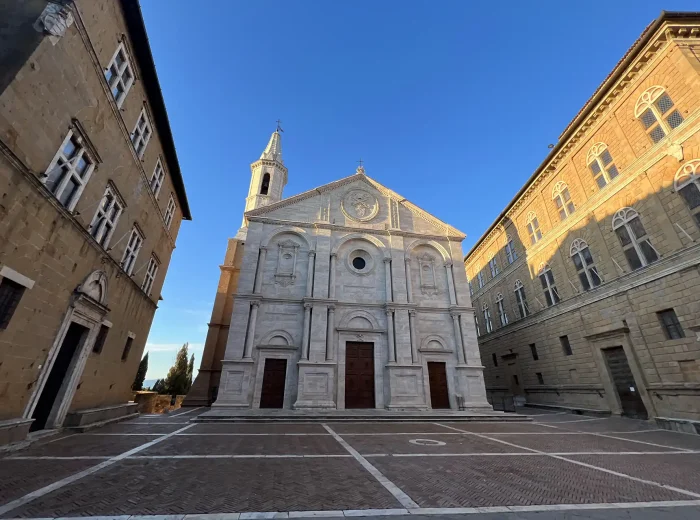
Next to the Cathedral of Santa Maria Assunta, stands the majestic Palazzo Piccolomini, the private residence of Pope Pius II.
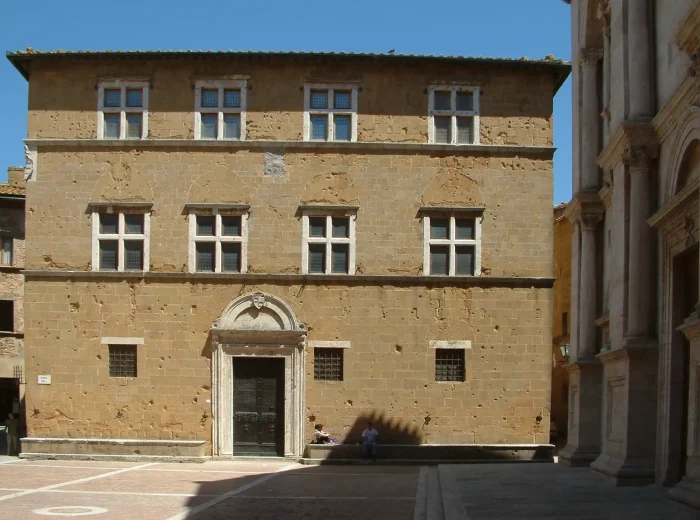
The building stands on the site where the house in which the pontiff, Enea Silvio Piccolomini, was born and is one of the early Italian Renaissance masterpieces. It was designed by Bernardo Rossellino, a student of Leon Battista Alberti, and combines the elegance of a Florentine palace with the harmony of a Roman villa. It is one of the buildings that symbolises Pienza and offers visitors a unique experience, allowing them to immerse themselves in the splendour and elegance of a noble fifteenth-century residence, perfectly preserved and overlooking the harmonious Val d’Orcia landscape.
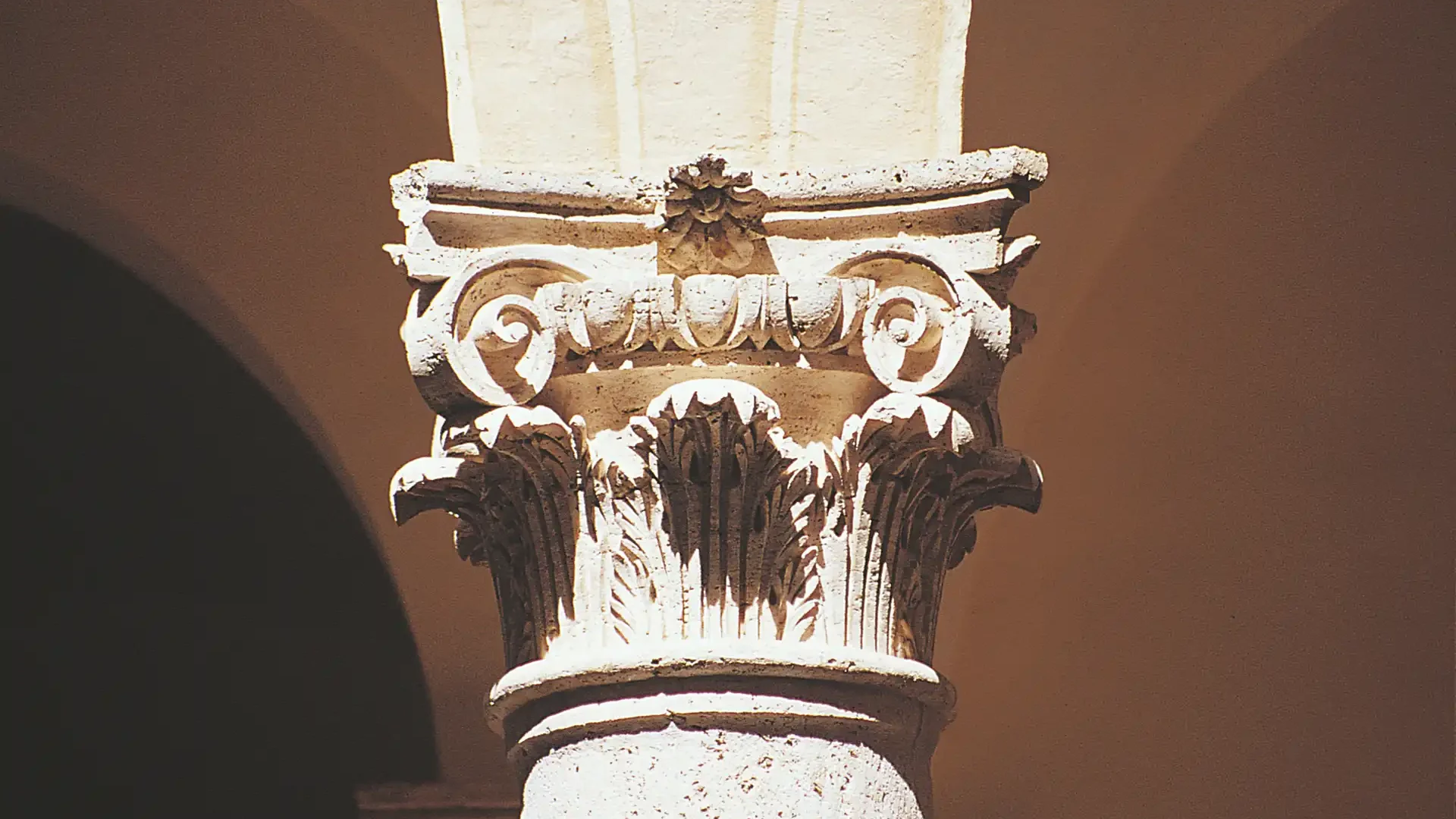
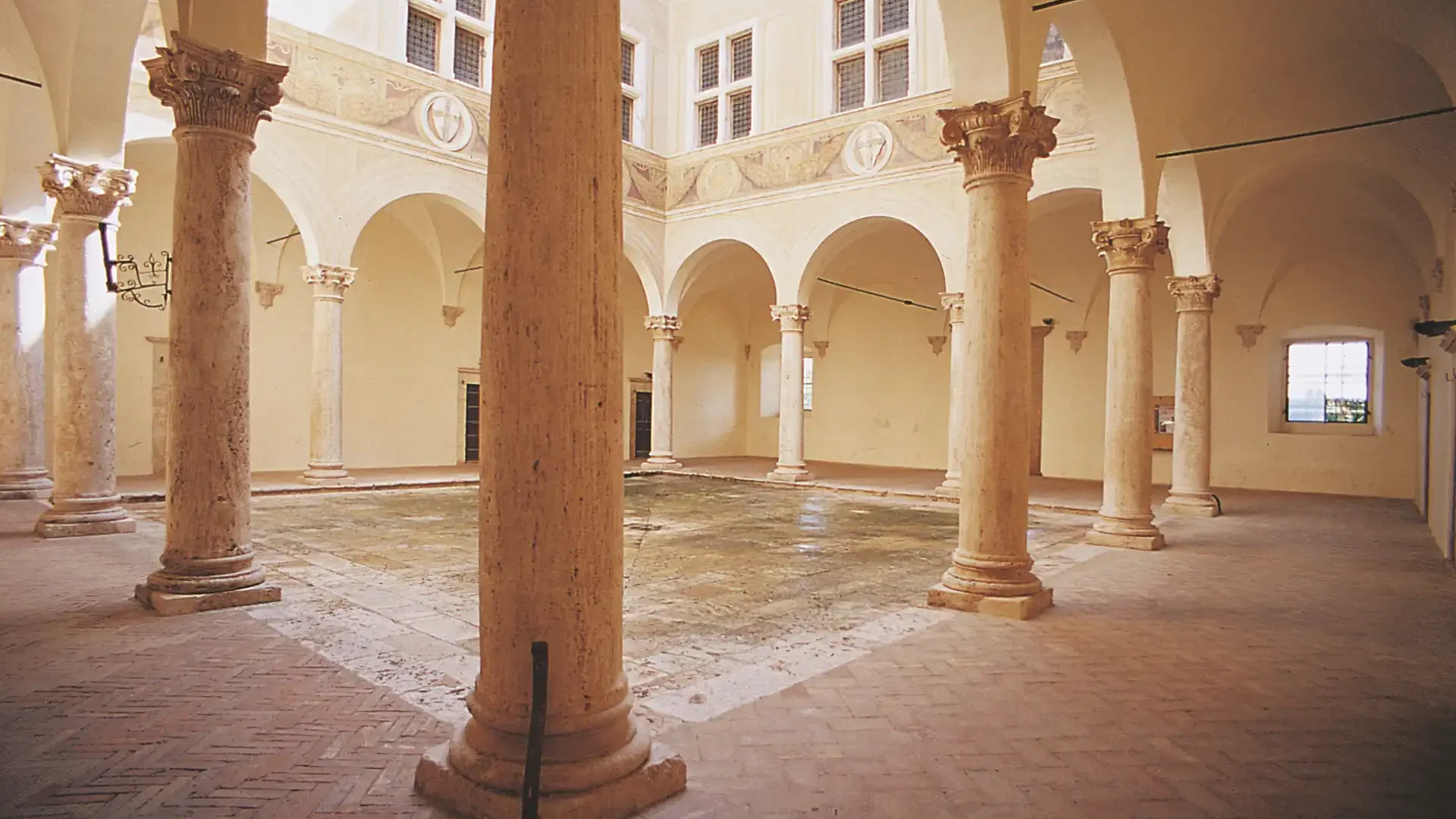
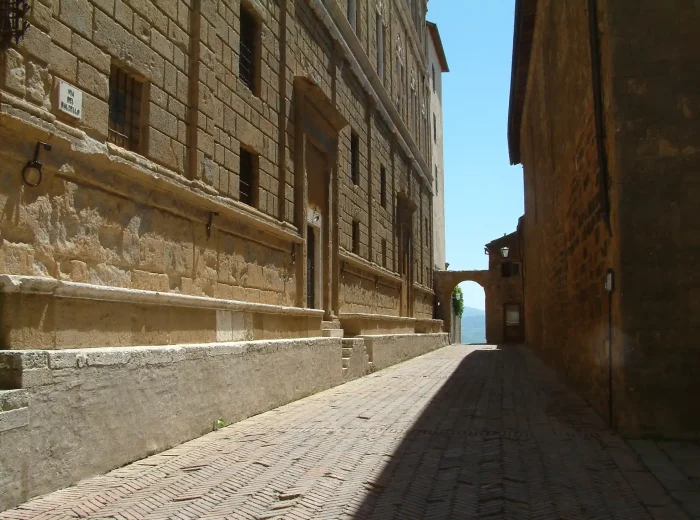
The sandstone and travertine façade is inspired by Florence’s Palazzo Rucellai. It is divided into three tiers with string courses, Guelph cross windows and Doric and Corinthian pilasters. Light, a theme so dear to Pius II, floods the interior spaces thanks to the large windows that also open onto the central courtyard, the real heart of the building.
The palace was renovated in the 20th century by Count Silvio Piccolomini and his wife Anna Menotti, who restored the residence to its former splendour, respecting the original design. When the count died, in 1962, the ownership passed to the Società Esecutori di Pie Disposizioni, with the commitment that it would be turned into a museum.
Today, visitors can enter the palace via the entrance in Piazza Pio II and discover the elegant vaulted rooms on the ground floor, now used for exhibitions and events. Going up the monumental staircase will take you to the main floor, the heart of the museum, where furnishings, paintings and original objects narrate five centuries of Piccolomini family history. One of the most captivating rooms is the Music Room, with a wooden ceiling decorated with four intertwined “P”s – Pius Piccolomineus Papa Pientinus – and walls covered in 17th-century multicoloured leather. It contains refined furniture, painted marriage chests, inlaid sideboards and precious artefacts like a lyre table by Carlo Gibertoni and a paesina stone cabinet.
The rooms contain numerous family portraits like that of Alessandro Piccolomini, a humanist and astronomer, or the portrait of Orazio Piccolomini by Giusto Sustermans, court painter for the Medici family.
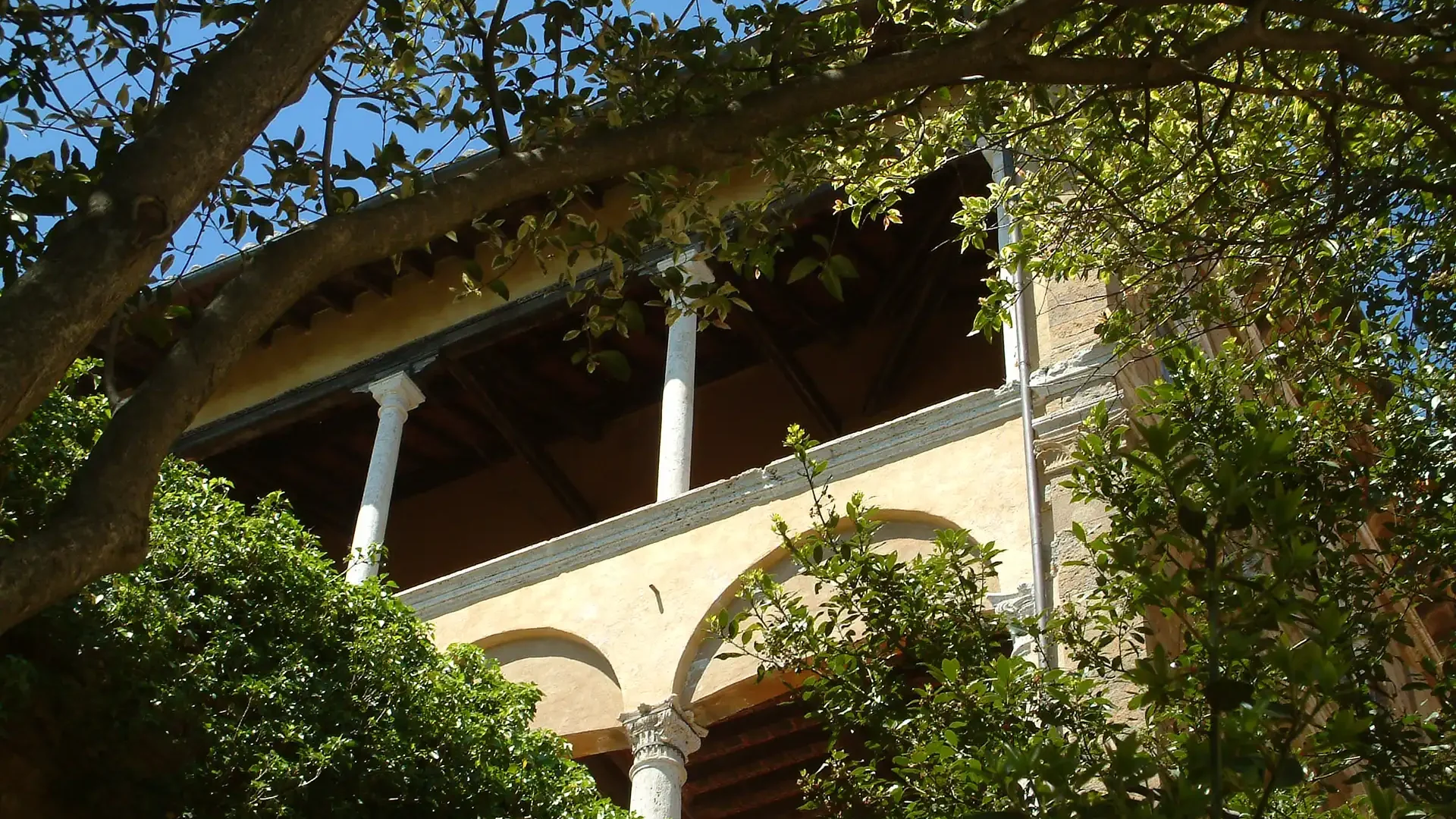
Halfway along the itinerary, visitors can look out from the panoramic Loggia which offers a breathtaking view of the Val d’Orcia, with Monte Amiata and the fortress of Radicofani.
The itinerary continues on the main floor with the Chamber of Pius II, where paintings are kept on the entrance wall of the room: the grotesques attributed to the young Antonio Bazzi, known as Il Sodoma, and the profile of the Pope enclosed in a recess; a splendid panel by Matteo di Giovannidepicting the Virgin Mary and Child with Saints, recovered in 2010 after being stolen in the 1970s, and a beautiful painted wooden Renaissance chest.
Following the itinerary, you will come to the galleries where you will find the Piccolomini family tree drawn by Antonio Ruggeri and engraved by Giorgio Widman and Arnold Van Westerhout (1685), as well as ancient majolica and Renaissance fabrics. The visit continues in the Library of Pius II, which, during the pope’s time, was the summer dining room. It displays incunables and documents linked to the pontiff and the Piccolomini family, as well as works by ancient authors such as Pliny, Ovid and Virgil.
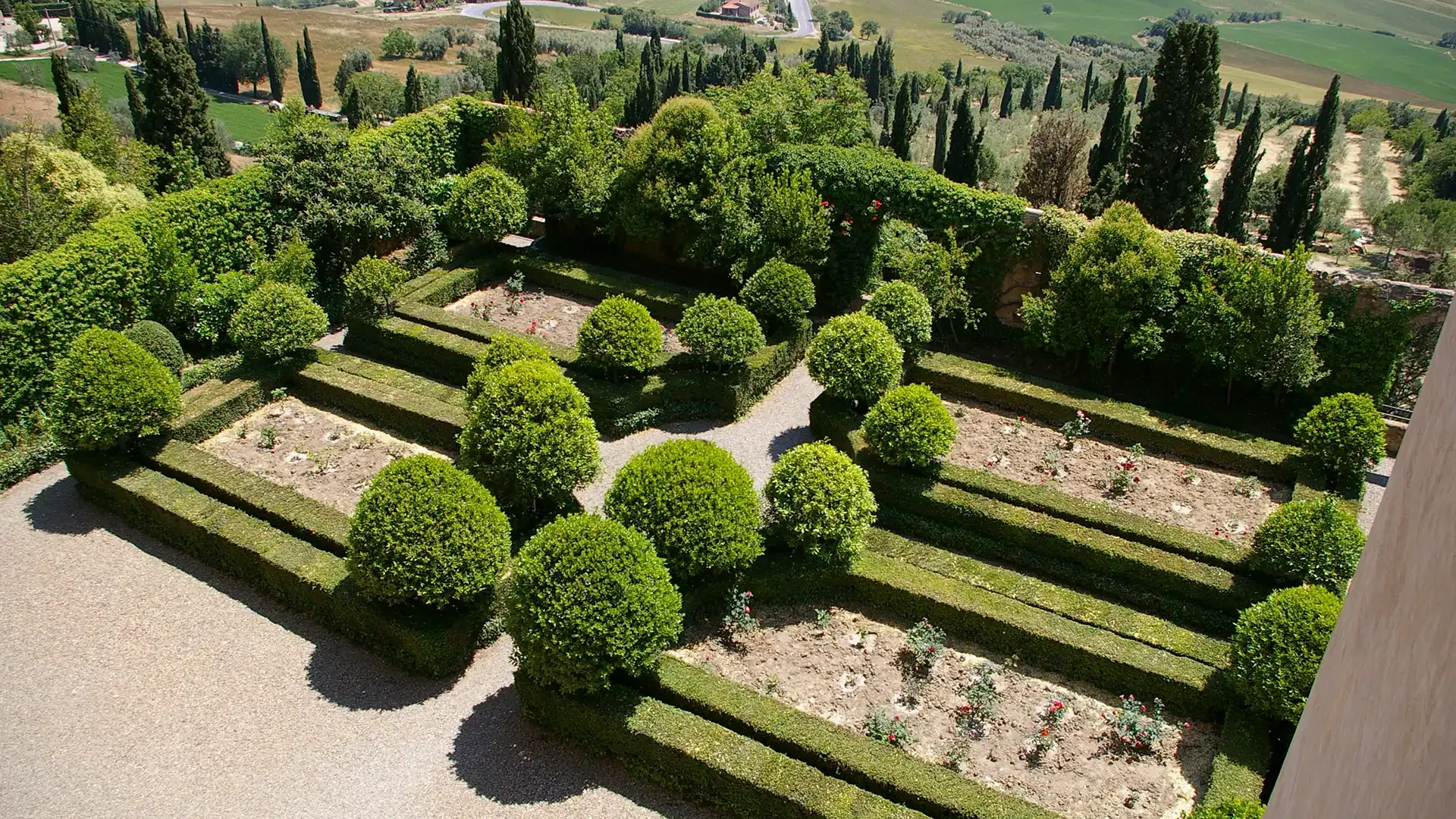
The tour of the palace comes to an end in the third gallery where you can admire the portrait of General Ottavio Piccolomini, one of the greatest generals of his time and a leading figure in the Thirty Years’ War (Prague, 1620), along with two 17th-century Batons that belonged to the family. From the palace courtyard, you can enter the hanging garden, one of the first Italian examples from the Renaissance period. Described in the Commentaries of Pius II, the space is divided into four beds of box and laurel trees, with a small fountain in the centre. Its layout is reminiscent of the Paradise Garden and is a place for meditation, but also for enjoying nature. As you enter, there is a splendid octagonal travertine well on the right, featuring the Piccolomini coat of arms and several bas-reliefs of plants, reminiscent of the art of the Sienese sculptor Antonio Federighi.