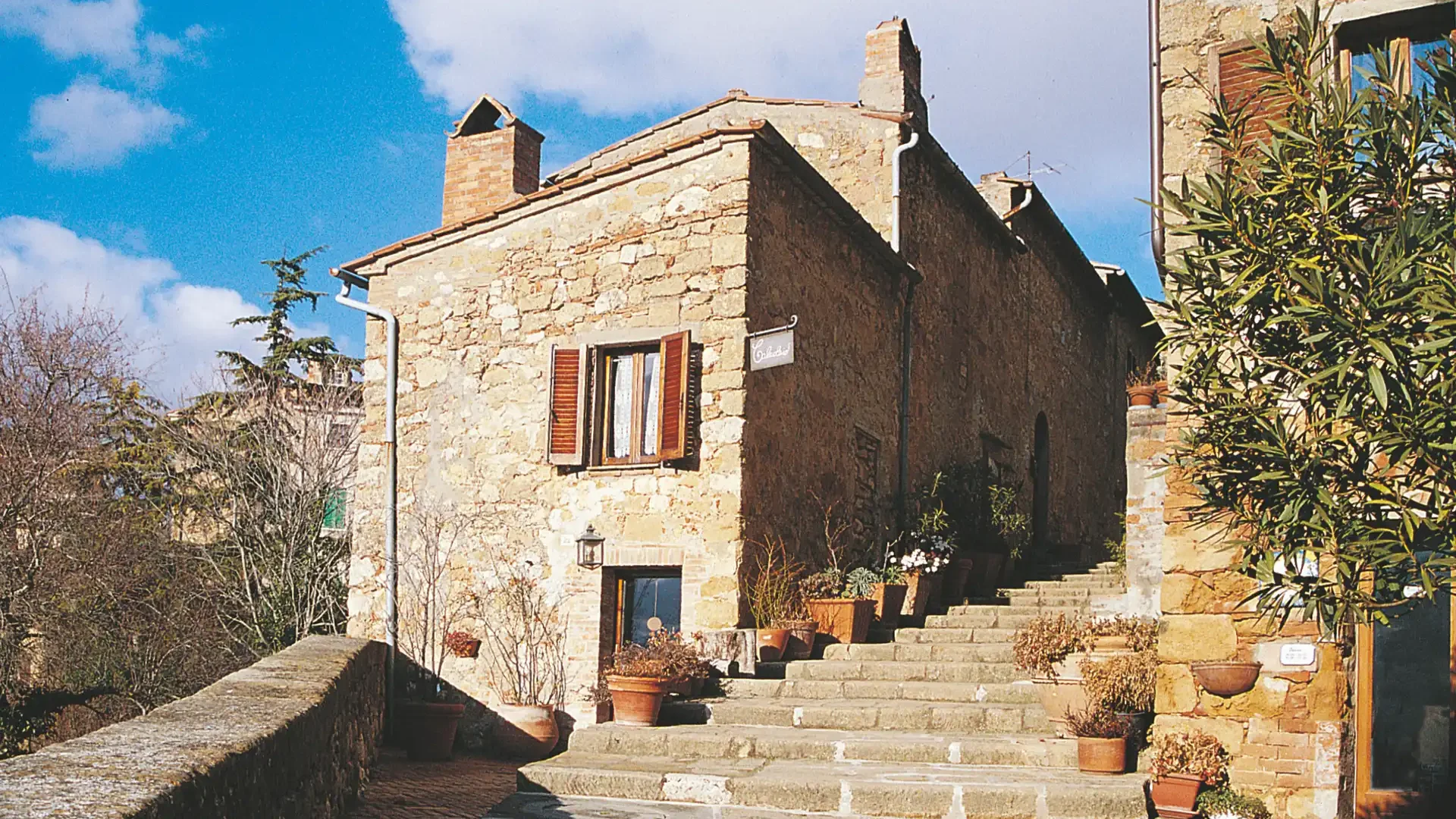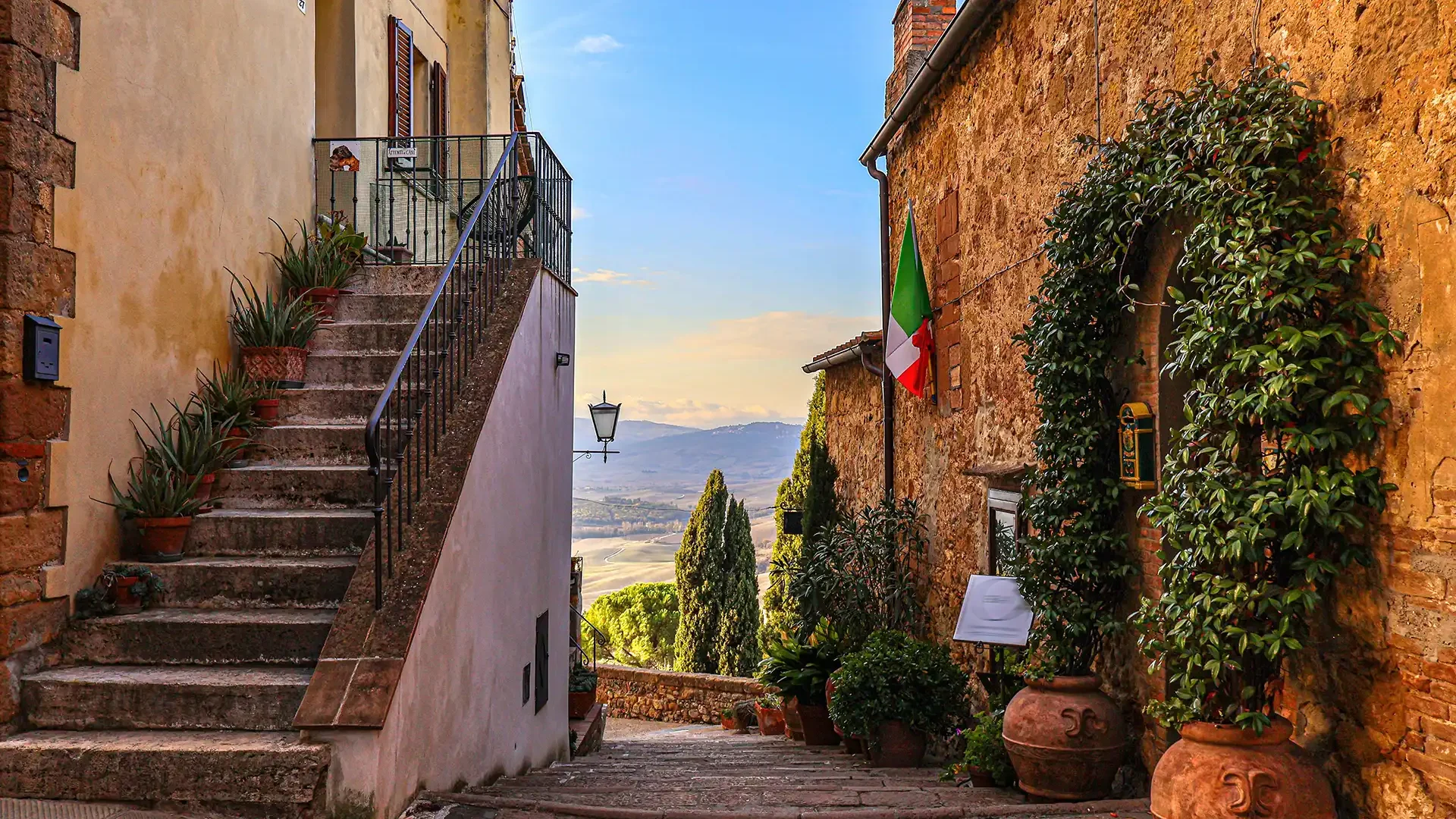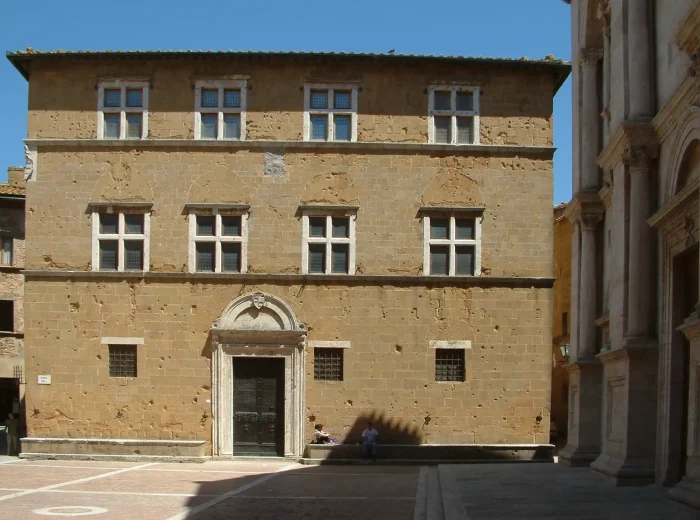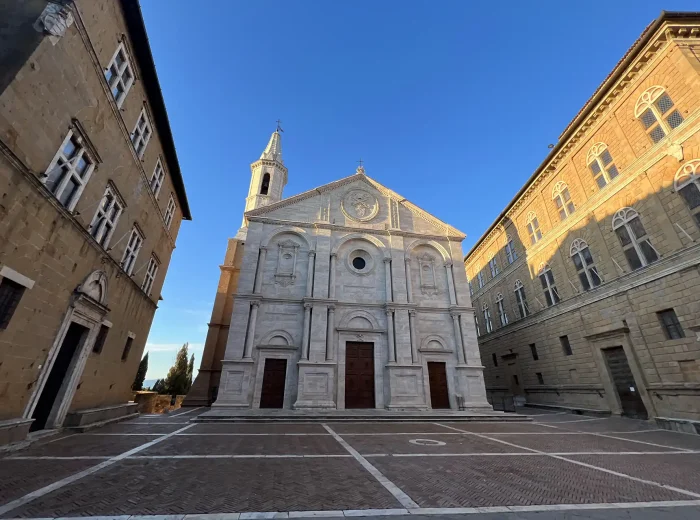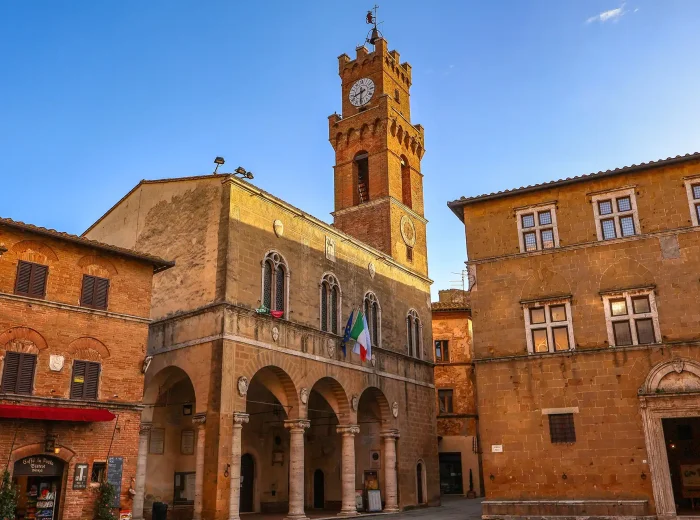
Located in the southwestern part of the town of Pienza, the Gozzante district has retained the ancient medieval atmosphere of what was once Corsignano.
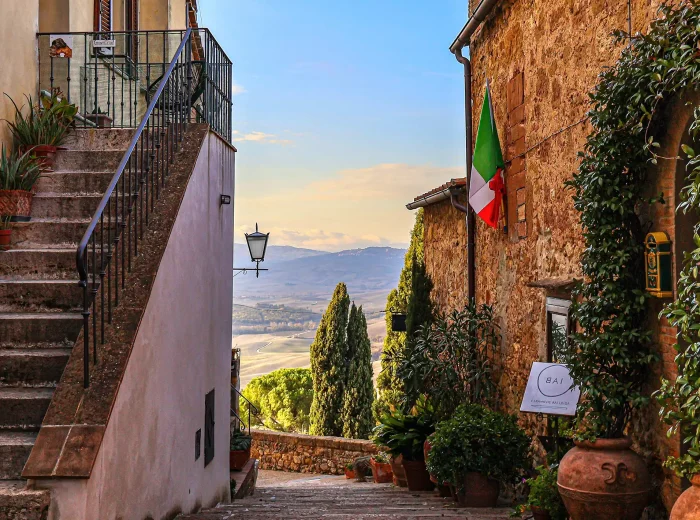
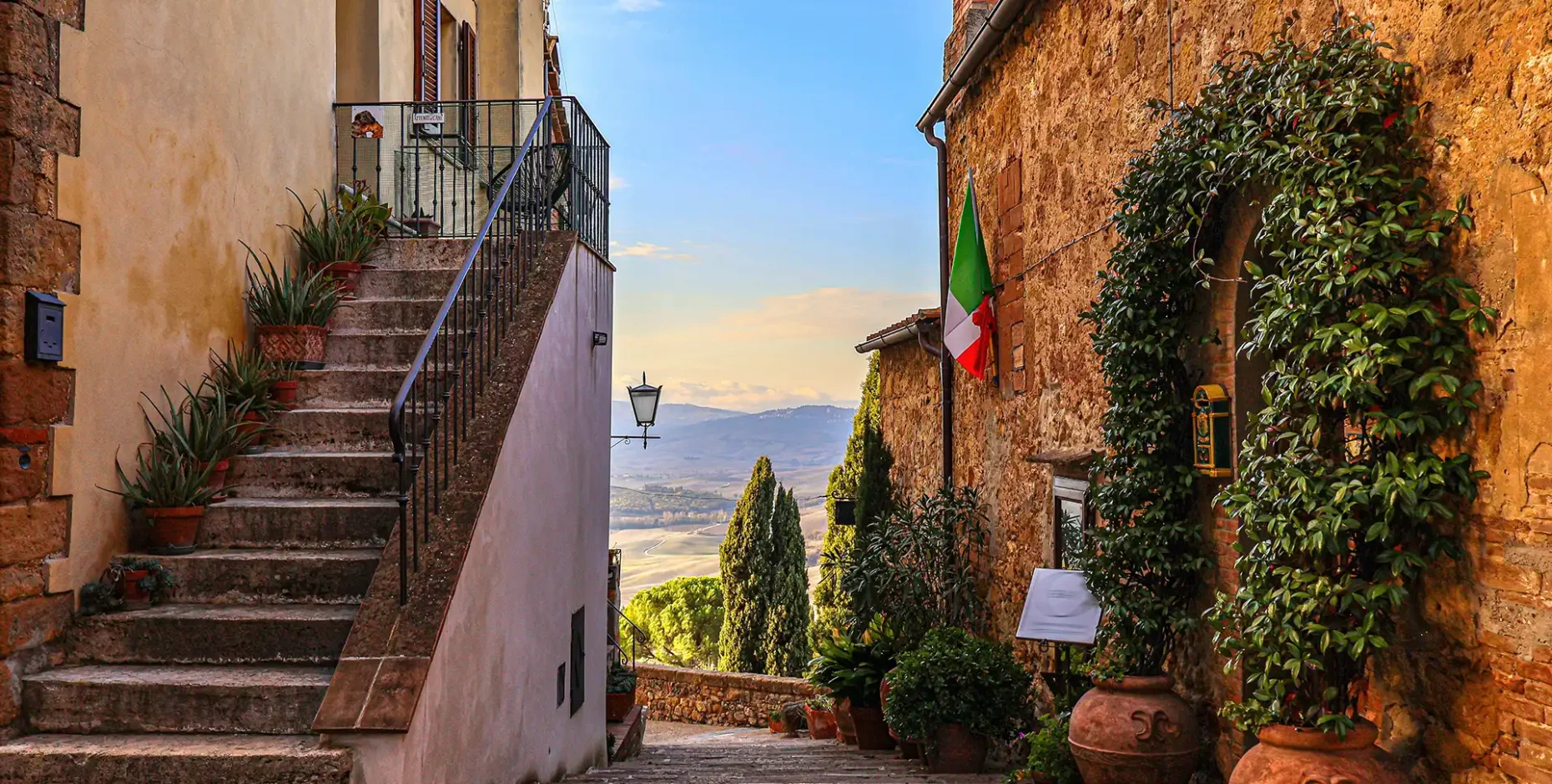
Coming from Piazza Dante Alighieri and passing through Porta al Murello, you’ll be struck by the presence of a captivating medieval underpass, on the right, that leads to a picturesque area filled with tiny medieval houses overlooking intimate inner courtyards and the enchanting Val d’Orcia landscape.
Things to see
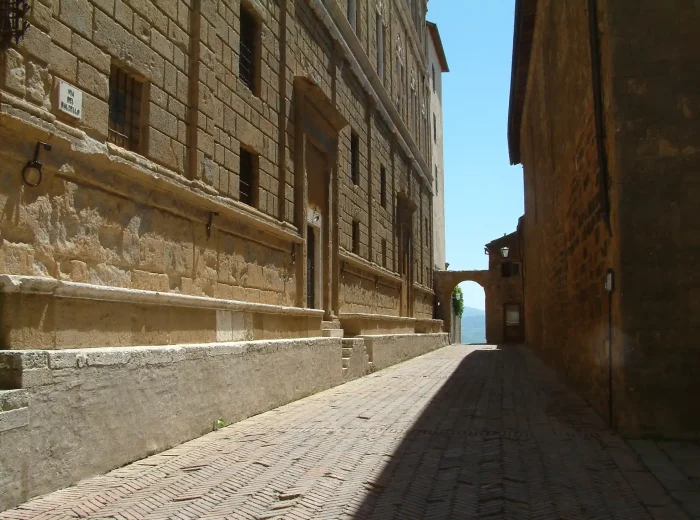
Small pastel-coloured doors and tiny windows overlooking the winding alleyways, once inhabited by the poorest people in the town of Pienza, transport visitors to a place that seems to be standing still in time. Humble families of farmers and small-scale artisans brought life to this place over the centuries, leaving their mark on the street name Via delle Serve Smarrite (Street of the Lost Servants) and Piazza Galletti.
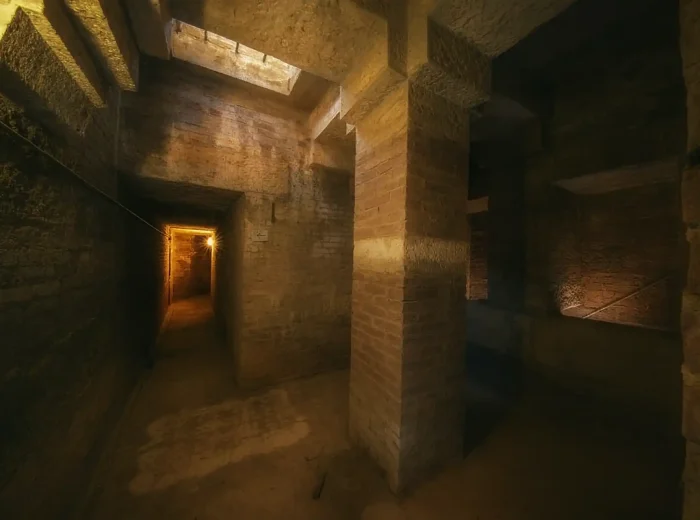
Walking down the low, wide steps that lead to the town’s perimeter walls, which coincide with Via Gozzante, you’ll notice an artisan pottery workshop on the left, located inside a pre-existing private residence, with an adjoining dairy, which leads into an ancient cave, probably of Etruscan origin. By entering this evocative and shadowy place, you can admire the oldest well in Pienza, which dates back to the 12th century, and a secret medieval passageway that connects the basement of Palazzo Piccolomini to the outside of the town, in the direction of Viale di Santa Caterina.
You can also see an old olive grinding stone, evidence of the oldest olive mill in the area, built in the 16th century by the Sienese Spannocchi family and used until the early 20th century.
Interesting Facts
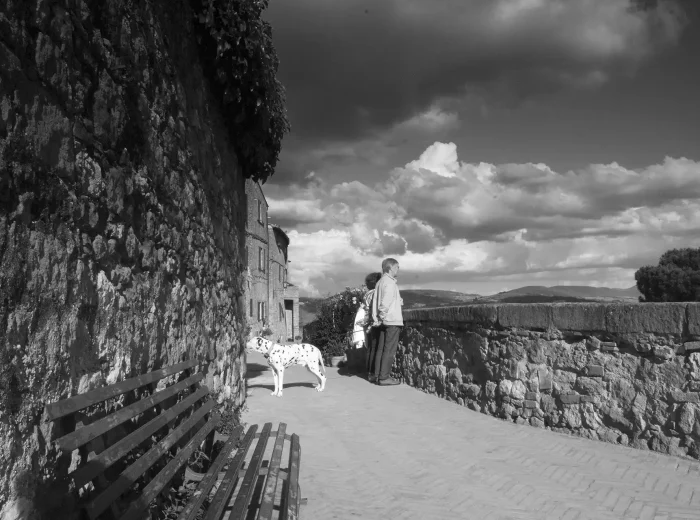
The view from the walls of Via Gozzante reveals the rolling wheat-covered Val d’Orcia hills, crossed by winding roads and dotted with slender cypress trees, iconic elements of the Tuscan landscape. This scenery became famous throughout the world thanks to film director Ridley Scott, who chose the Val d’Orcia as the setting for several famous scenes in his Oscar-winning film, Gladiator.
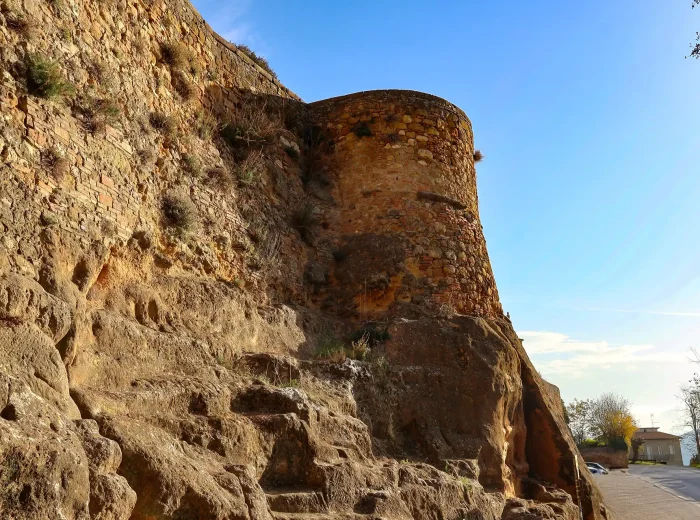
From the panoramic walls, where there are houses converted from old medieval watchtowers, you enter the little Piazza Galletti, created after the bombing that took place on 15 June, 1944, by the Anglo-American Air Force, which hit a German command stationed in the town.
An unusual fact: attached to the wall of a house in the square, there is a bench made from the front of an old 16th-century fireplace and decorated with the coat of arms of the Sienese Spannocchi family who – thanks to Pope Pius II Piccolomini – came to Pienza and probably lived in Gozzante.