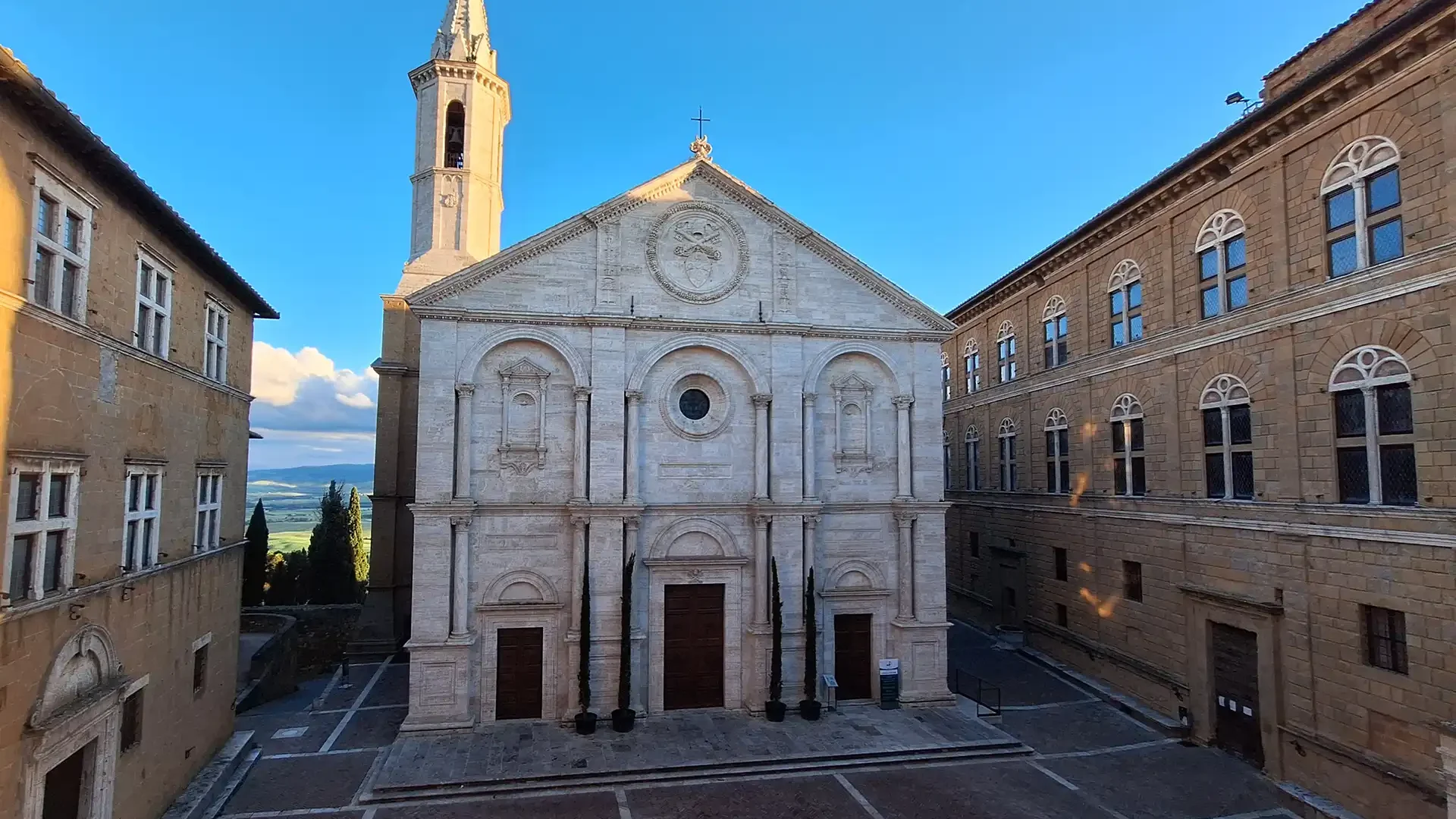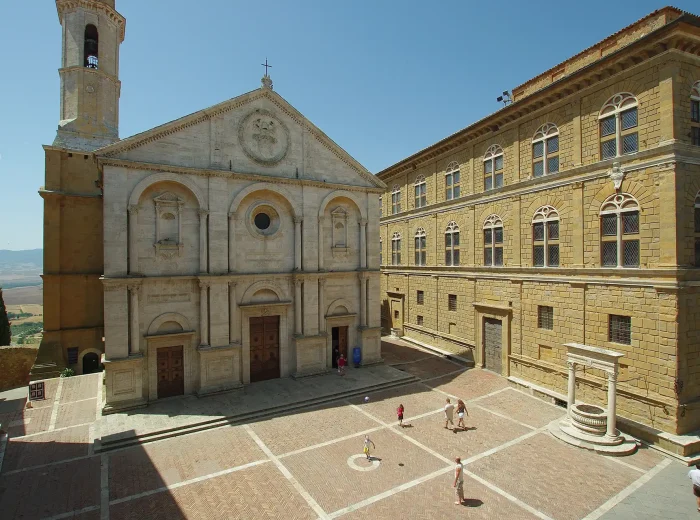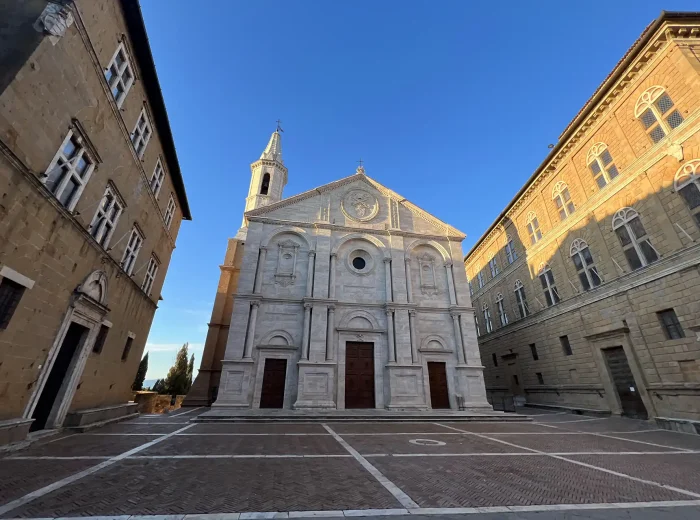
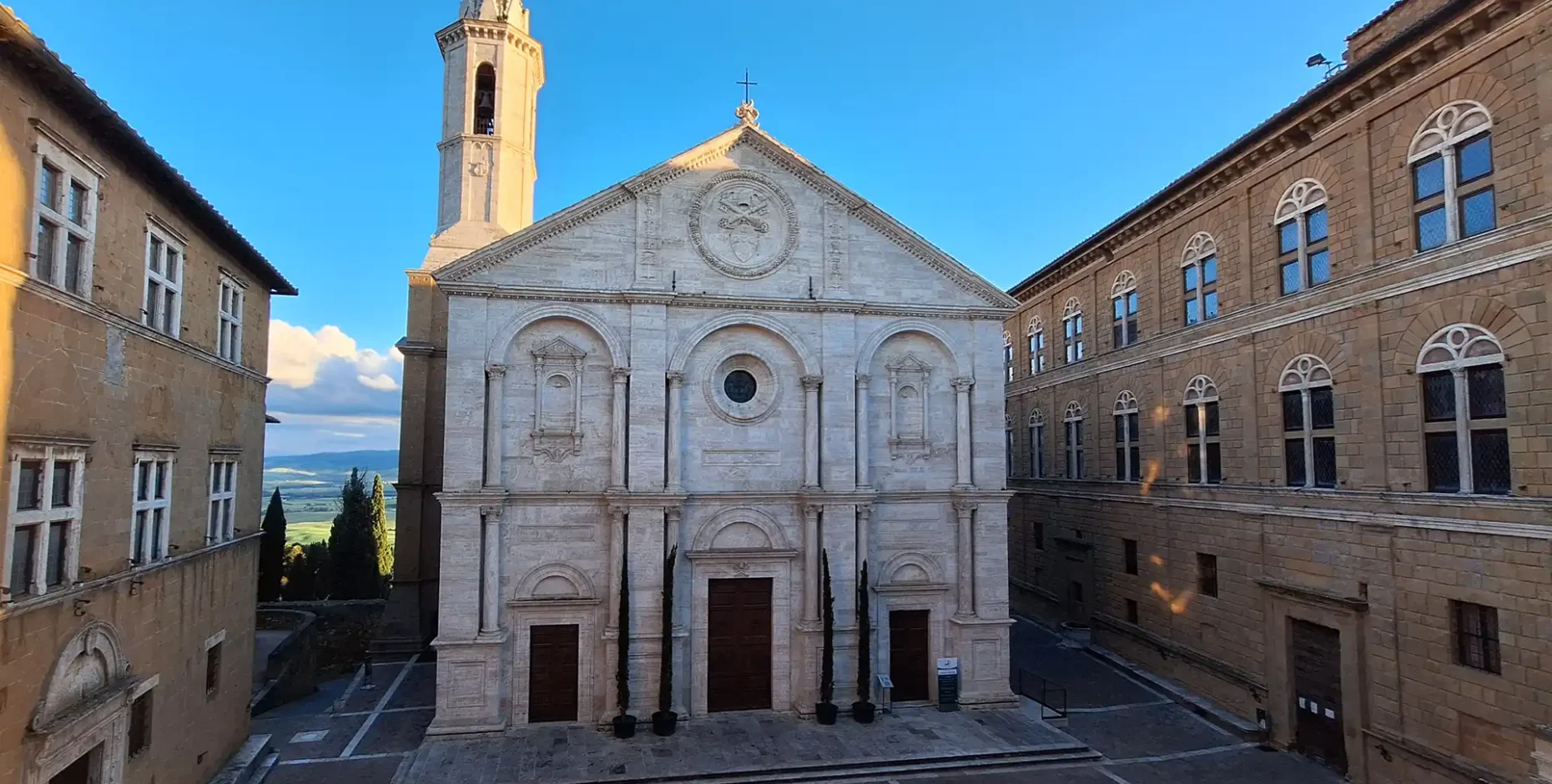
On the left-hand side of the Cathedral of Santa Maria Assunta is the entrance to what is now called the Cathedral Crypt. By going down two flights of steps, you come to the what remains of the medieval parish church dedicated to Saint Mary, in the Church of San Giovanni.
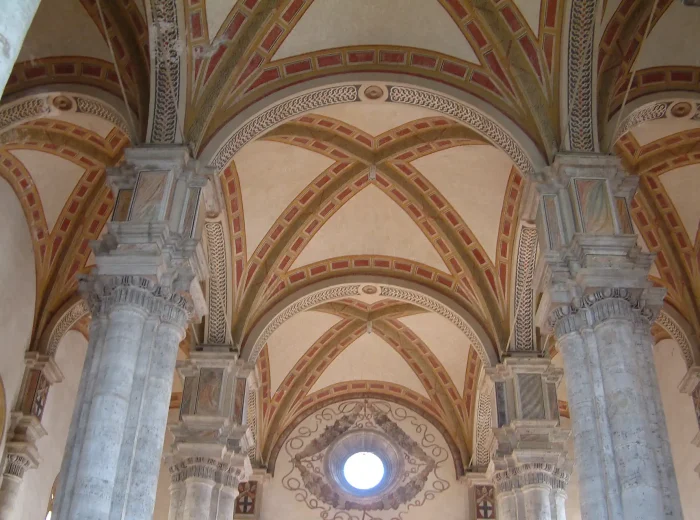
Visitors find themselves in a single, large room filled with works of art; starting from the right side, you will see several pieces attached to the wall, which were found during one of the most significant restorations, in 1932, including the architrave of the ancient portal, where scenes from the Old Testament are depicted. A glance along the wall reveals three Flemish tapestries from Audenarde (Belgium), portraying the stories of the prophet Daniel and the episode of Sophonisba and Massinissa, donated by Bishop Francesco Maria Piccolomini to the Cathedral in 1593. The visitor’s gaze shifts from the wooden choir to the beautiful illuminated pages of the graduals that Enea Silvio Piccolomini, Pope Pius II, had commissioned for the Cathedral of Pienza.
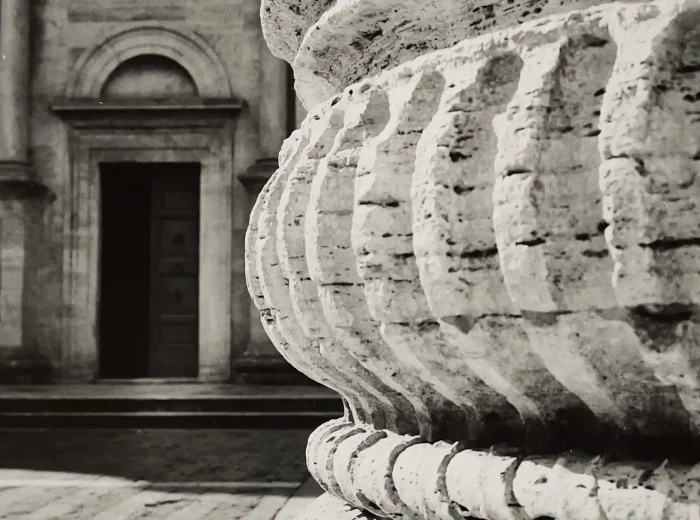
The visual journey ends with the baptismal font designed by Bernardo Rossellino and built by his workshop. It rests on a double circular base and features a large node with convex pod-shape decoration, very popular in this period, and acanthus leaves supporting the tabernacle culminating in the figure of Christ.
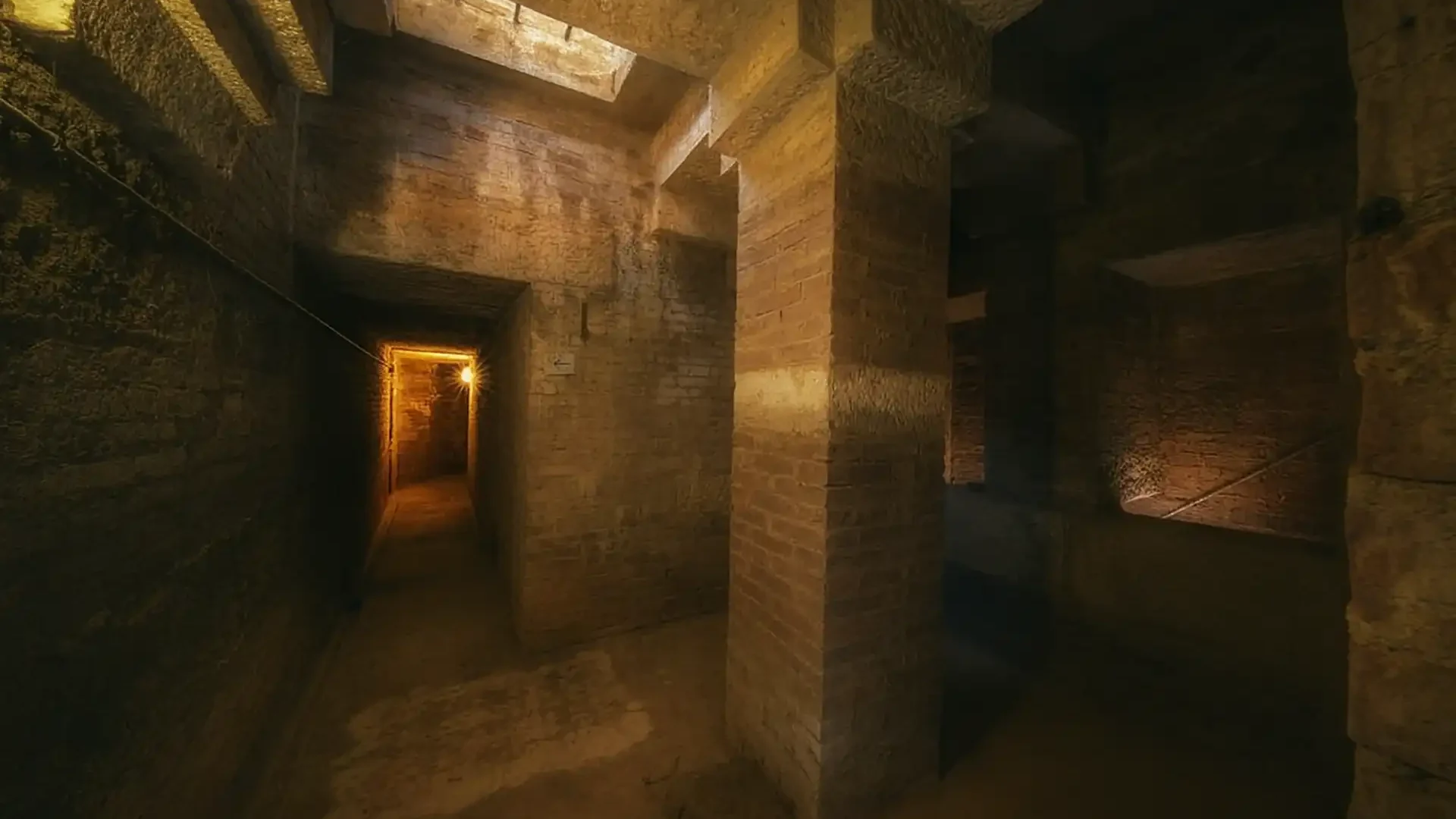
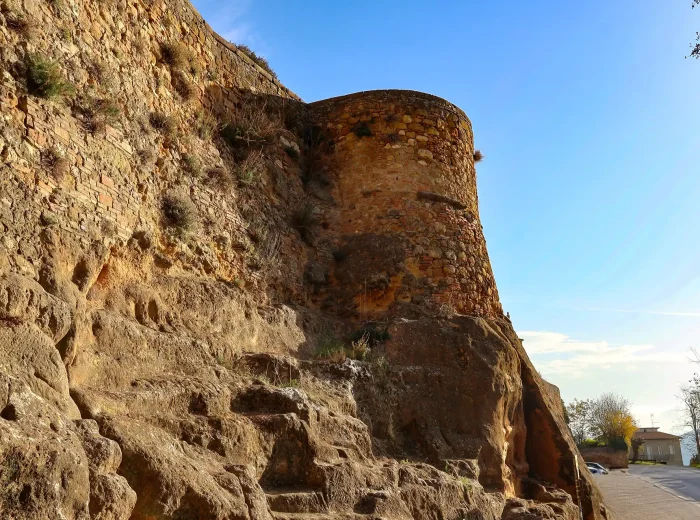
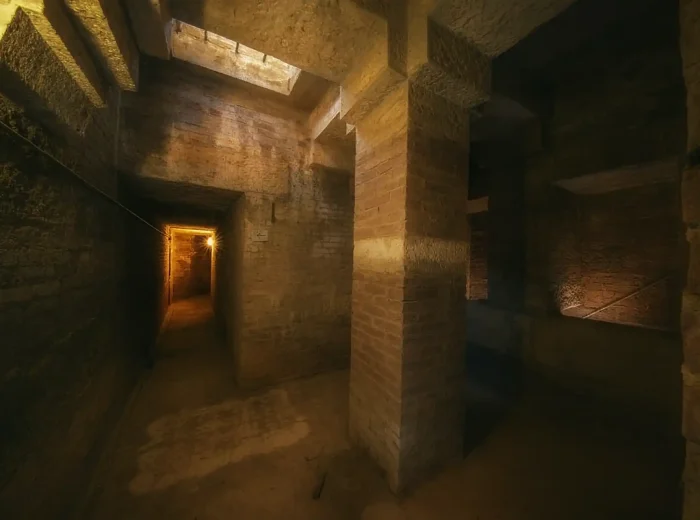
From the same large room, now known as the crypt, you descend into the labyrinth. The Labyrinth is composed of a series of tunnels built in the early 1900s to allow rainwater to drain away and to provide support for the apse of the Cathedral, which had already begun to collapse by the 15th century due to its enormous weight supported by extremely flexible sandstone.
Today, visitors can go down two levels beneath the large apse to admire some of the extraordinary work carried out at the beginning of the last century. The tunnels were dug all the way down to the valley below and end with a large wooden door that opens onto the Val d’Orcia, amidst the olive trees.