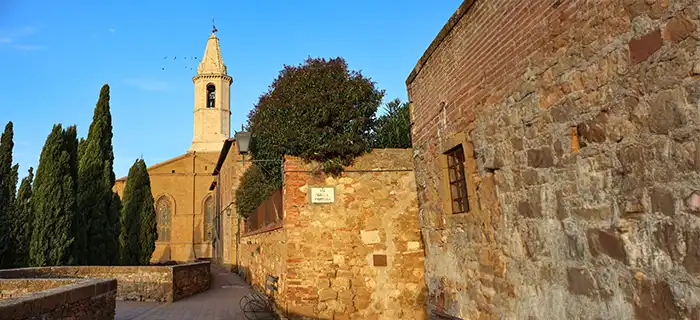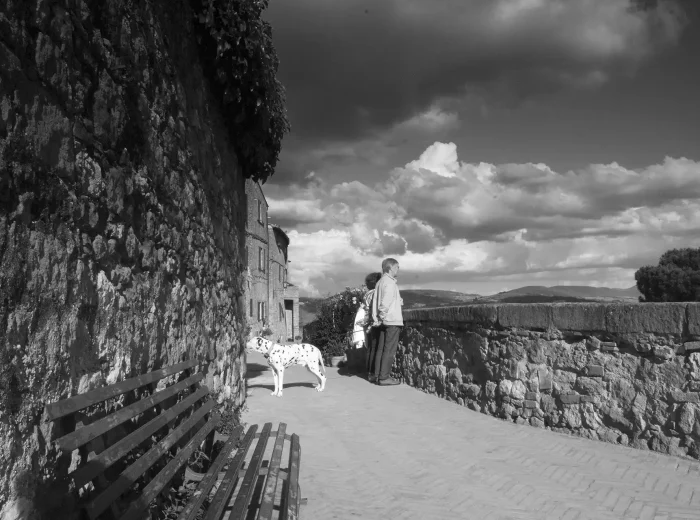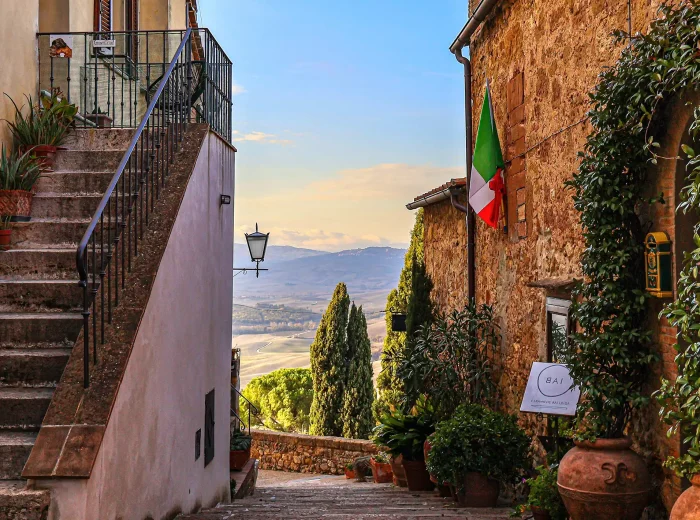
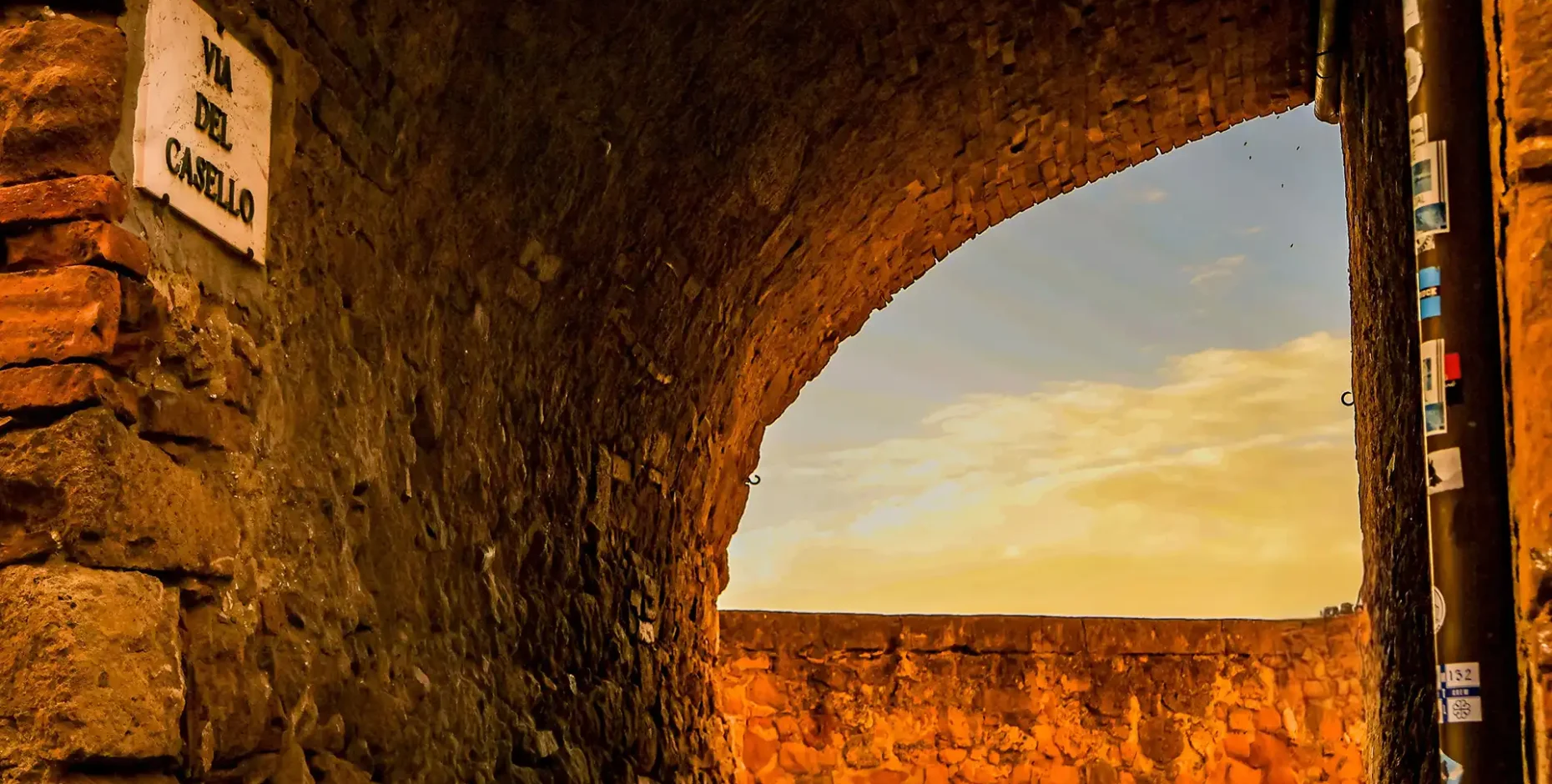
In Via del Casello, which overlooks the breathtaking Val d’Orcia landscape, with views of Radicofani, Monte Amiata and Montalcino, Largo Mario Luzi was inaugurated in 2012
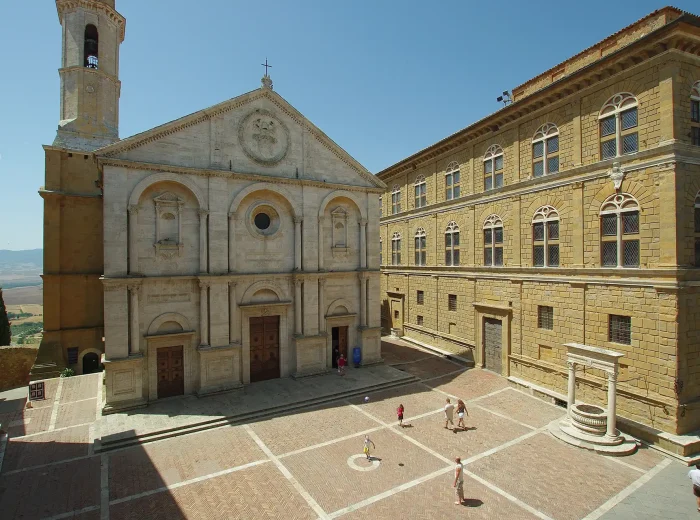
The poet, Mario Luzi, began visiting Pienza in the 1970s; he considered these places a source of inspiration, where the soul could find solace by losing itself in the beauty of the scenery. Pienza is also a town of poetry thanks to the poet’s love for these places and the precious Mario Luzi La Barca Study Centre located in Via San Carlo Borromeo. Today, it contains and preserves some of the masterpieces that the poet donated to the town, which has celebrated him since 2022 with the Poeti per Mario Luzi (Poets for Mario Luzi) exhibition, a high-level cultural event held inside Palazzo Piccolomini.
A plaque displaying some of the poet’s verses has been placed in the alley:
This grey land, smoothed by the wind across its ridges
As it gallops towards the sea,
in its herd huddled under the yokes
and the inland spurs, seen
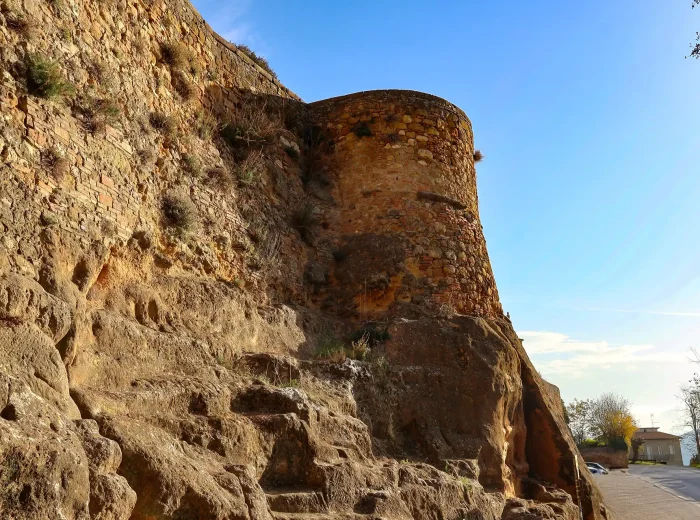
in the dizzying heights of the bastions, formlight, mysterious light years…
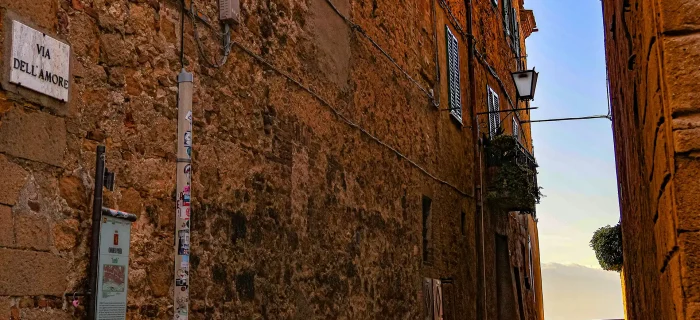
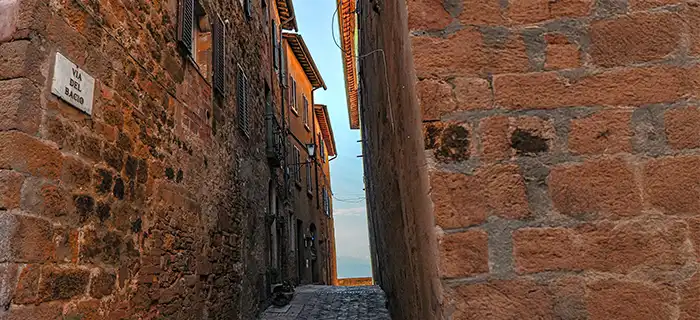
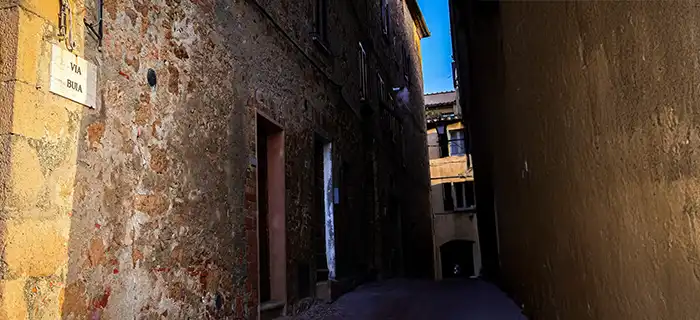
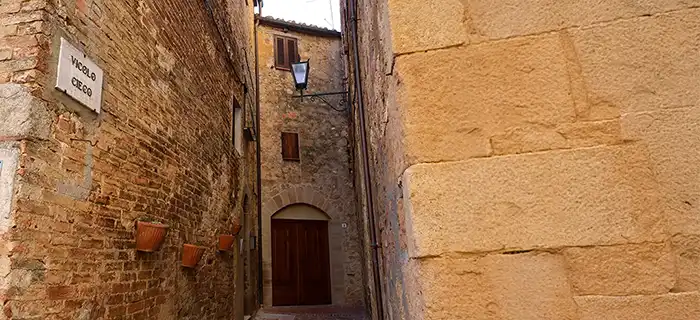
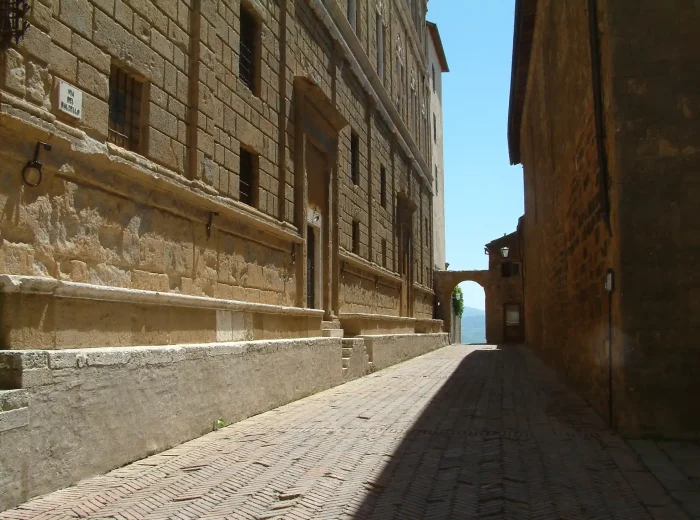
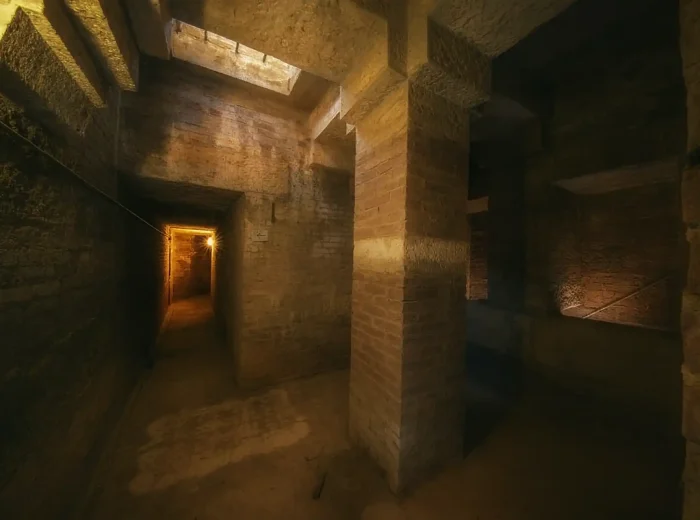
Vicolo del Casello is linked to Corso Rossellino by four evocative “little alleys”: Via della Fortuna (Street of Luck), Via dell’Amore (Street of Love), Via del Bacio (Street of the Kiss) and Via Buia (Street of Darkness). This unique area of the town is a destination for many tourists and certainly reflects the sentiment of love with which the Pope wanted to rebuild his ancient hometown, a sentiment well reflected in the words of Giovanni Pascoli: Pienza, “Born from a thought of love and a dream of beauty”. These little streets were not, however, the work of the humanist pope and didn’t get their unusual names until more recent times, giving the ideal town a romantic and magical appearance so dearly-loved by tourists from all over the world.
There are no publications or scientific texts that explain these romantic street names in the town. However, the Parish Bulletin, signed by Don Armando Faneschi on 15 August, 1954, possibly explains the use of these unique names.
The priest claims that it was a mayor of Pienza who chose the names of the streets: “One day […] he was the one who, in memory of this adventure of his […], stuck these names on these walls”.