The Corsa di Pio
Don’t be surprised to see runners wearing jute tunics racing through the streets of Pienza on the third Sunday in September.
This just means that the race known as Corsa di Pio is taking place. It is an event that the Regional Authority has recently included in the calendar of historical reenactments in Tuscany and it is funded by the Ministry of Culture’s fund for historical reenactments.
The Historical Reenactment
It is about acknowledgements that certify the validity of the event, which has noble historical origins. For the inauguration of Pienza, the ideal Renaissance town, it was Pope Pius II himself, the architect of its design and construction, who wanted the ceremony to be accompanied by a festive atmosphere and, above all, by games open to the entire population.
The 1462 precedent
As reported in the chronicles of the time, on 21 September 1462, for the Fair of San Matteo, already deeply heartfelt and celebrated by the inhabitants of the old village of Corsignano, the challenge included a horse race, a donkey race and a race on foot for adults and youths. As he reported in his Commentaries, Pius II himself (born Enea Silvio Piccolomini, born in Corsignano, the small village later transformed into the town of Pienza) watched all the games from a window in his palace, experiencing great enjoyment and pleasure.
The Corsa di Pio Today
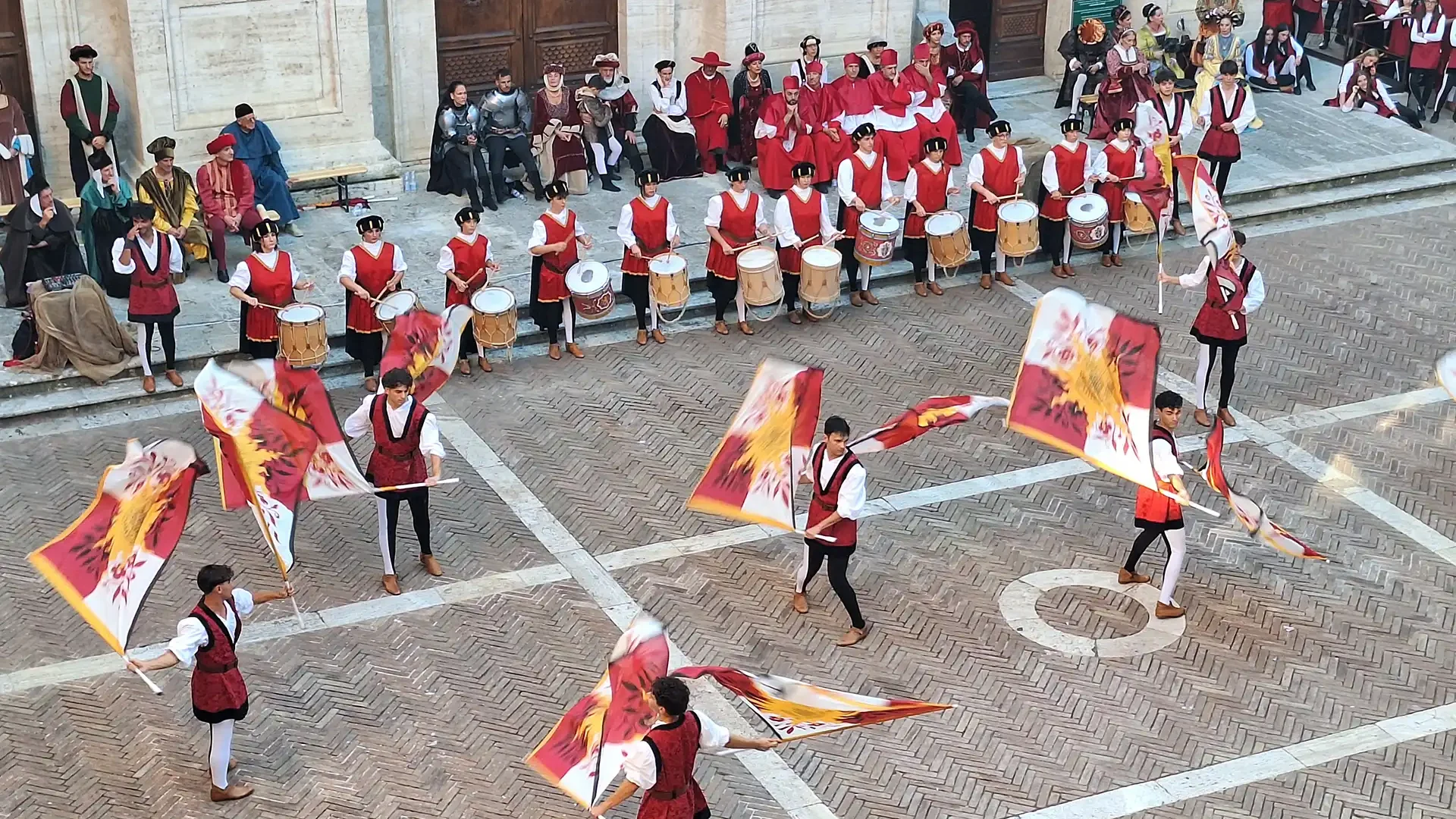
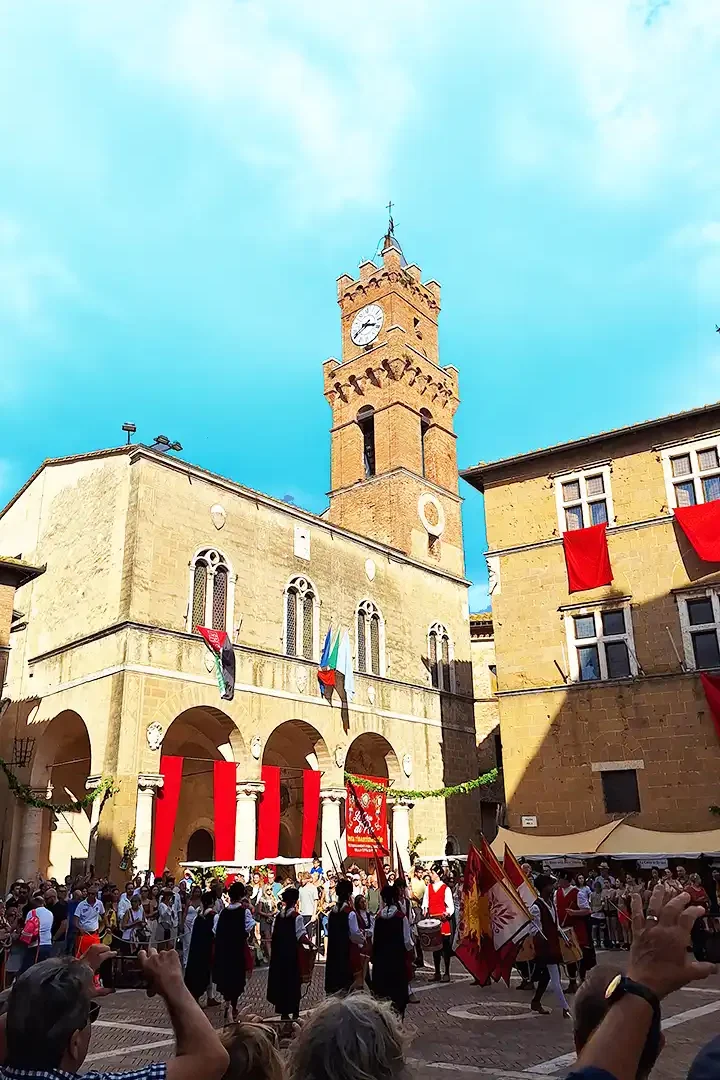
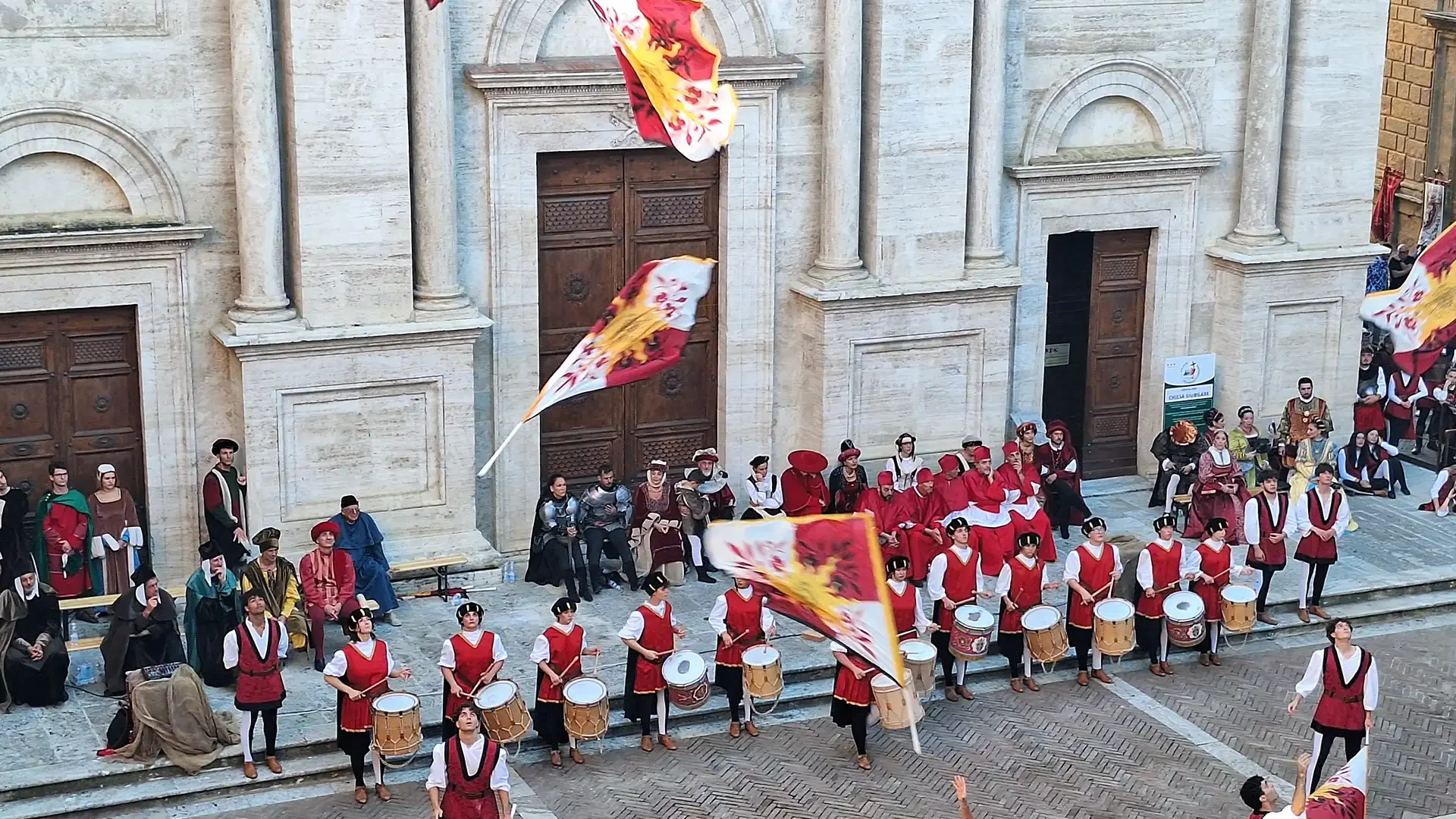
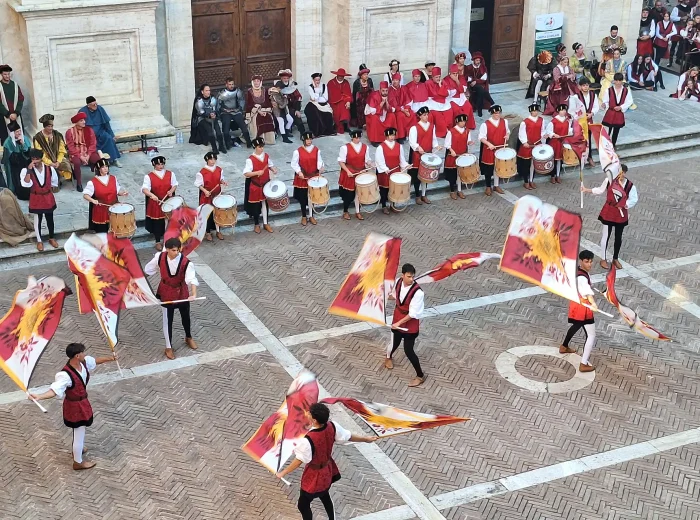
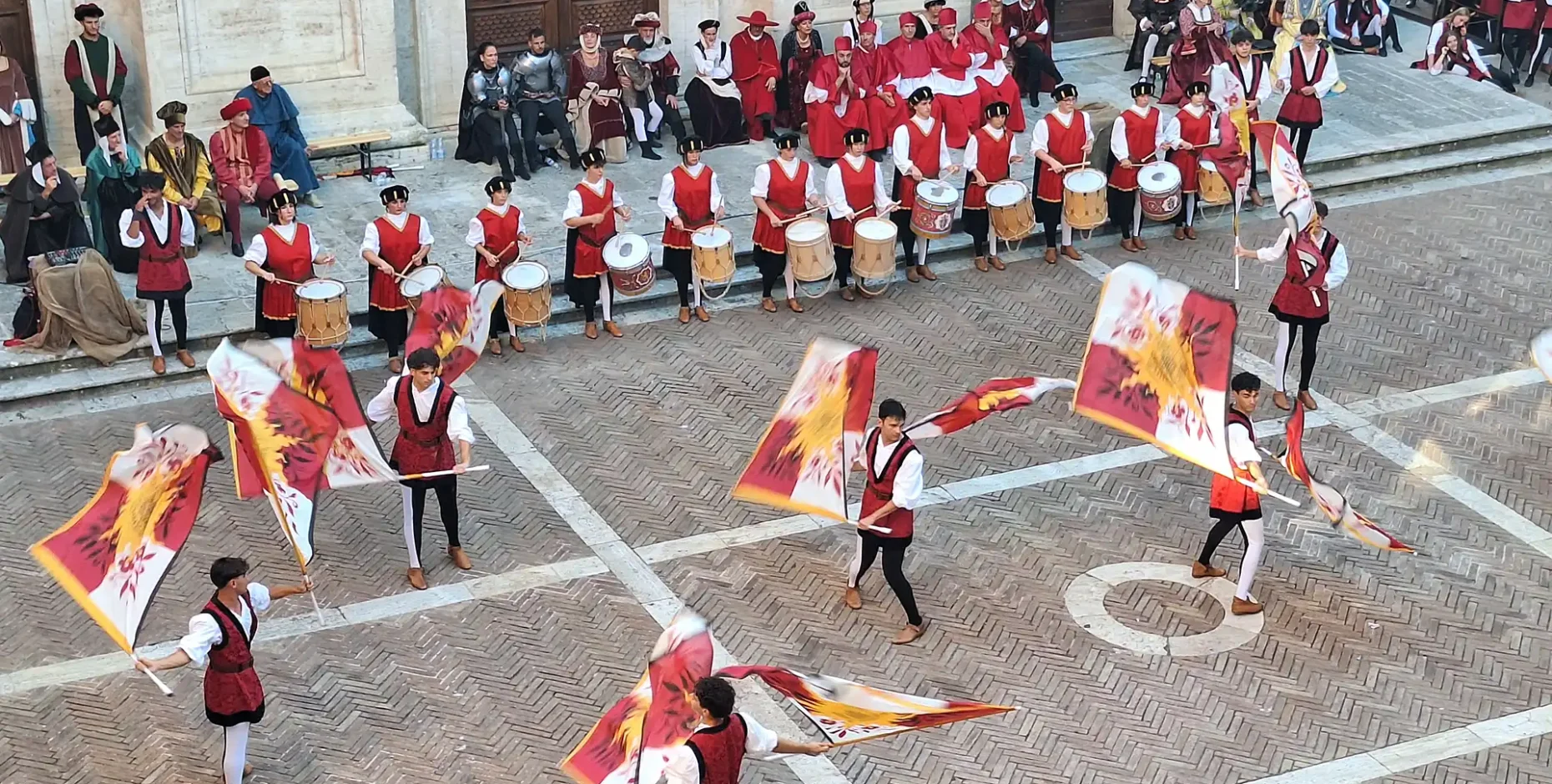
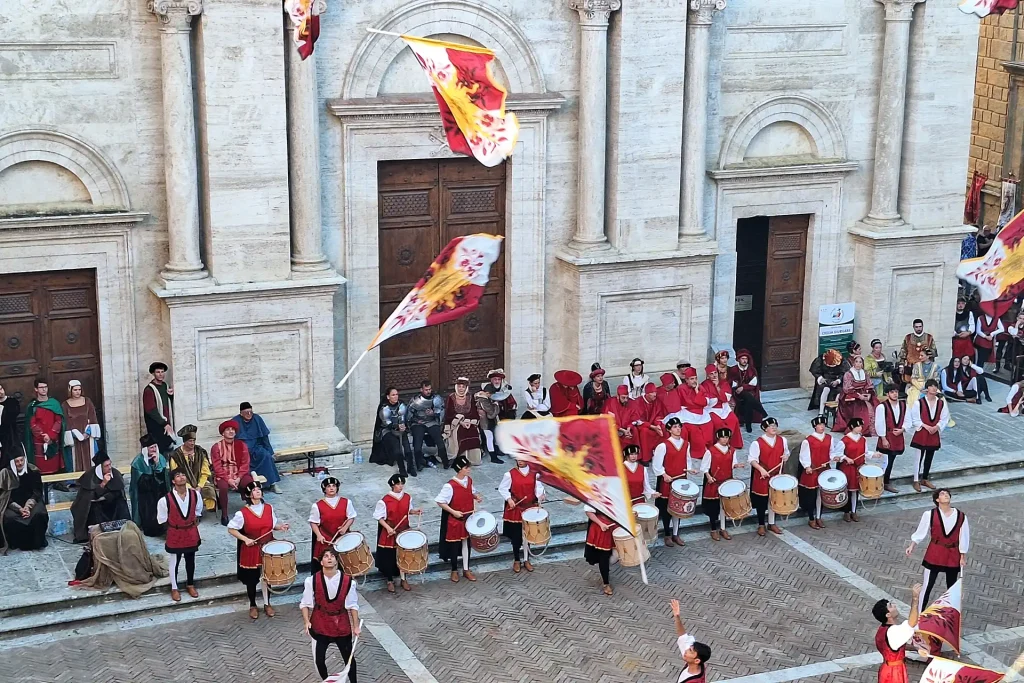
Today, the Corsa di Pio race is part of a rich commemorative event held during the weekend closest to 21 September. The anticipation of the eve of the race, with banquets and a fair in costume, street performers and falconry shows and the much-applauded performances of musicians and flag-throwers, culminates in the actual race on Sunday afternoon. It may be the only one of its kind in the world based on the succession of movements, concentrated within a few metres, between the Renaissance palaces and the foothills of the Val d’Orcia countryside. Competitors are divided into categories: children, youths and adults, who have to cover different distances. All runners are required to wear a tunic that evokes the period of the Renaissance race.
Historical elements
The scene of Pius II, played by an extra, looking out of a window in Palazzo Piccolomini and giving the go-ahead for the adults’ race to start, arouses a great deal of curiosity and even a certain intrigue. The prize-giving also respects history: the competitors from Pienza, legitimate heirs of the 15th-century inhabitants, are awarded artistic terracotta reproductions of geese, precious farmyard animals, the live version of which were given to the competition’s protagonists six centuries ago.