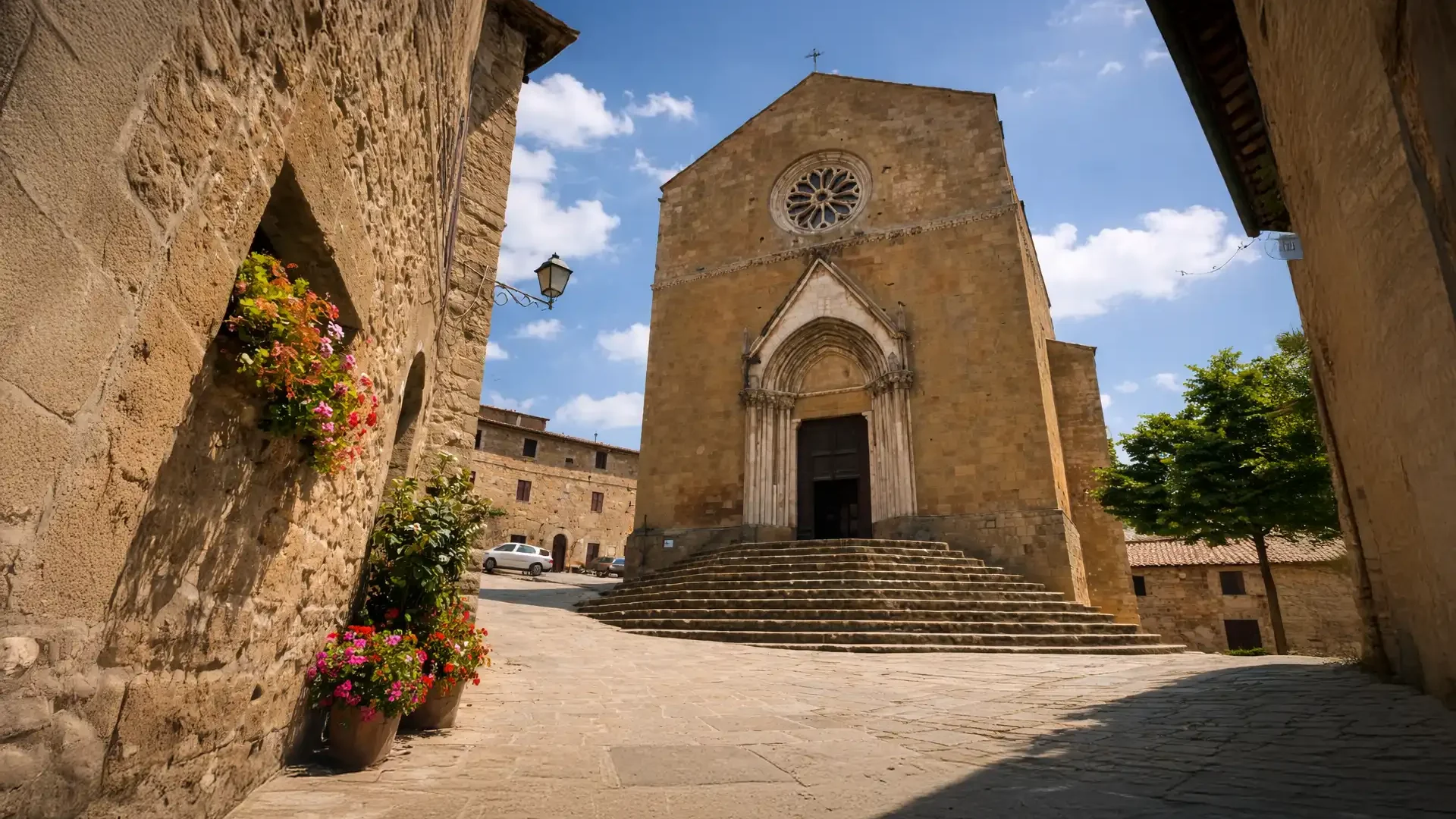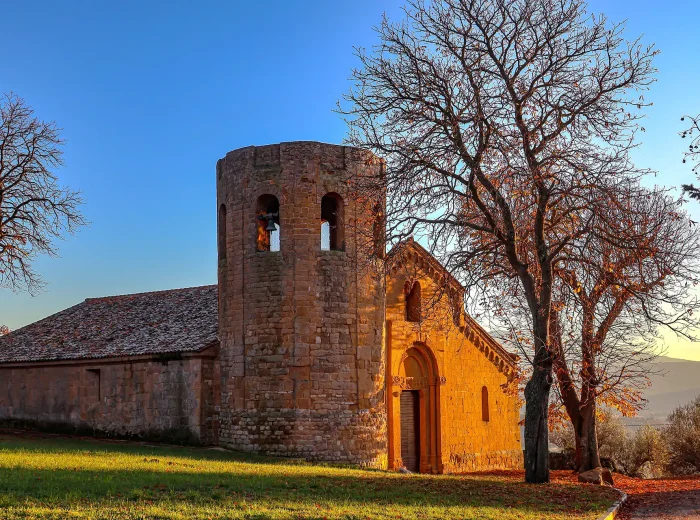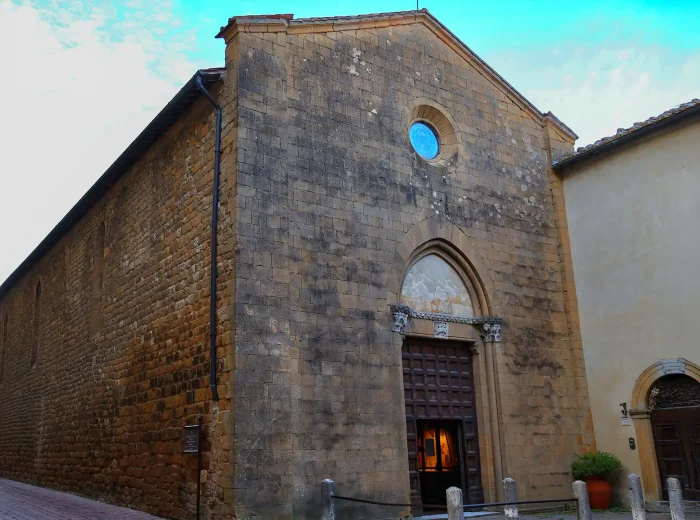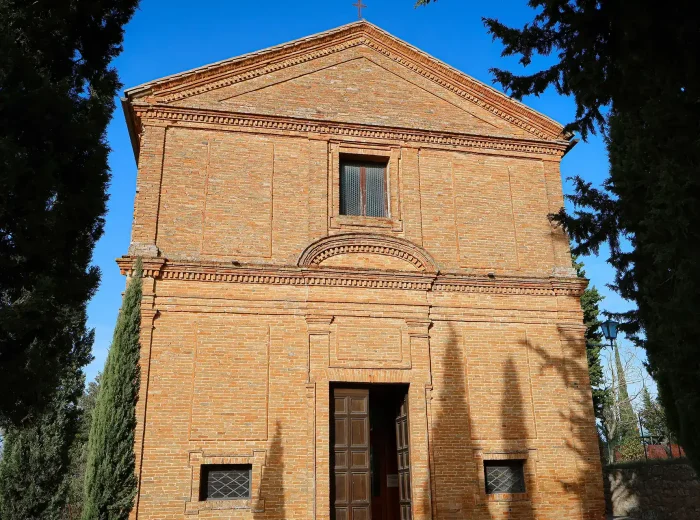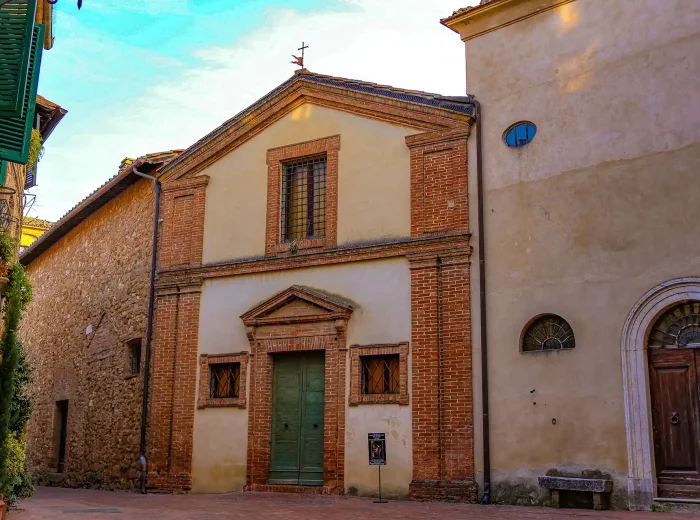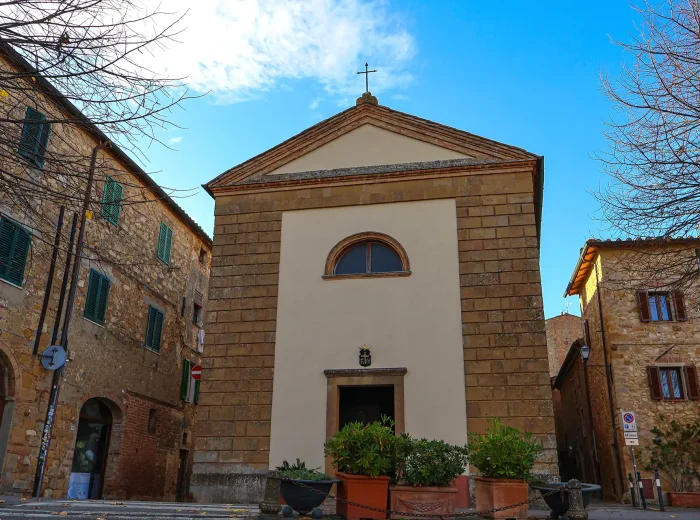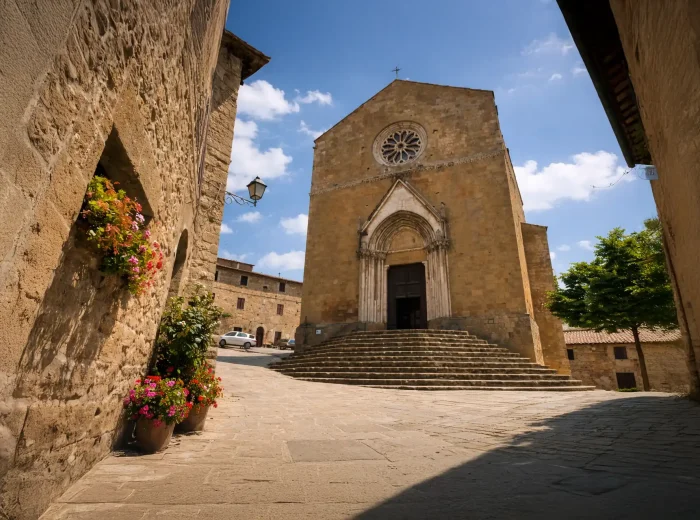
The Provostal Church of Santi Leonardo e Cristoforo, also known as the Parish Church of Santi Leonardo e Cristoforo, is an important place of worship of medieval origin located in the village of Monticchiello.
It stands in the highest part of the village, in a dominant and scenic position, and can be reached via a steep flight of steps.
The building dates back to the 13th century and was constructed in late Romanesque-Gothic style. It was built at the end of the thirteenth century, in a period of great expansion of the village, which was under the dominion of the Republic of Siena at that time. The date of 1292 engraved on the bell is generally attributed to the consecration of the church. The building was originally dedicated to St Leonard of Limoges.
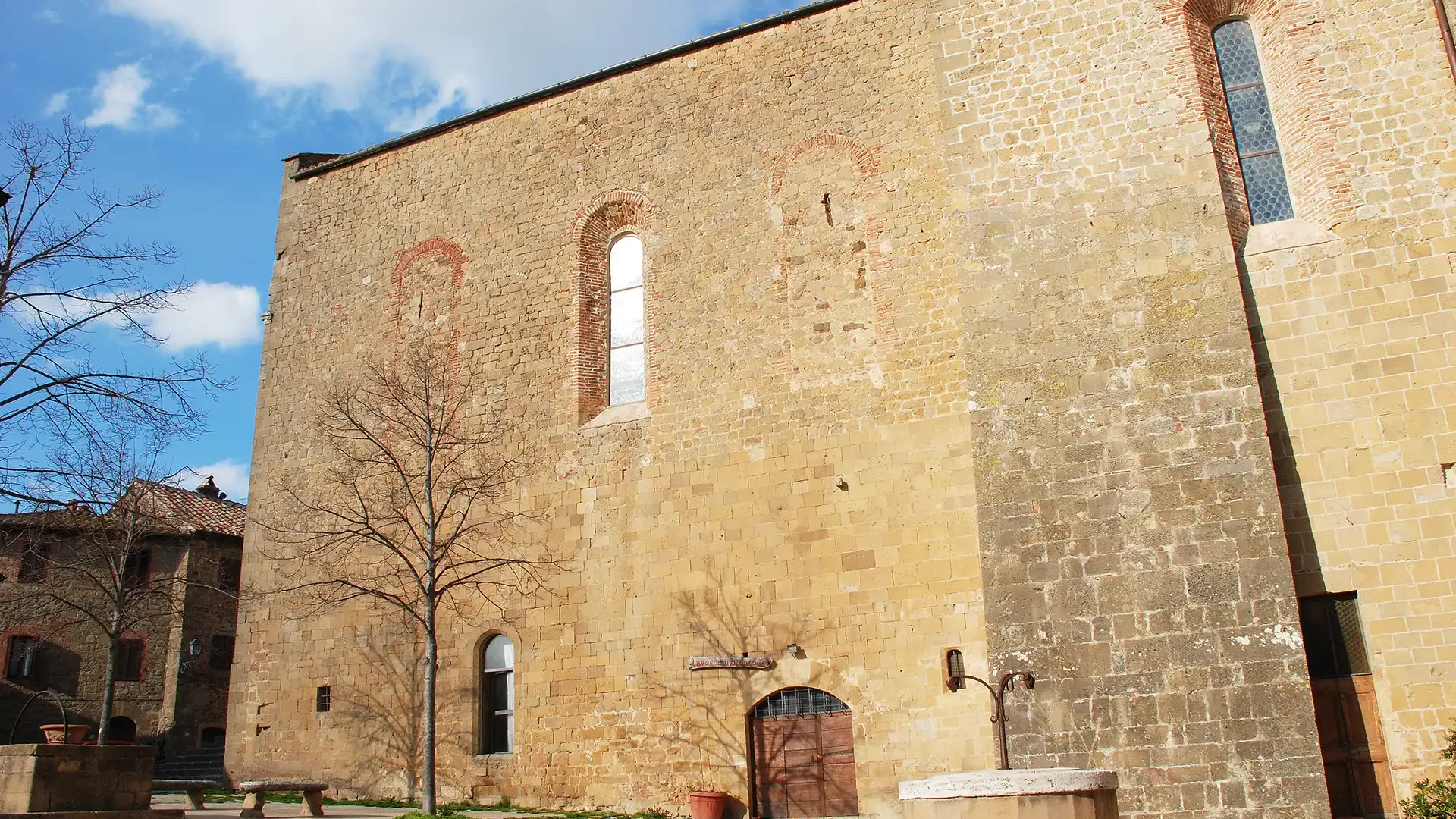
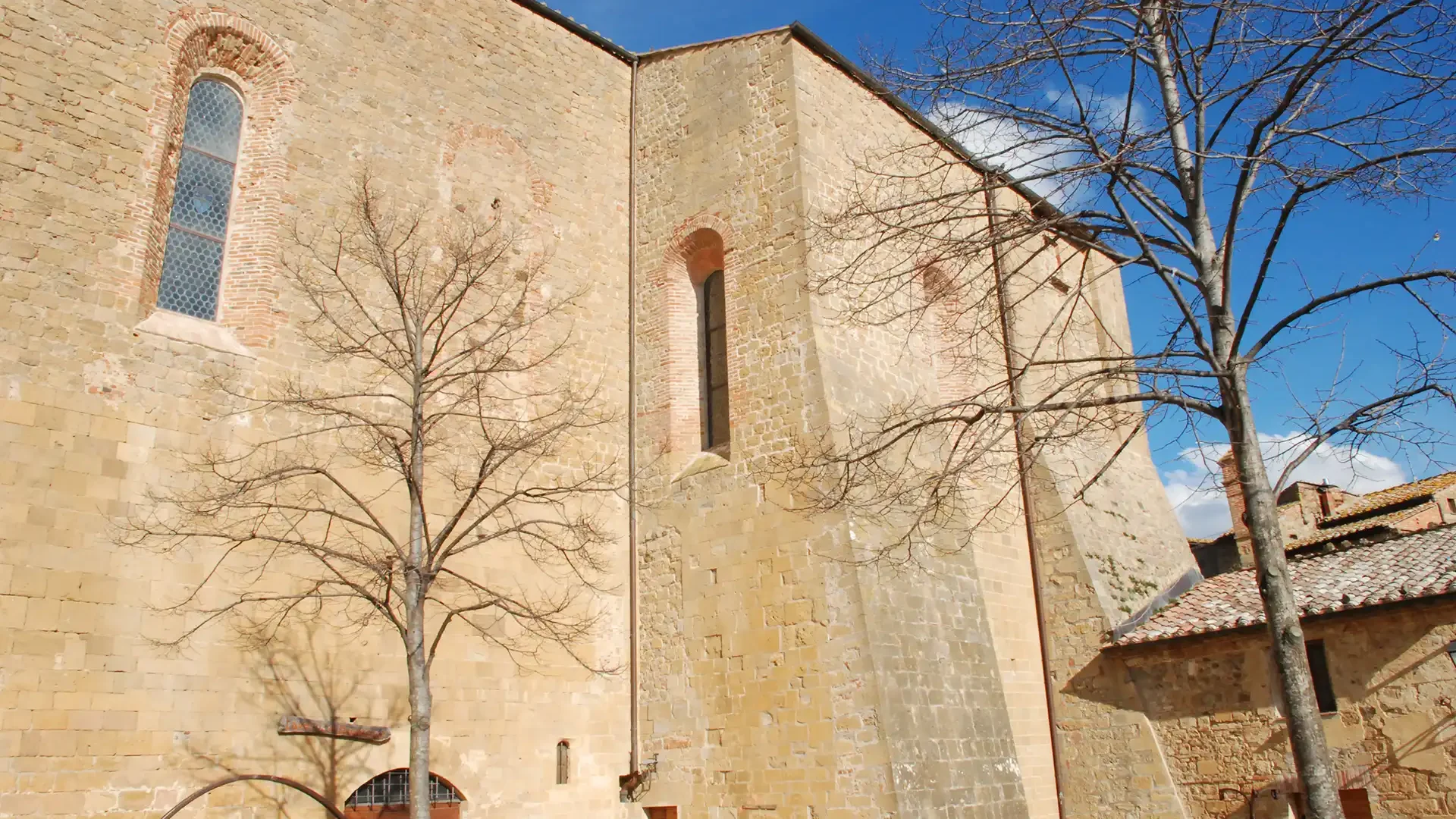
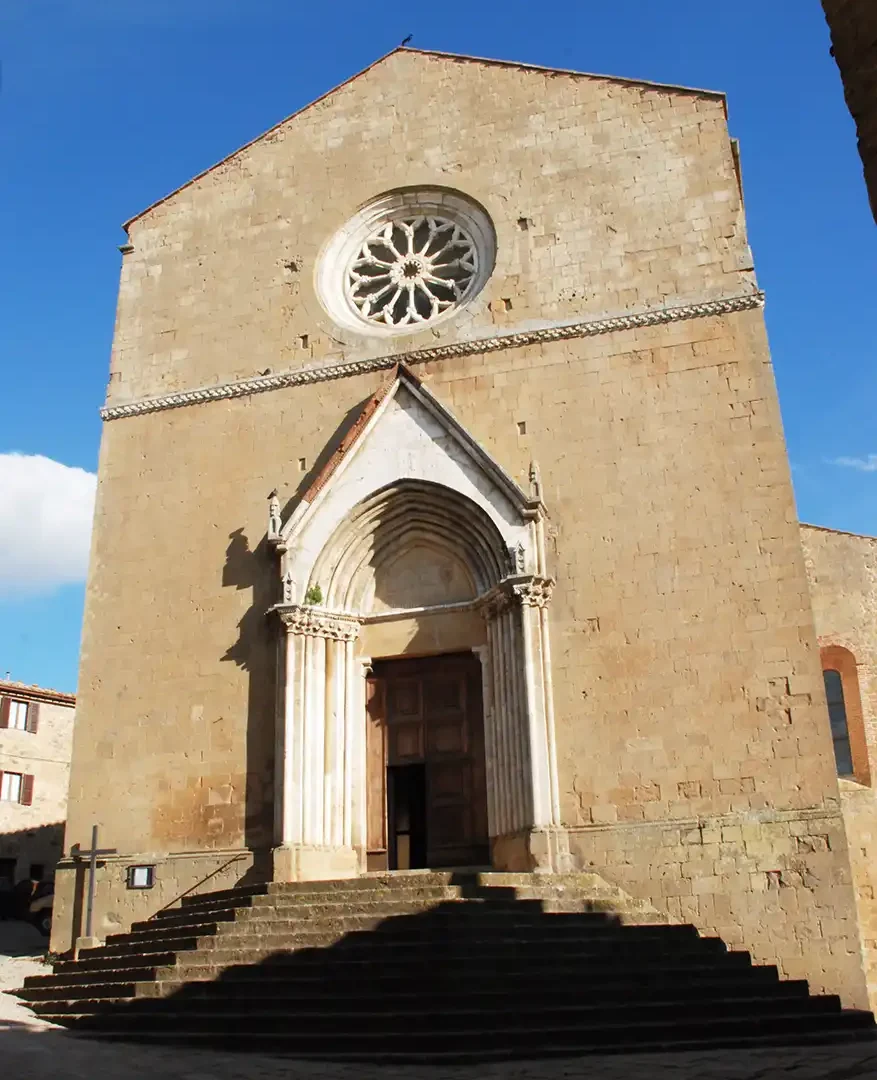
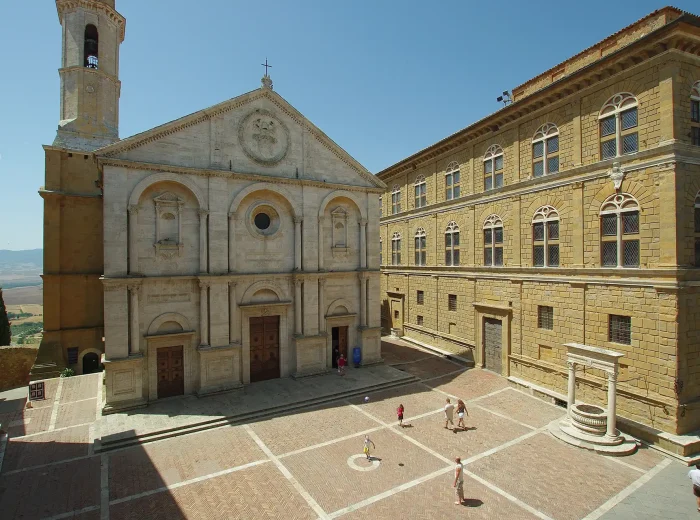
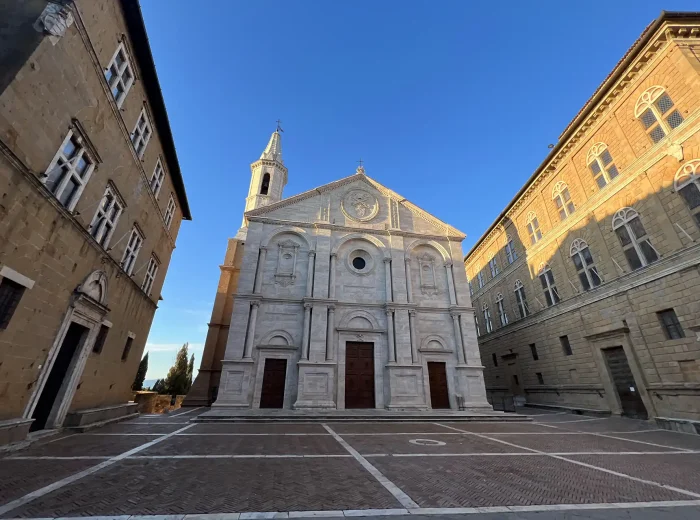
The church has a “T-shaped” (tau cross) floor plan , with a rectangular apse oriented towards the east and side chapels, an architectural solution that testifies to the phase of transition between Romanesque and Gothic. Its exterior is simple and solid, featuring high walls made of local sandstone and plain decoration; the most elaborate element is the façade, which is well proportioned, with a central rose window and a Gothic portal.
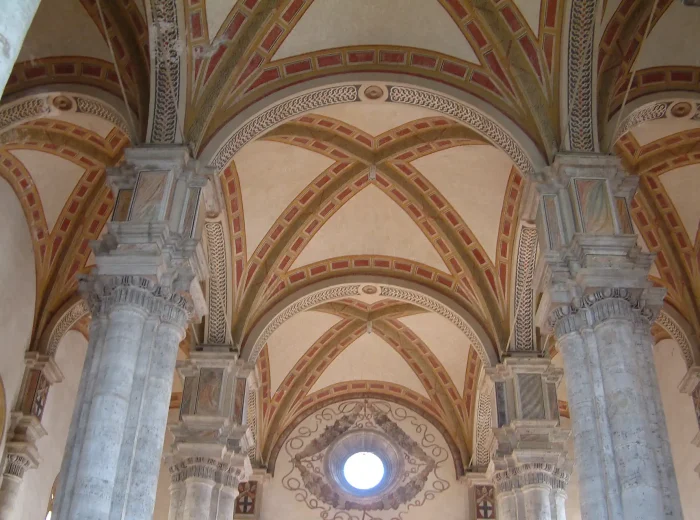
The architectural layout is reminiscent of iconographic models imported to Italy by the Cistercian monks, albeit with simplifications for economic reasons, like a single nave and the use of vaults only in the side chapels. There are numerous similarities between this church and the Abbey of San Galgano in Chiusdino, particularly in the ribs of the vaults and in some of the decorative elements.
Inside, the church is divided into a single nave with a transept and side chapels. It contains fourteenth-century frescoes by the Sienese school, which have been partly restored and depict sacred episodes like the life of St Catherine of Alexandria and other religious scenes. One of the best known frescoes is that of Saint Christopher, created with colossal dimensions, about five meters high, carrying the Baby Jesus on his shoulders. On the left-hand wall of the choir, there are also two particularly interesting frescoes depicting the theme of Confession, a very rare subject in medieval painting.
In the second half of the eighteenth century, the interior of the church was profoundly transformed: the work was concluded in 1797 with the construction of an impressive main altar, the plastering of the walls and the subsequent covering of the frescoes, as well as the insertion of composite columns to divide the spaces. Renovation work carried out by the Superintendence of Monuments of Tuscany in 1933 brought the building back to its original appearance and brought the frescoes to light, albeit in some cases only partially, like the fragment of a Maestà, which can be seen in side altar compartment.
The presence of important works of art, in the past, is also documented, including the Madonna di Monticchiello by Pietro Lorenzetti, now kept in the Diocesan Museum of Pienza. The work, dating back to around 1325, was originally located in the right-hand chapel of the transept. It was stolen on 10 February 1965, but was found the following day in Florence; it was later restored and is now kept in Pienza. In addition to this, there were other panels attributed to artists of the medieval Sienese school.