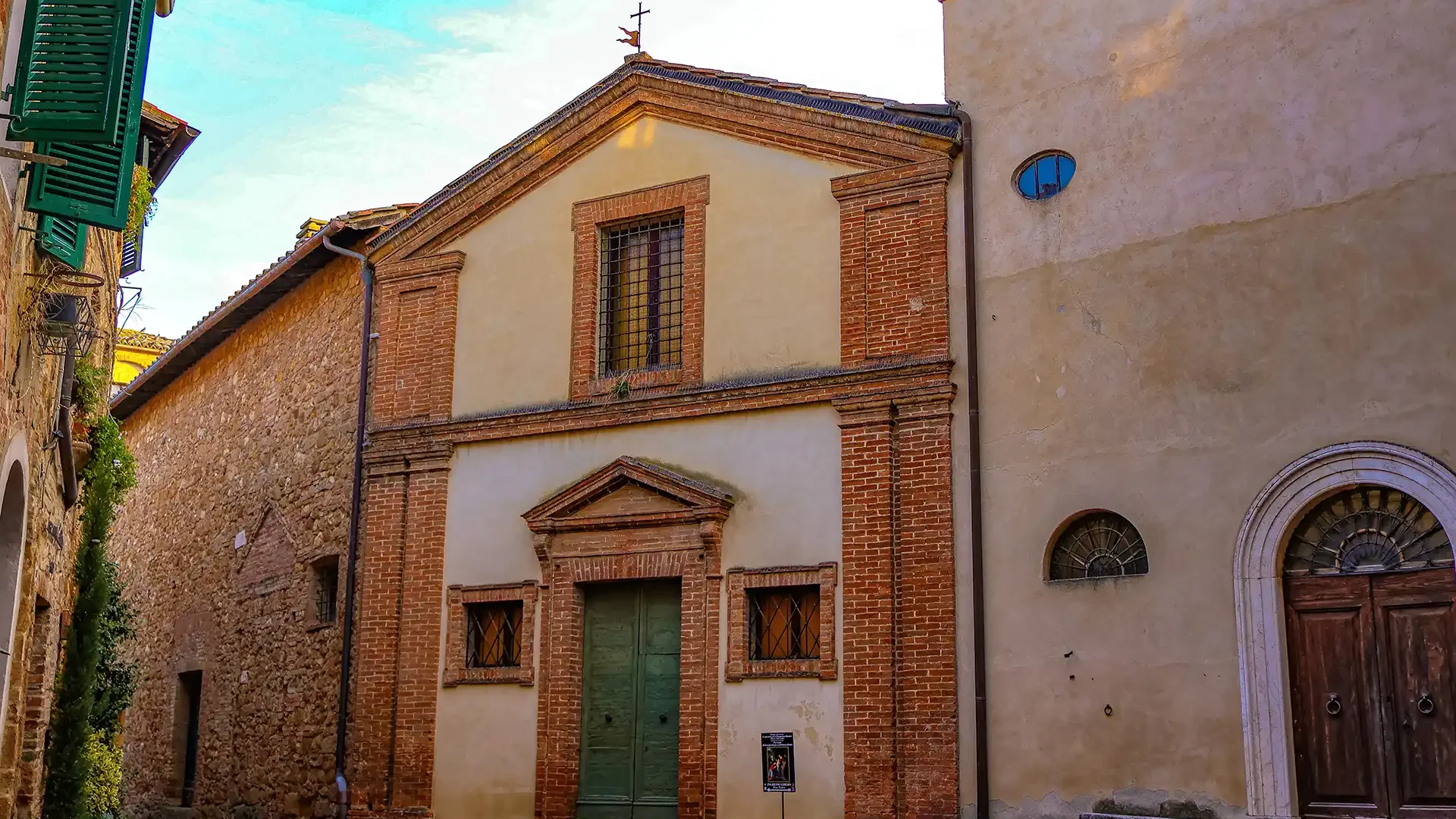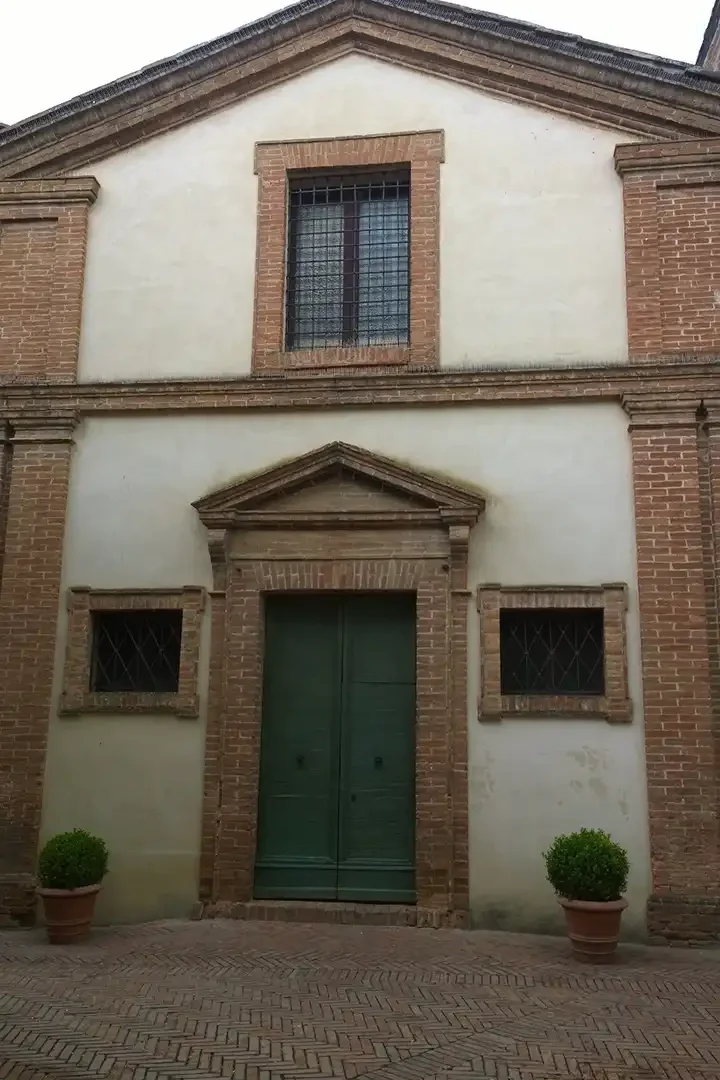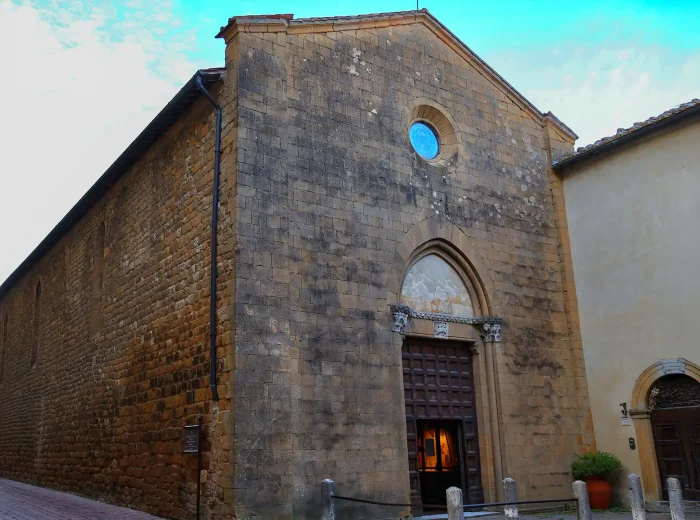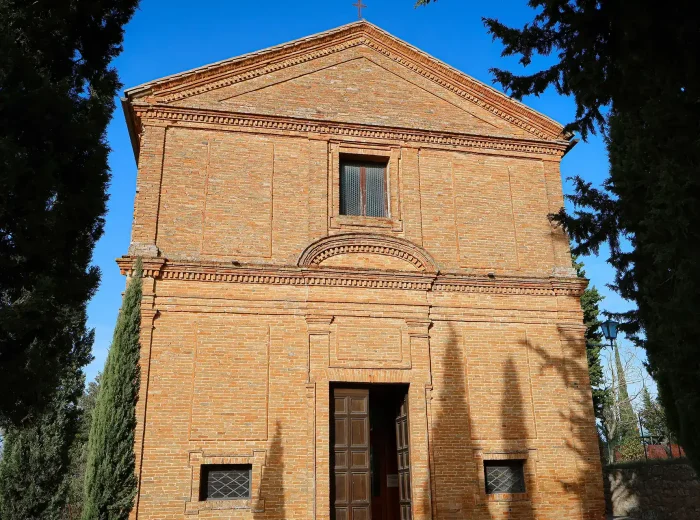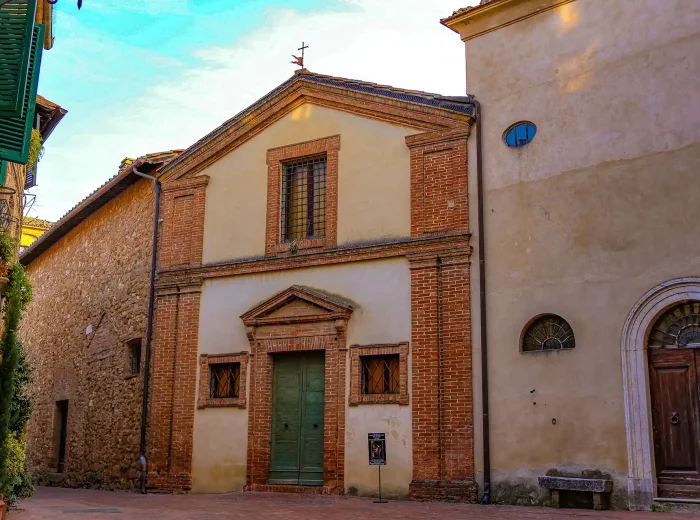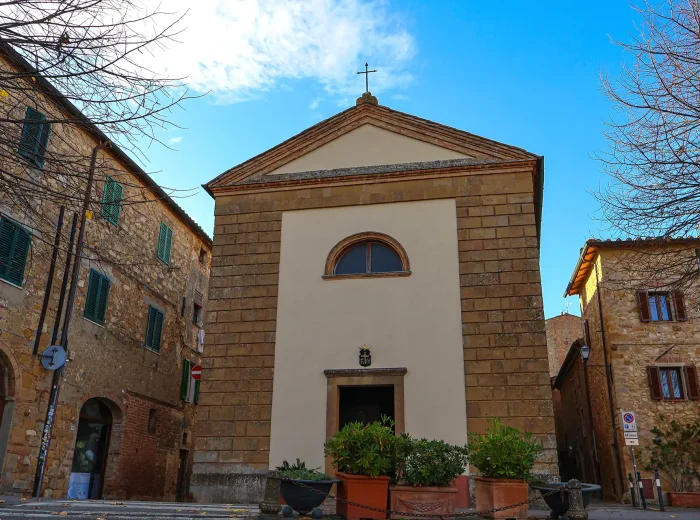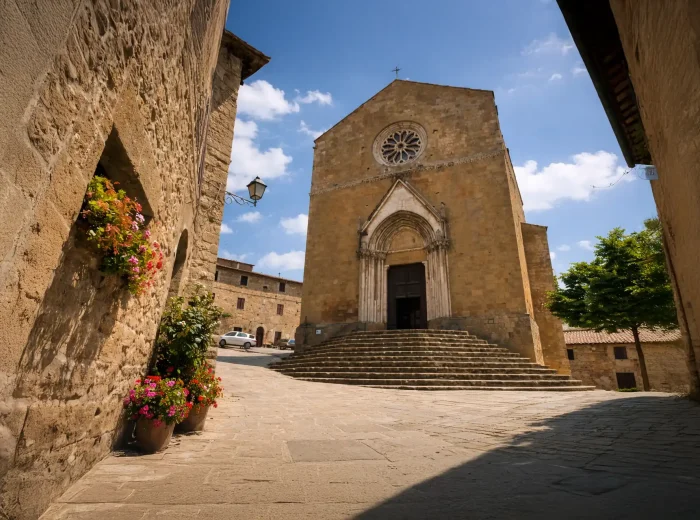
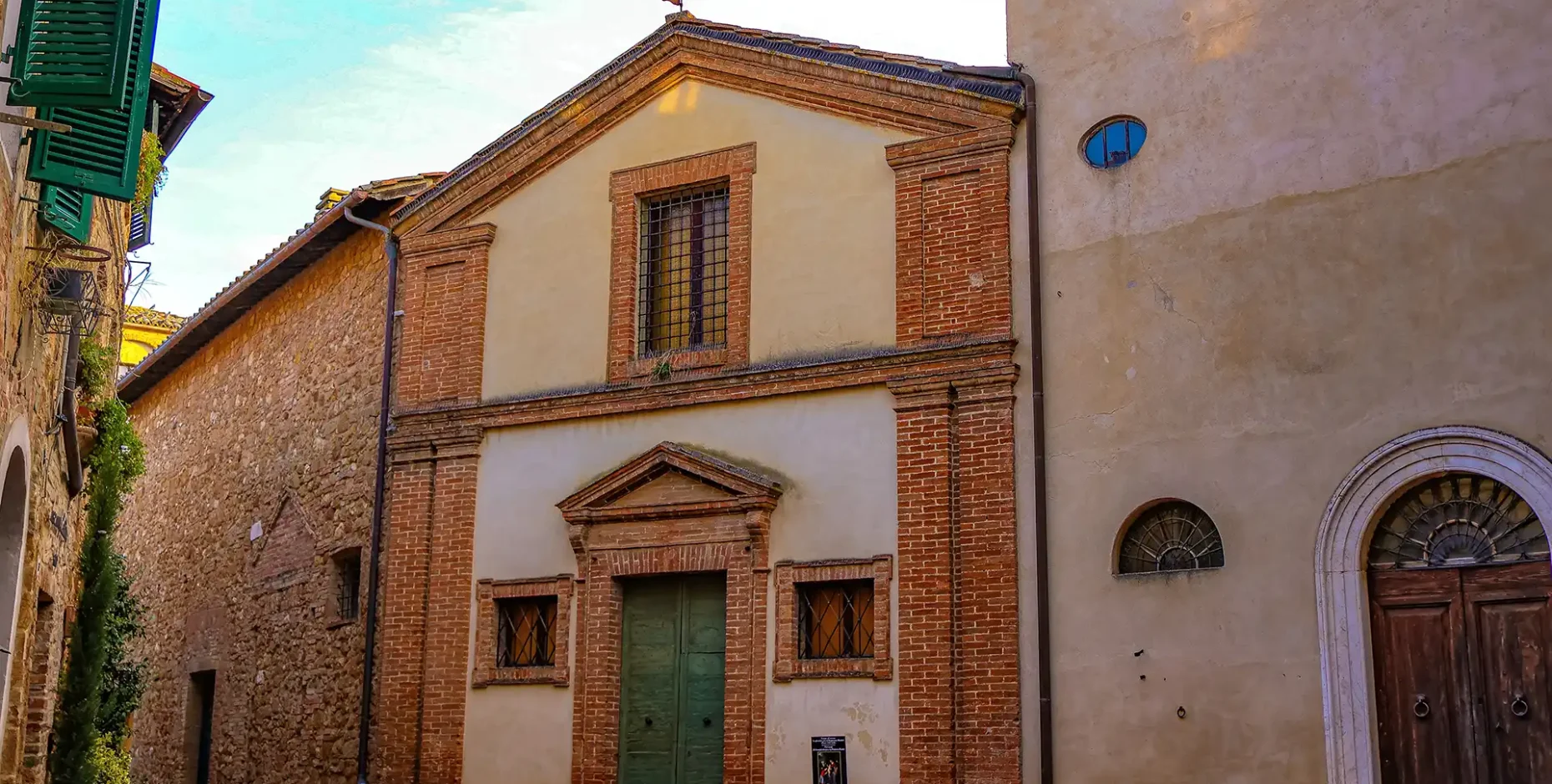
The Church of San Carlo Borromeo in Pienza is an interesting sacred building of historical origin, located in the heart of the village and an integral part of the ancient Conservatory of San Carlo Borromeo.
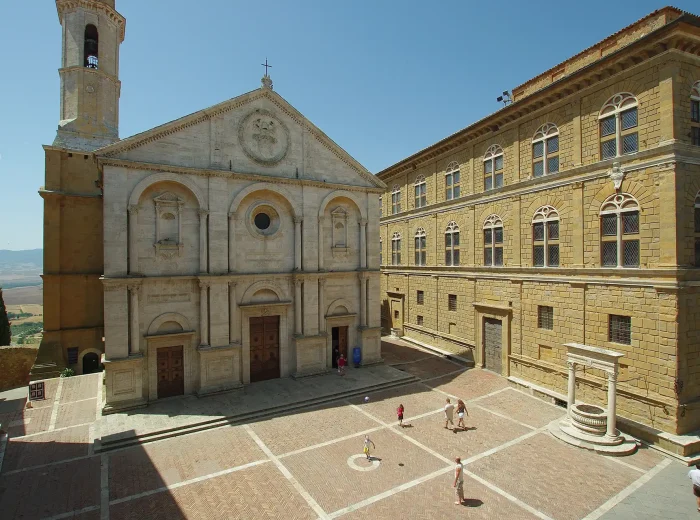
It is easy to get to on foot from the historic centre and is located close to areas of great significance, like Piazza Pio II and other Renaissance monuments in the town.
The origins of the complex date back to the 14th century, when a hospice for pilgrims and sick people was built on the walls of Corsignano (Pienza’s ancient name). Over time, the building’s function changed: with the papal bull released by Urban VIII on 5 January 1634, it became a Conservatory for the nuns of the Augustinian order, taking on the name of San Carlo Borromeo.
In 1787, by decree of the Grand Duke of Tuscany, Leopold I, the complex was transformed into a boarding school for girls and also included a school for local girls. Then, in 1930, it became an Institute of Higher Education, to which men were also admitted.
The church, which is part of an institution founded in Pienza in the seventeenth century and enlarged in the centuries that followed, is historically linked to educational and religious goals. The complex was connected to the town’s ancient medieval walls and towers, entering the urban expansion beyond the original fortifications of Corsignano.
Externally, the church has a simple façade, typical of the small but very charming town churches.
Inside, there is an altarpiece of considerable artistic value, attributed to Francesco Rustici, known as il Rustichino (active in the first decades of the 17th century). The painting portrays a Holy Conversation with the Virgin Mary and Child and various saints and it is considered an important example of Sienese Caravaggesque naturalism.
After a safety intervention, the church was reopened to the public in December 2024, thus returning one of the most fascinating and lesser-known places of worship to Pienza.
Entry is free, making it an ideal place to stop at during a visit to the town, especially for lovers of sacred art and painting in quiet and authentic spaces. The Church of San Carlo Borromeo is a significant example of “minor” sacred art but one of great importance in Pienza’s historical and artistic framework. It contains one of the most important pictorial works in the area from the first decades of the seventeenth century and, through its complex, it narrates the religious and educational history of the town.