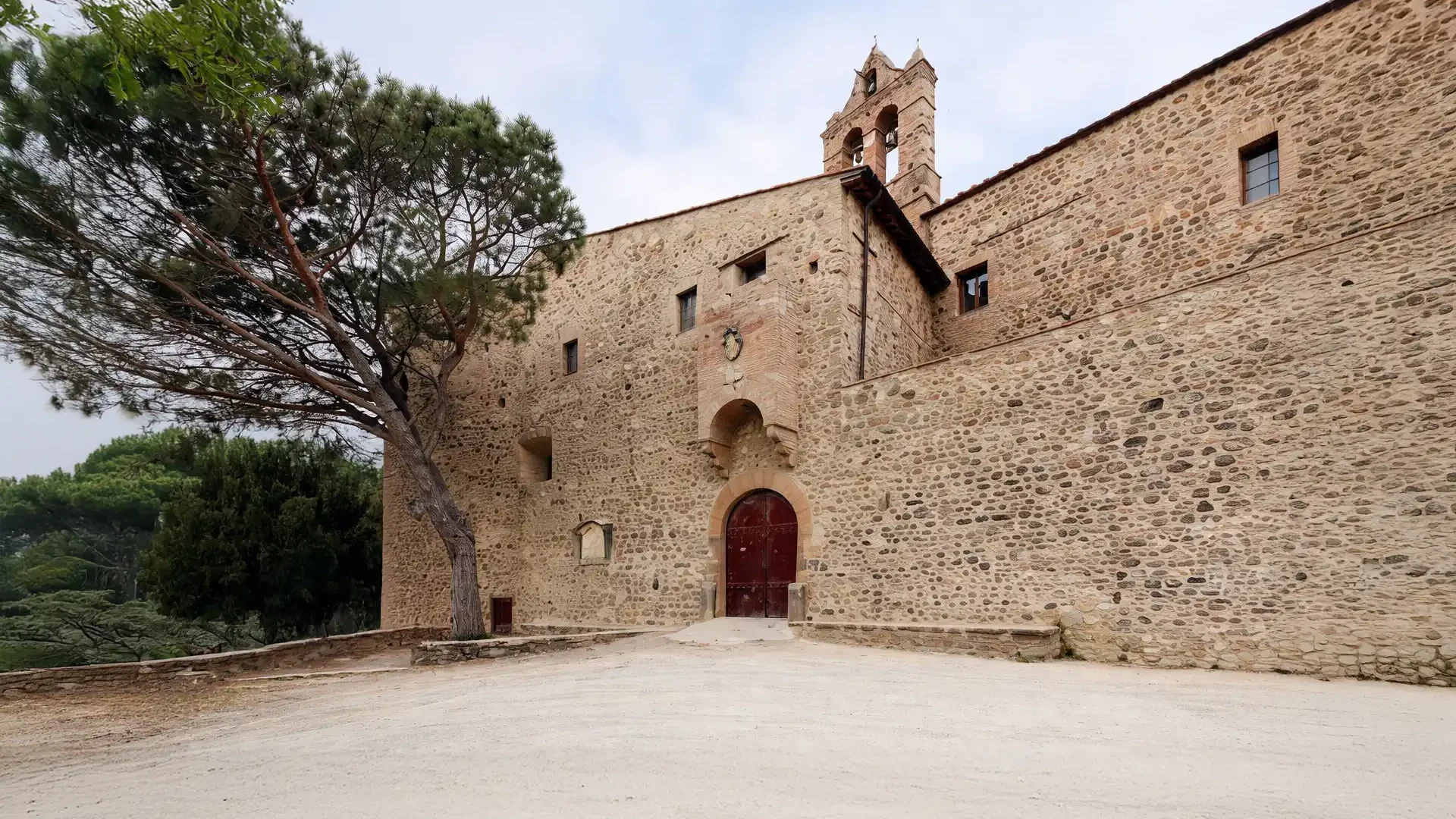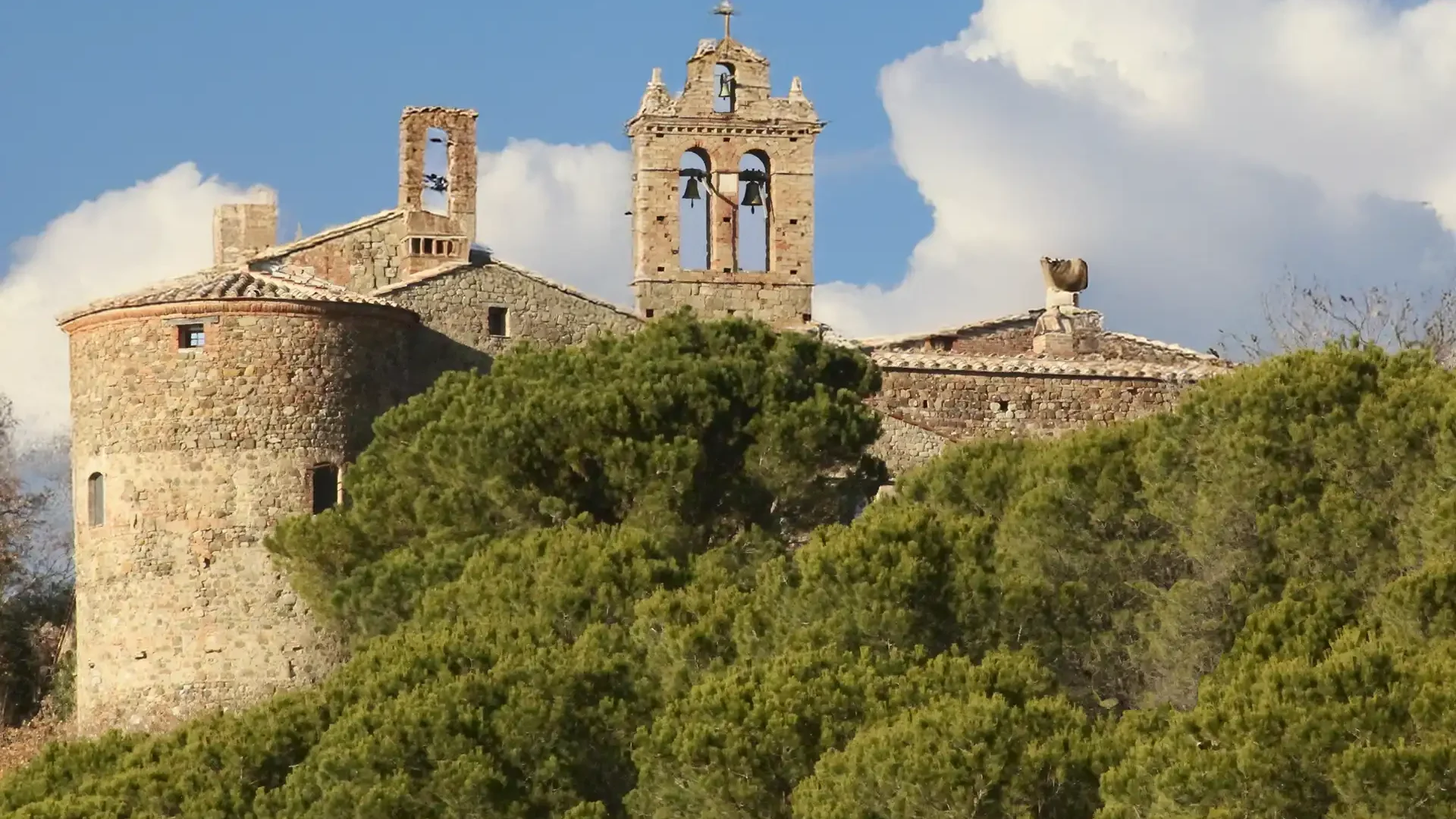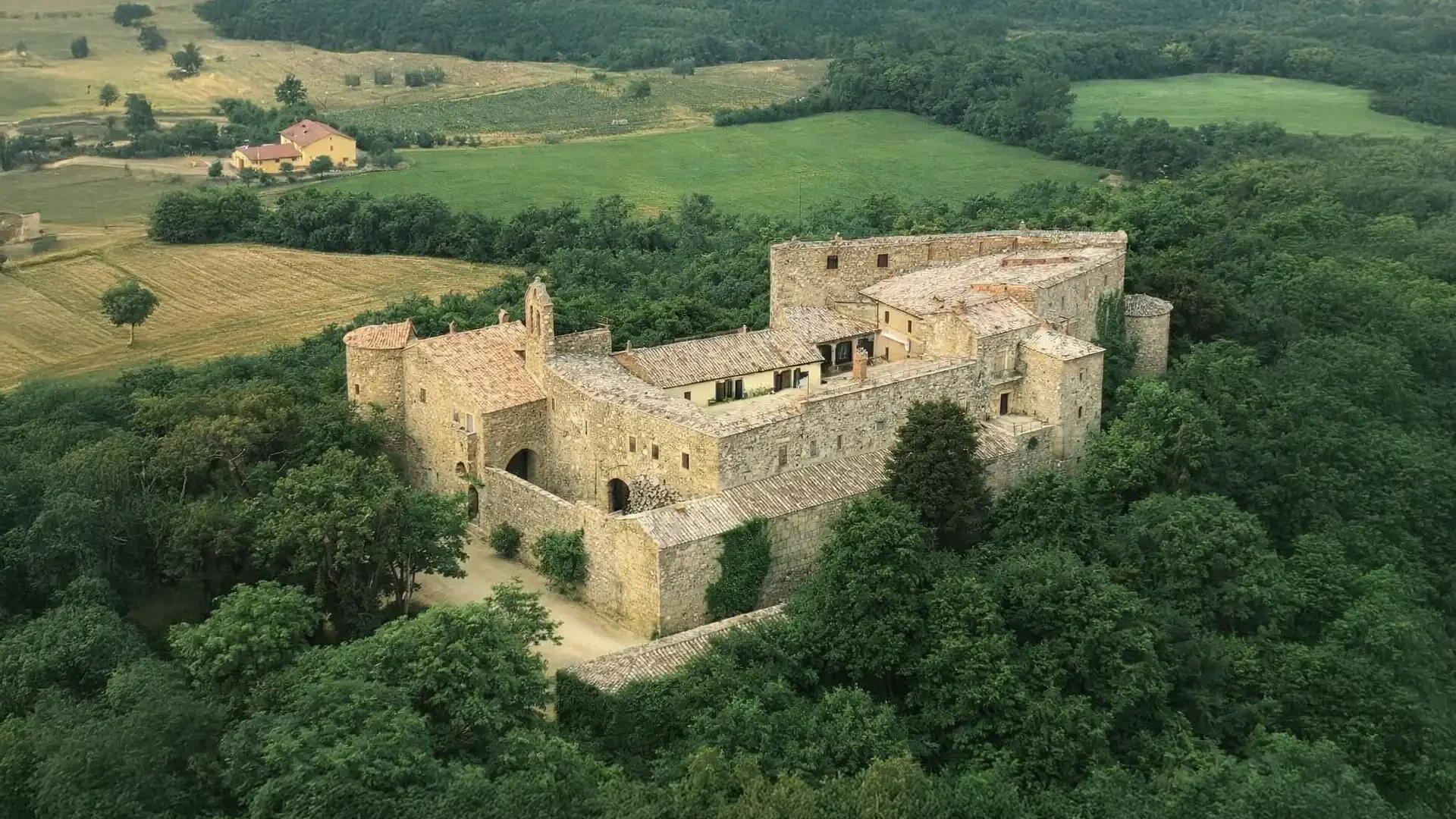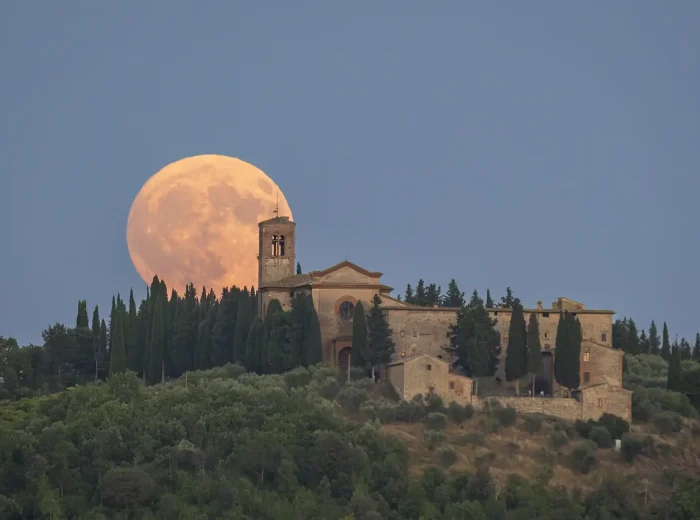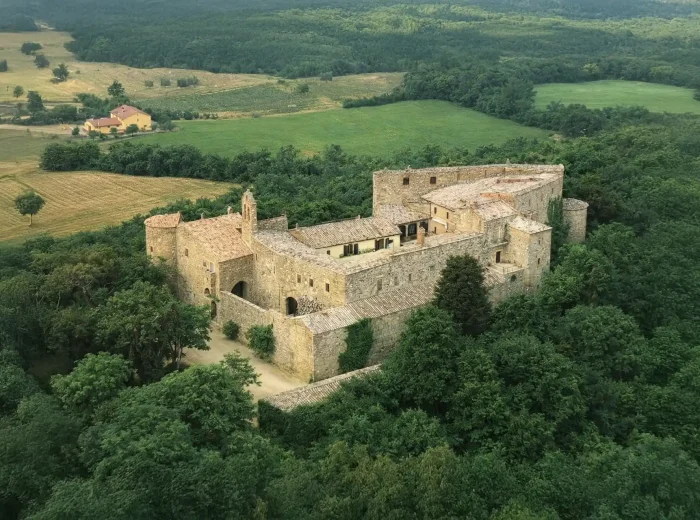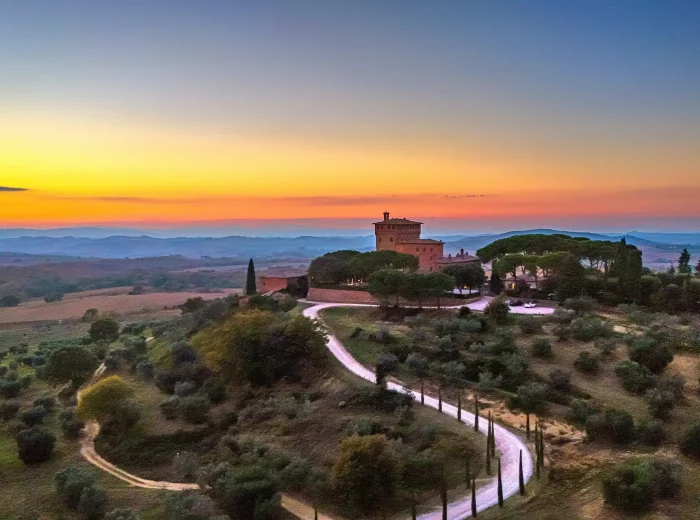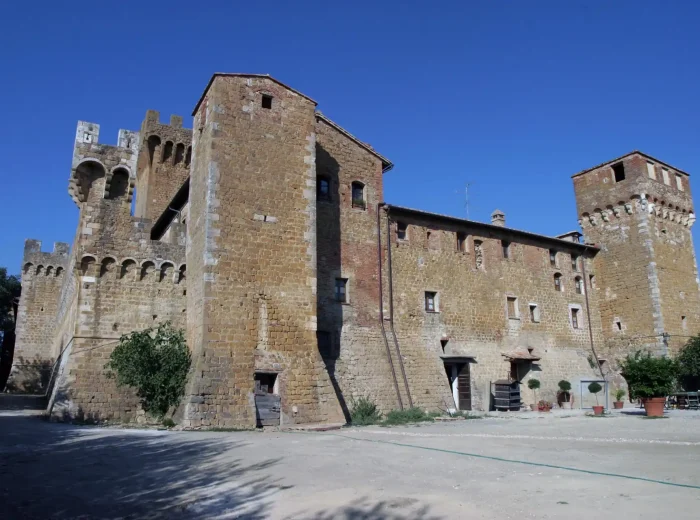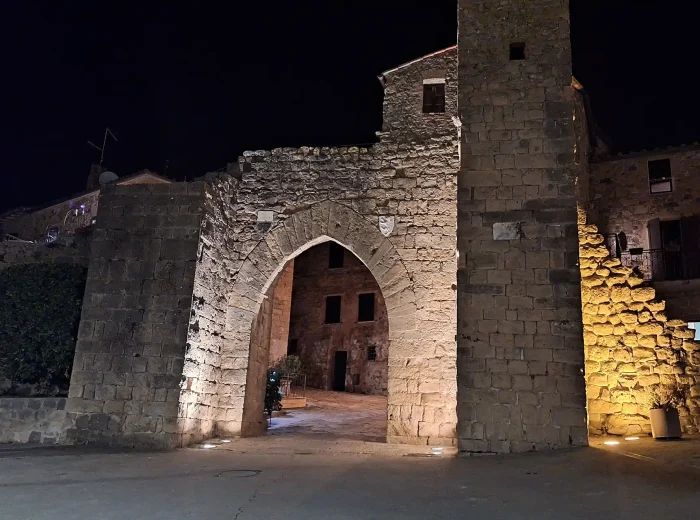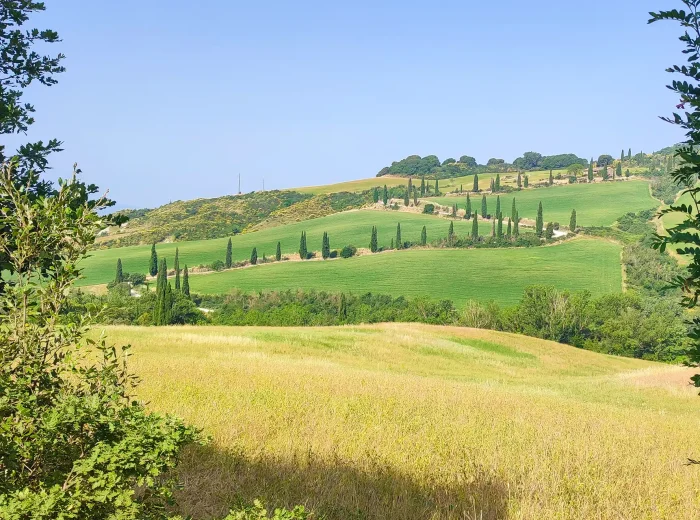
Castelluccio della Foce, often simply called Castelluccio di Pienza, is an ancient castle and fortified farm located in the hills of the Val d’Orcia, in the municipality of Pienza, near the Foce Pass, along the road connecting the Val di Chiana to the Val d’Orcia.
The complex is characterised by two round corner towers and the ruins of the ancient defensive walls, now largely reduced to their foundations.
The castle was formerly also known as Castelluccio dei Bifolchi, the name of its first owners, and it stands on a hill about 10 km from Pienza and Chianciano Terme. From 1320, it was part of the territory of the Republic of Siena and took on a strategic role in controlling access to the valley.
In 1390, part of the complex was donated to the Hospital of Santa Maria della Scala in Siena and was transformed into a grange, or a fortified farm intended for agricultural management and territorial control; this function remained active until 1787.
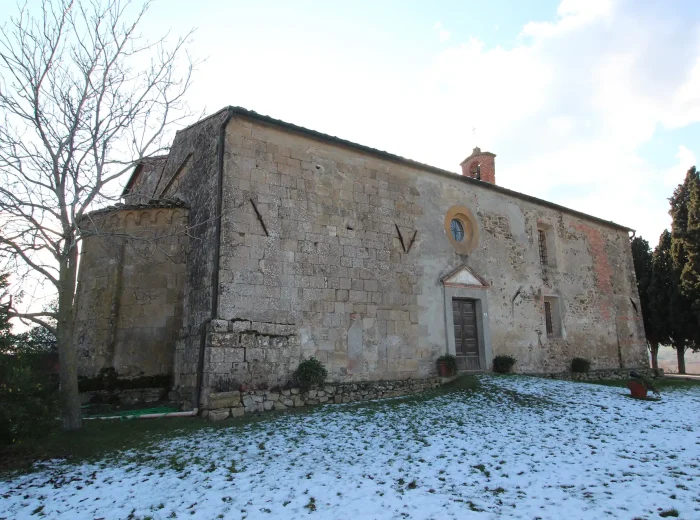
In 1556, after various trials and tribulations caused by war, the Florentines occupied Castelluccio once and for all and dismantled its walls. The Medici family later returned it to the Hospital of La Scala, which retained possession until 1783. In that year, the Grand Duke of Tuscany arranged the transfer of a small portion of the complex to the chaplain to allow for the construction of the Church of Santi Bernardino e Andrea Apostolo, located within the castle, in remembrance of the preaching of St Bernardino of Siena in the 15th century.
Over the centuries, the castle had several owners and was used for different purposes, while maintaining the typical structure of Sienese granges.
In 1934, Castelluccio became part of the La Foce agricultural estate, one of the most celebrated estates in the Val d’Orcia, made famous by Iris and Antonio Origo, who lived there and contributed to the enhancement of the landscape and the local culture.
The castle has hosted cultural events, including the “Incontri in Terra di Siena” festival, a musical and artistic event that breathes life into the area during the summer. The building is not always open to the public, but can be admired from the outside or visited during cultural events when access is allowed.
In recent years, the complex has changed ownership; several interventions and projects have been initiated, the outcome and completion of which are still being finalised.