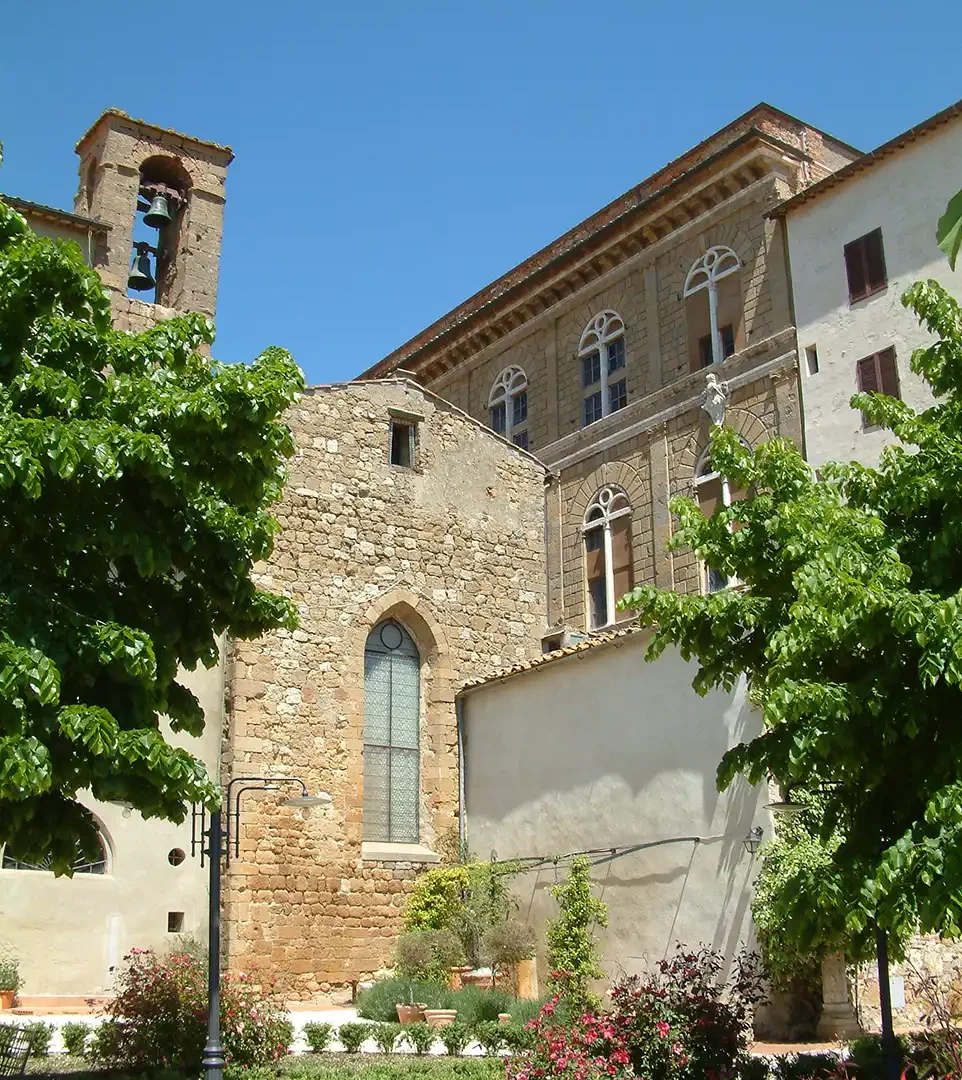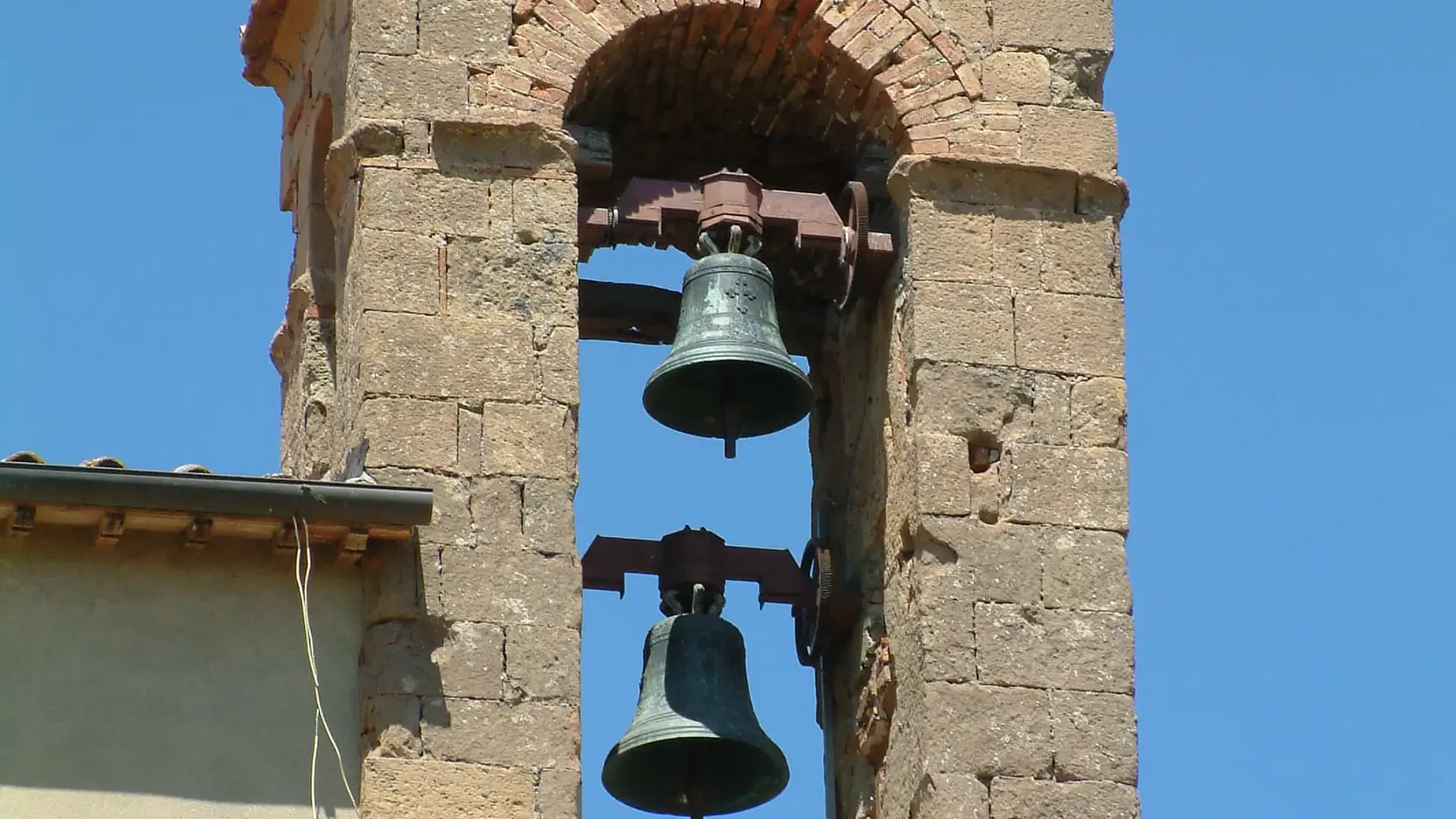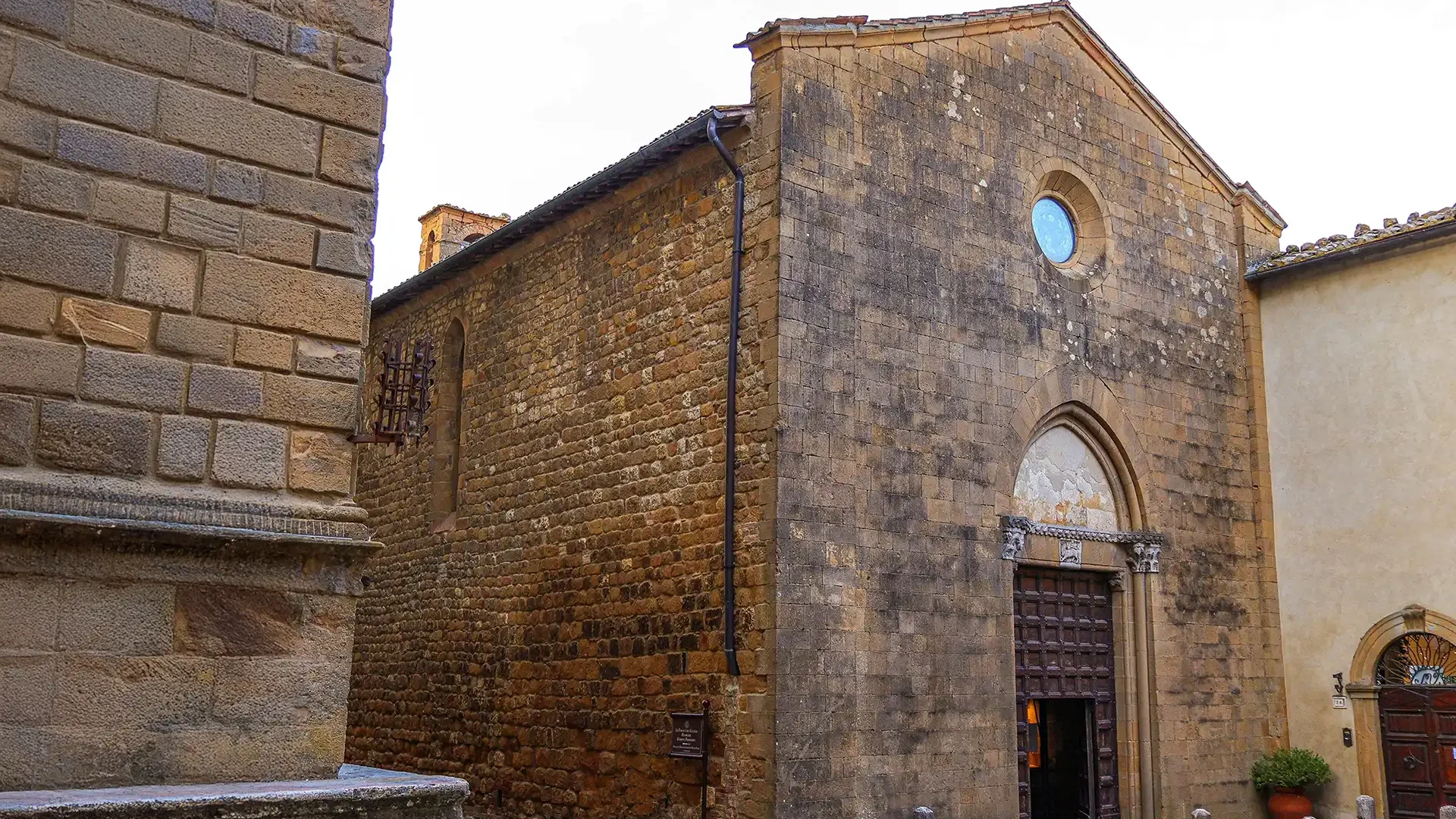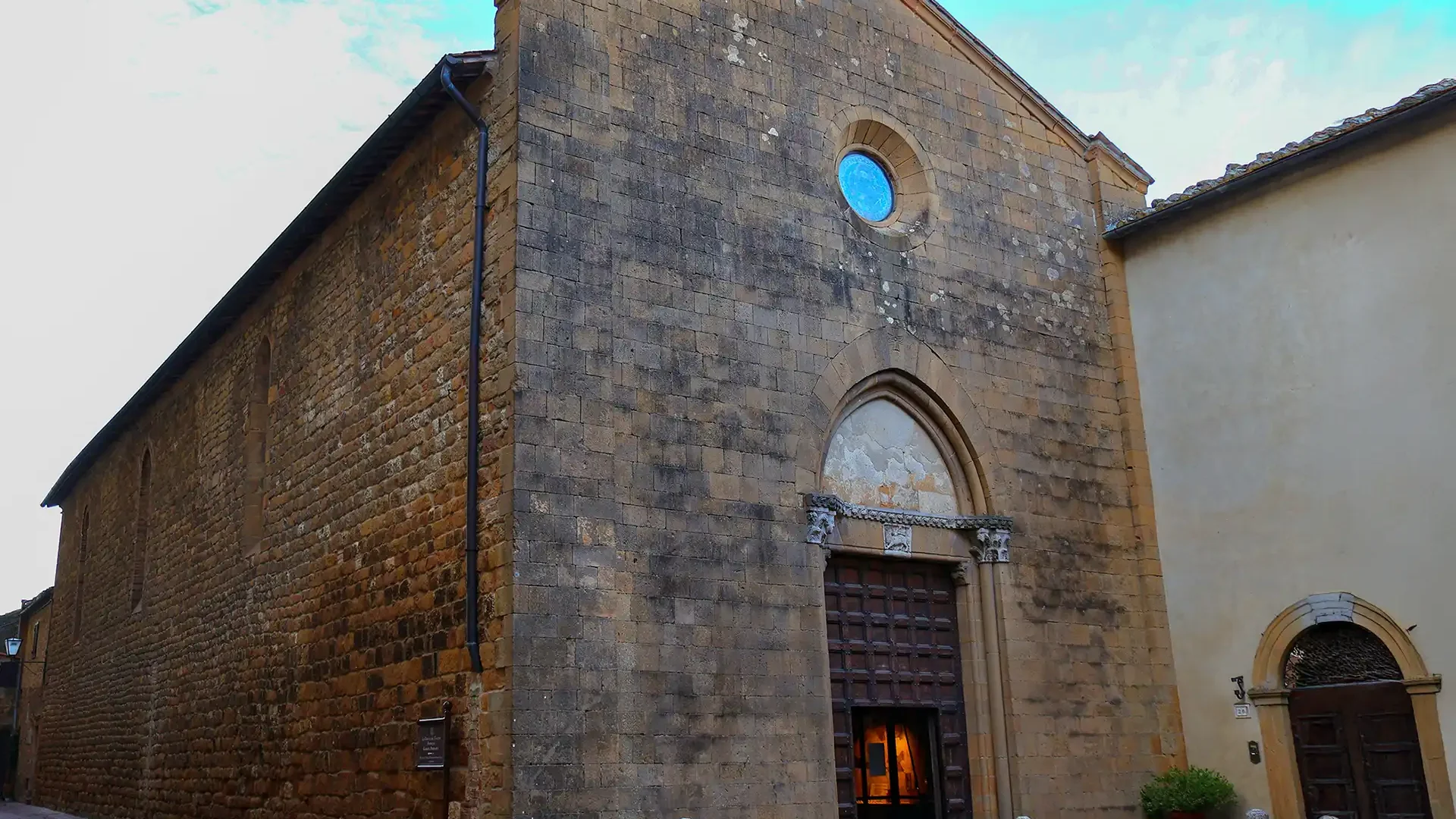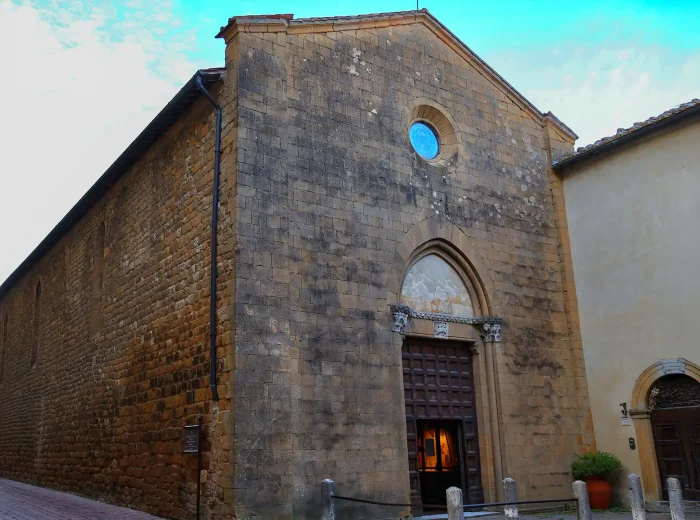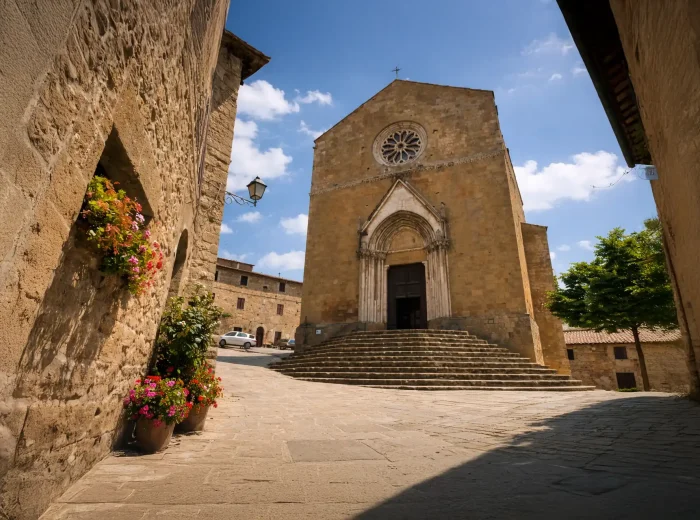
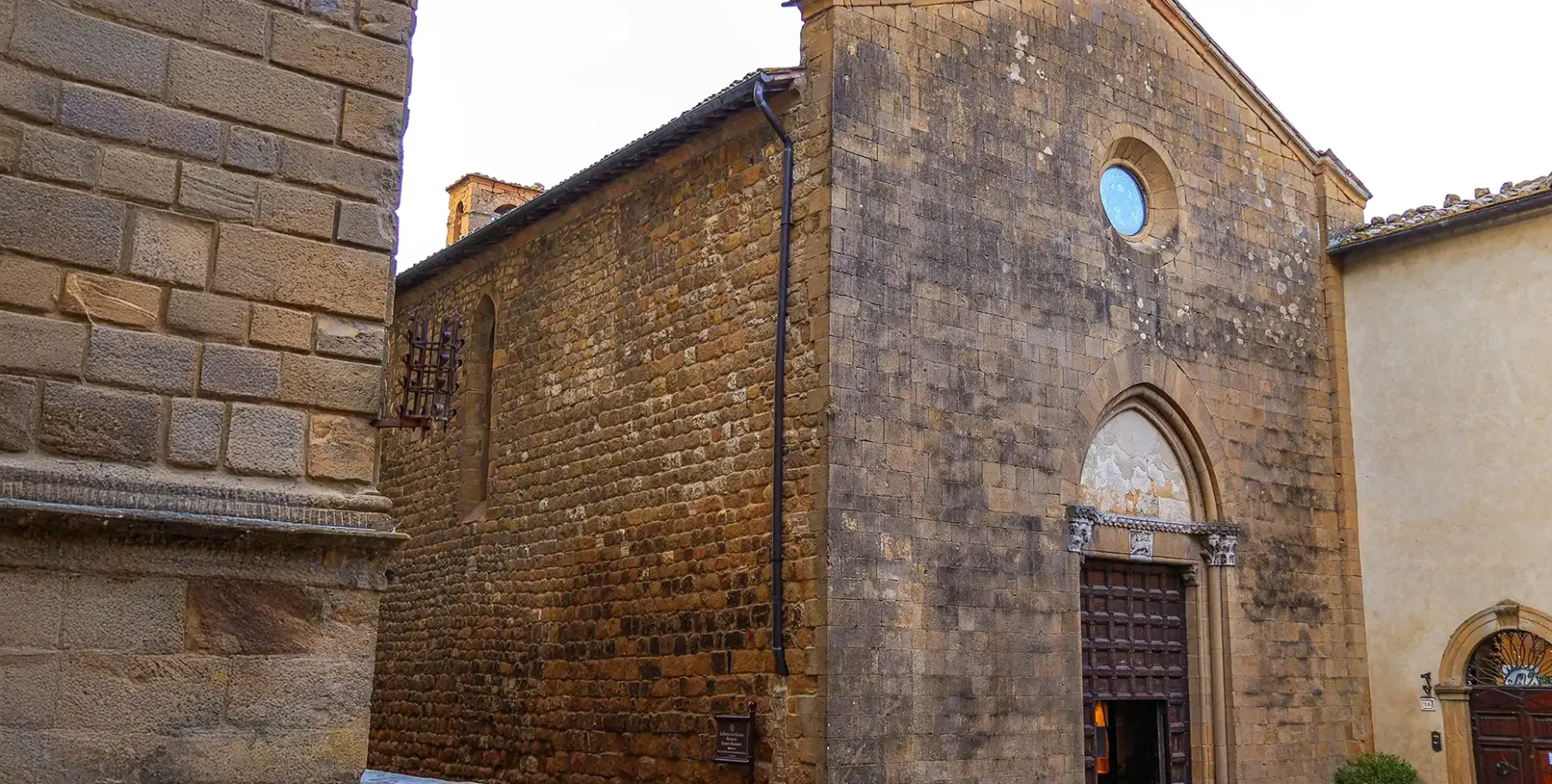
After passing Palazzo Piccolomini, along Corso Rossellino towards Porta al Prato, on the left-hand side of the road, you will come across the Church of San Francesco with the adjacent 16th-century cloister, now used as a hotel.
The church was built in the 13th century by the Friars Minor, followers of St Francis, who died in 1226. It is the only medieval architectural complex in the historic centre to have survived the renovation commissioned by Pope Pius II. In just a few years, from 1459 to 1462, he had rebuilt his ideal town, based on a design by architect Bernardo Rossellino.
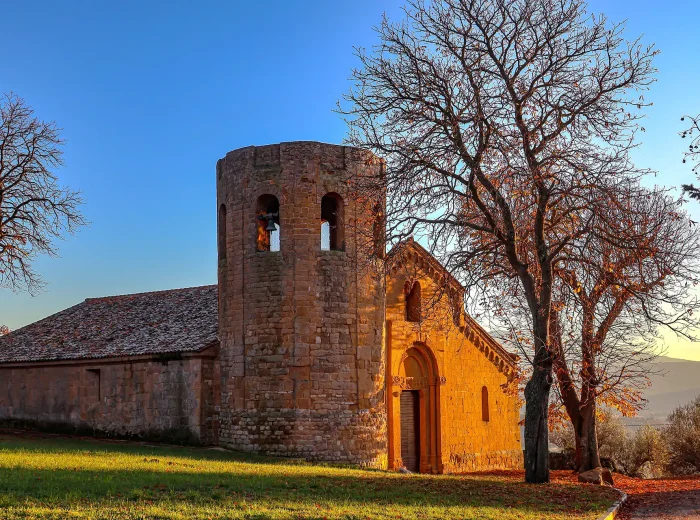
The church has a simple gabled façade made of sandstone, with a single portal featuring a pointed arch. The interior of the church has a single nave. In keeping with the Franciscan principles, its appearance is very simple and bare, although the walls must have been entirely covered in frescoes, as recent renovations have revealed. Arranged in three registers, these paintings depict figures of Saints, including that of Saint Francis, also the protagonist of the story painted on the left wall, which shows the saint while he receives the stigmata on the mountain of La Verna.
The frescoes on the apse walls are better preserved. They include the Annunciation and the Descent from the Cross, as well as a series of stories about St Francis, including the saint’s encounter with the wolf. These paintings have been attributed to Cristoforo di Bindoccio and Meo di Pero, two important Sienese painters who worked in the second half of the 14th century. Some frescoes, such as the Mystic Marriage of Saint Catherine and the figures of Saints John the Evangelist and Peter, are attributed to the Sienese painter Niccolò di Ser Sozzo. Pius II’s parents were buried in this ancient church, as shown by the tombstone with the family crest located at the back of the building, on the left. Their remains were later moved to the Church of San Francesco in Siena.
The church also contains several contemporary works of art; notable examples include Piero Sbarluzzi’s 1988 ceramic Nativity of Jesus and the bronze sacred furnishings with a three-piece stone altar by Sienese artist Massimo Lippi.