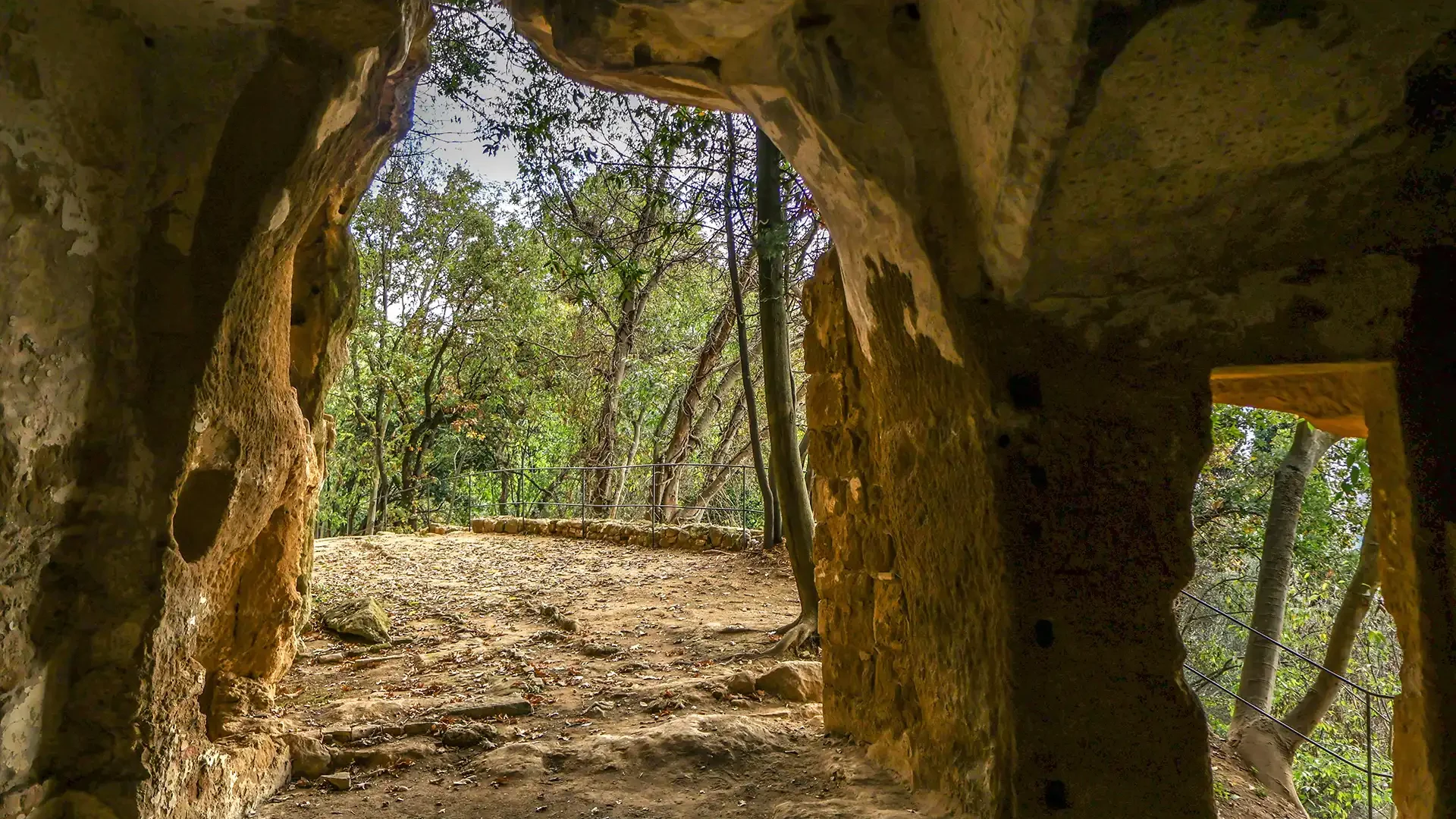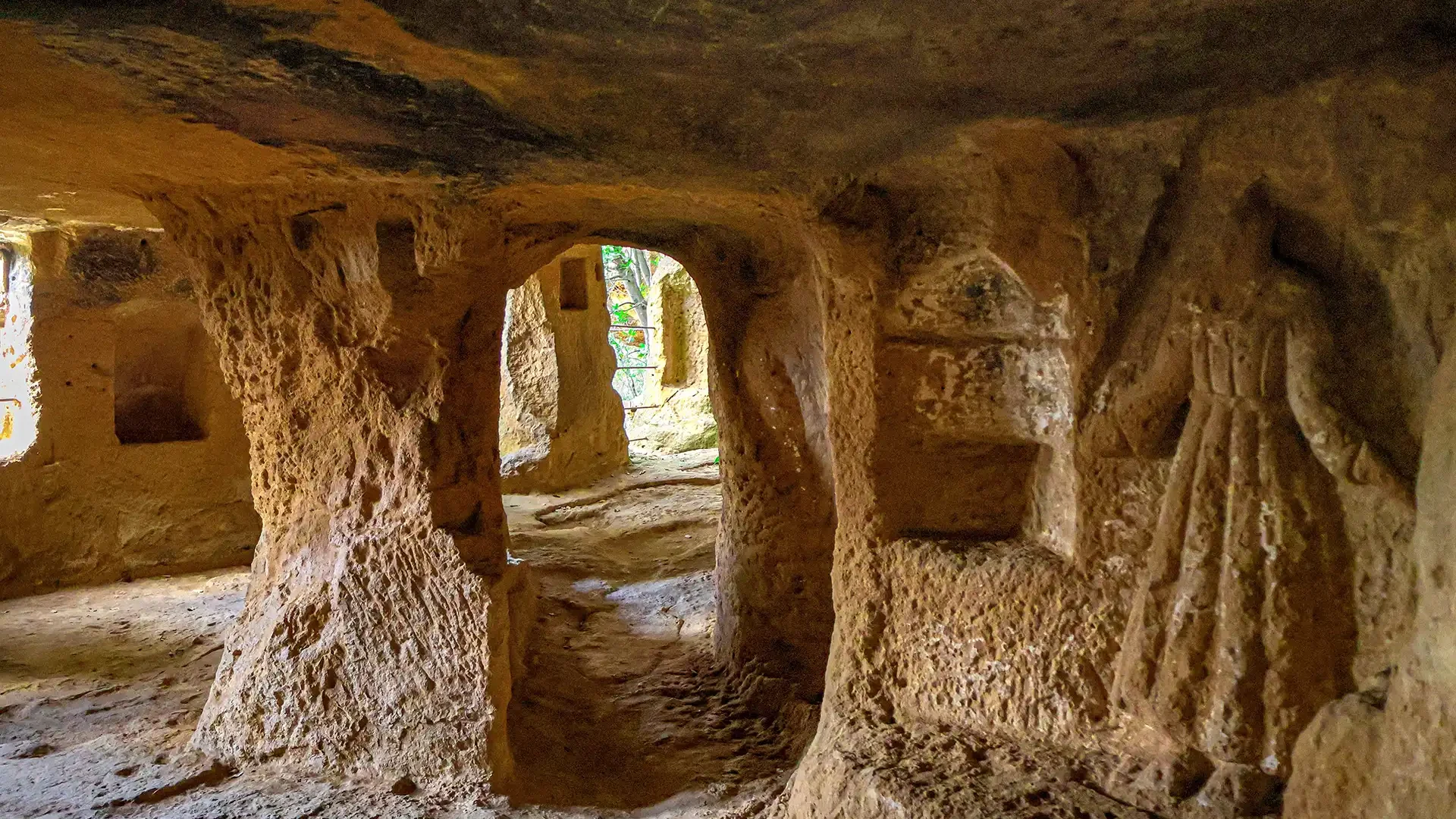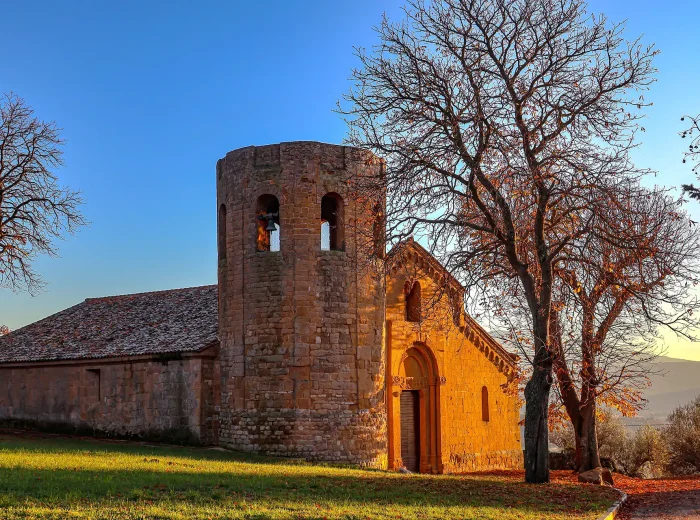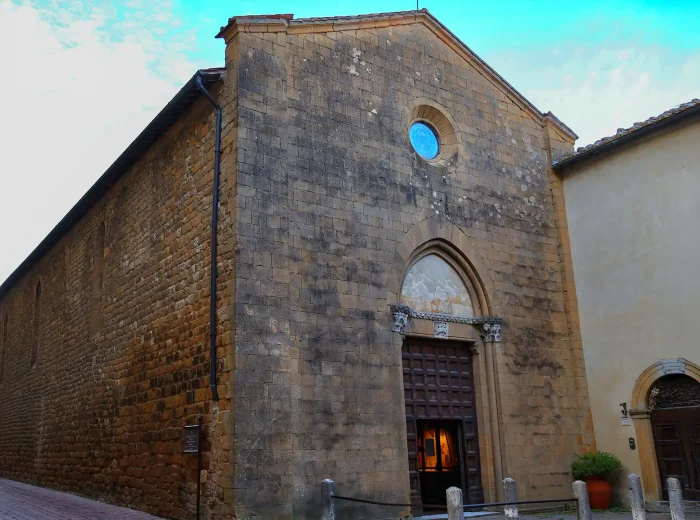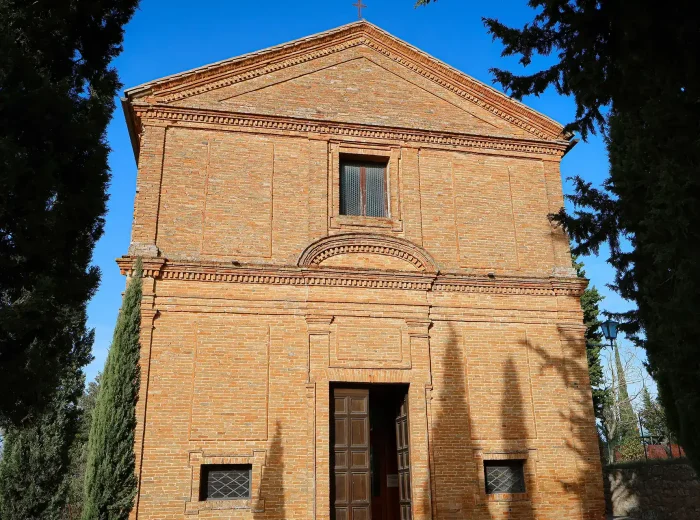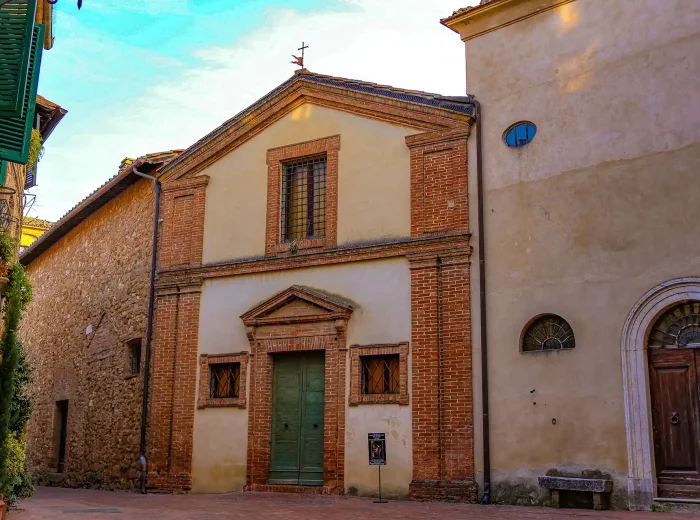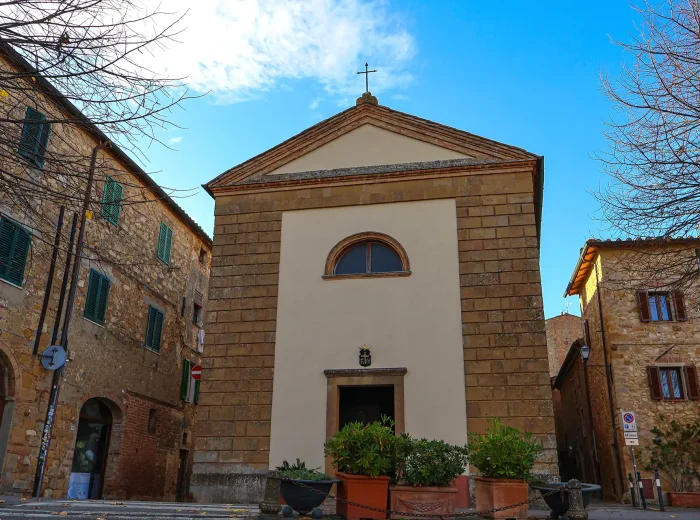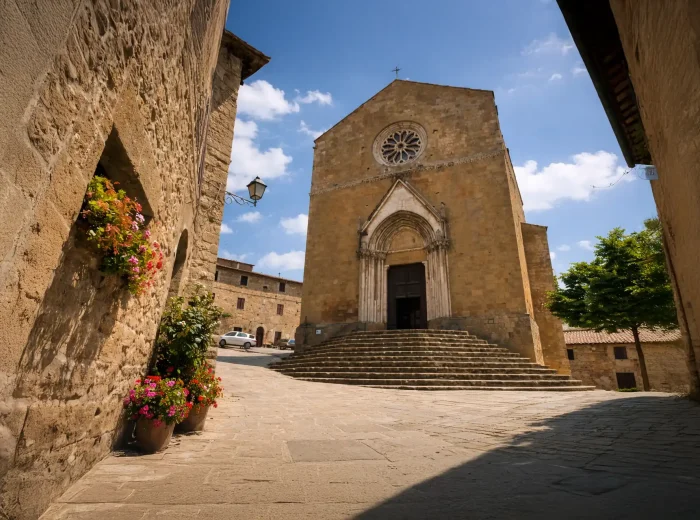
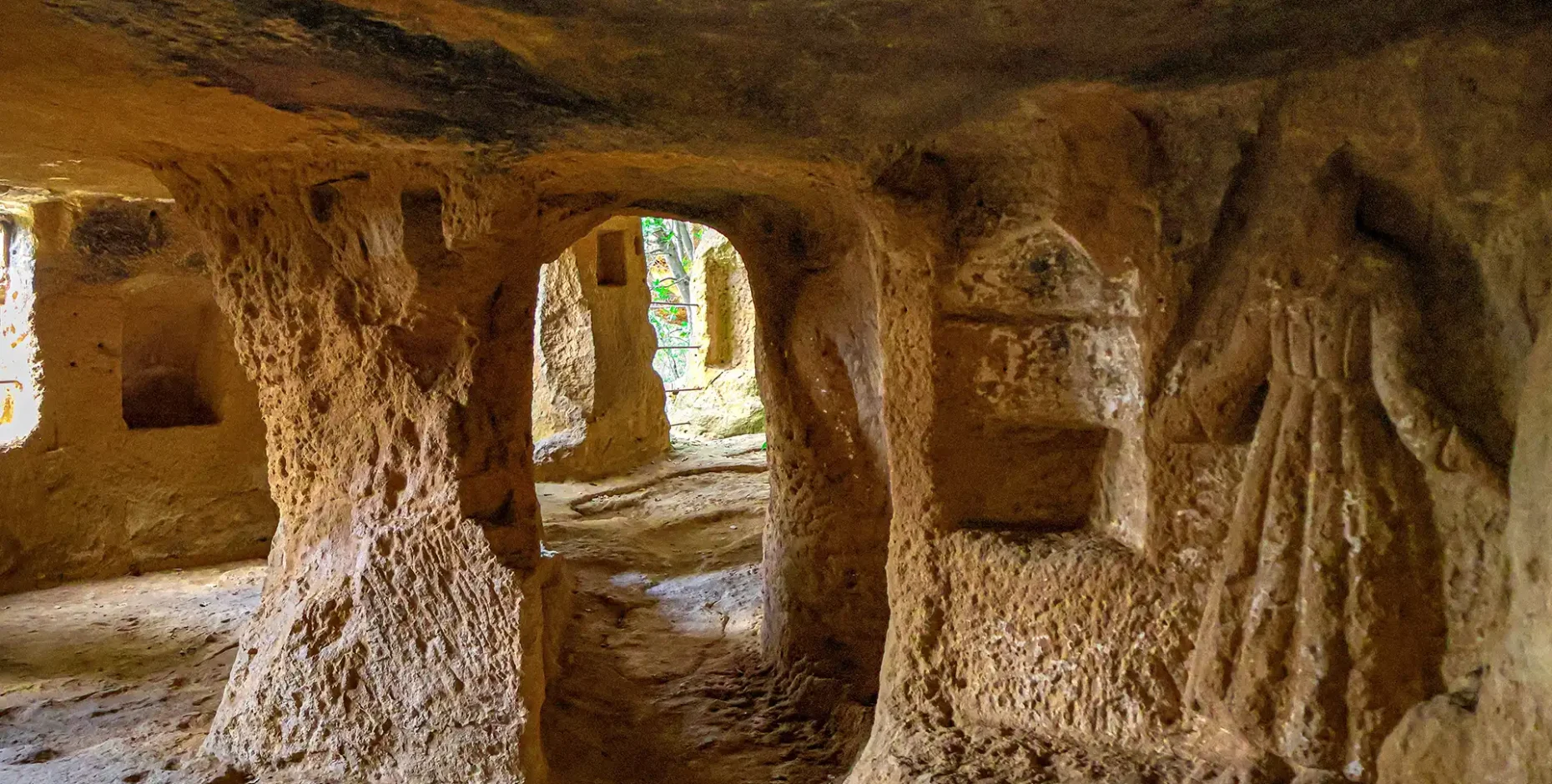
Not far from the historic centre of Pienza, visitors can admire a captivating place carved into the sandstone escarpment beneath the Church of Santa Caterina, near the Parish Church of Corsignano: this is the Hermitage of Pienza, a place where hermits or small monastic communities retreated for prayer and isolation.
The site, now open to visitors by booking, overlooks a breathtaking view of the Val d’Orcia, towards the summit of Monte Amiata. It was only exposed in 1996 thanks to the intervention of private individuals who cleaned and restored this evocative environment.
The oldest document relating to the hermitage dates back to 1344, as is indicated in the inscription on the tombstone: “Anno Domini 1444 – You who pass by, bear me in mind as I lie in the monument, such as you are, I was, such I am, you will be. Say the Lord’s Prayer for the soul of Brother Luca”. Subsequent documents attest to the presence of hermits there until 1768.
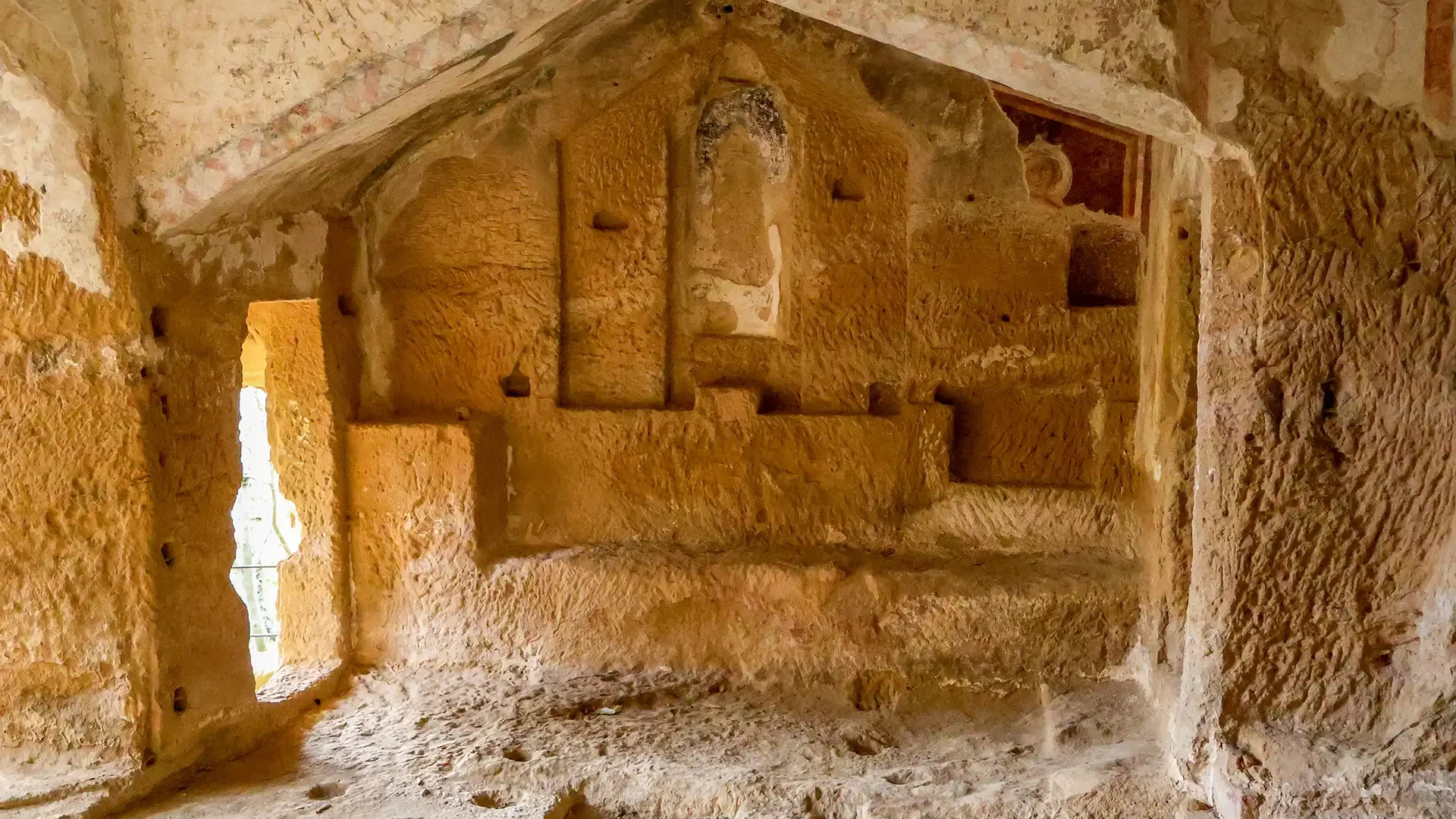
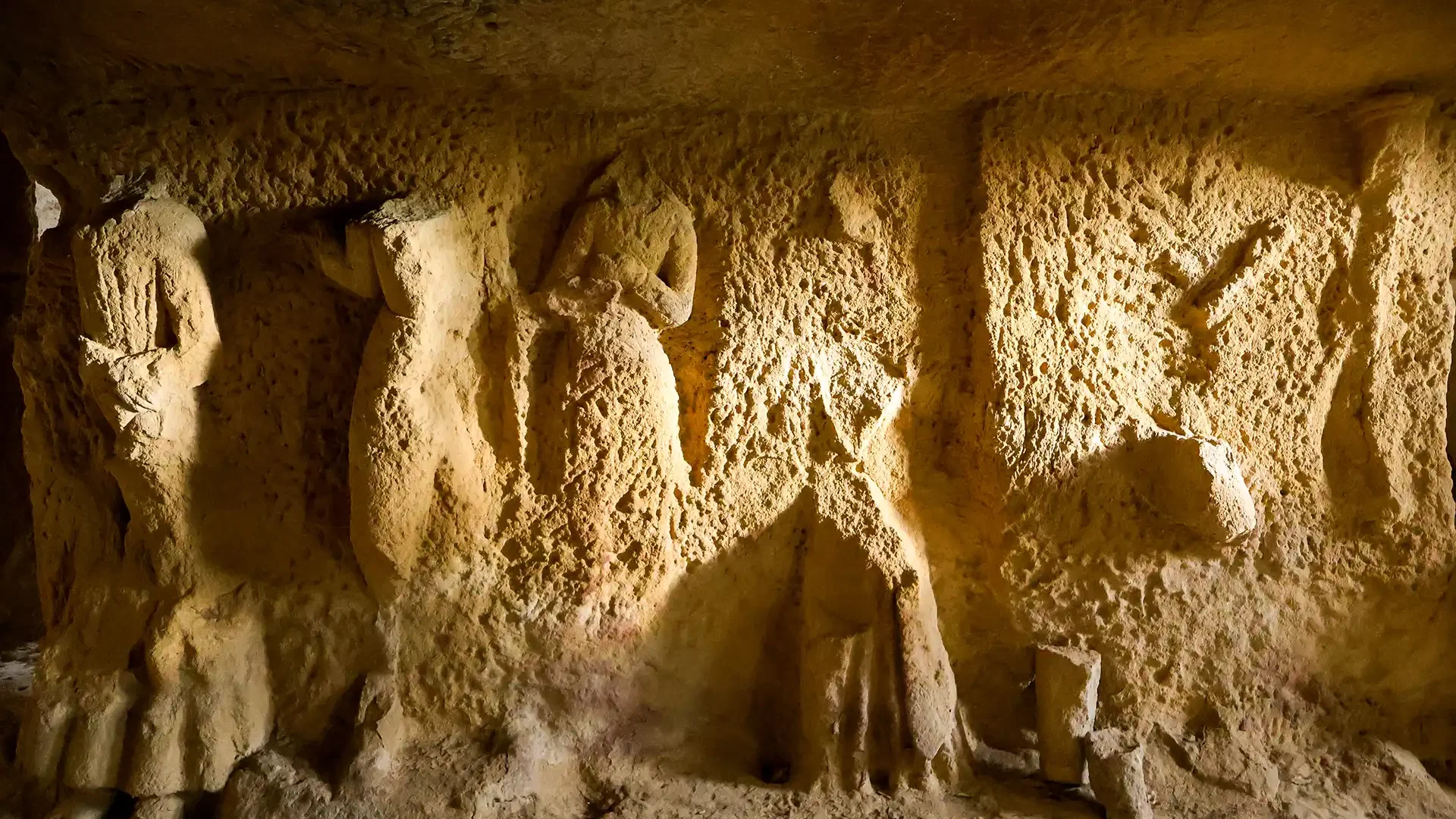
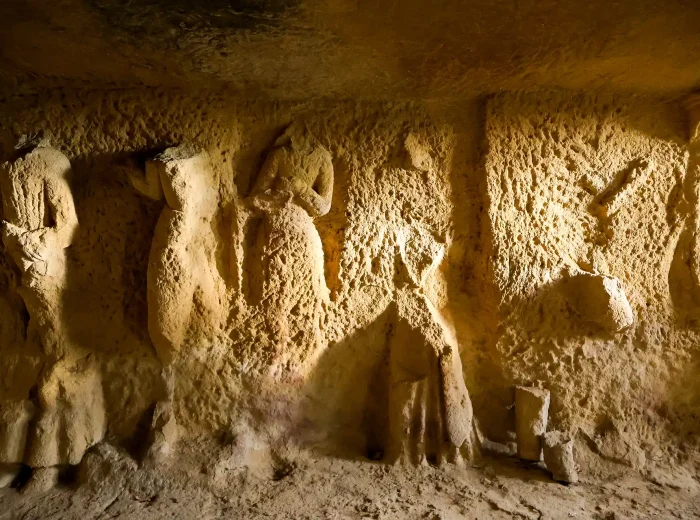
The hermitage’s rooms are strongly characterised by sculptures and a few frescoes, now in a rather precarious state of preservation and difficult to date.
Among the most fascinating sculptures worthy of mention: a group of four figures, two of which are women dressed in long robes, which were probably intended to be alongside the figure of Christ at the Column, which has now been lost. Other sculptures can be seen in the area next to the church: the head of Christ, the face of a friar and the image of the tailed mermaid, also found on the portal of the Parish Church of Corsignano. According to the famous architect, Jan Piper, in his important book entitled “Pienza”,The project for a humanistic vision of the world, suggests that the hermitage may have been a sort of representation of the Holy Sepulchre. In his opinion, this intuition can be confirmed not only by the type of sculptures that remain, but also by its location. In fact, the hermitage is located at a strategic point between the Parish Church of Corsignano and San Quirico, on one of the most important variants of the Via Francigena, where pilgrims could rest before reaching Rome.