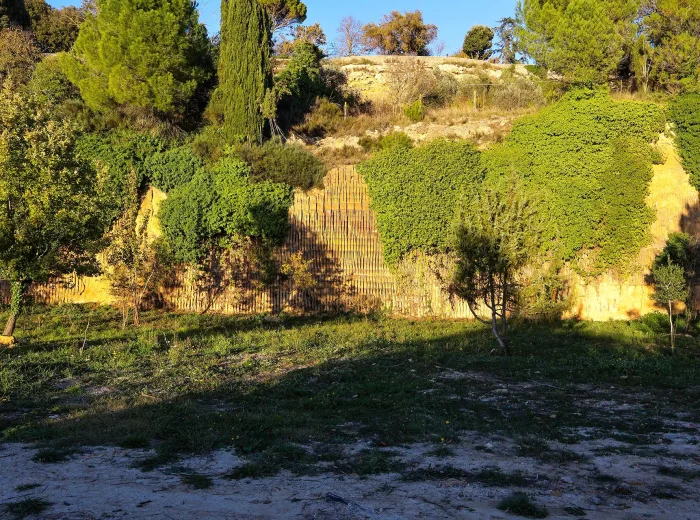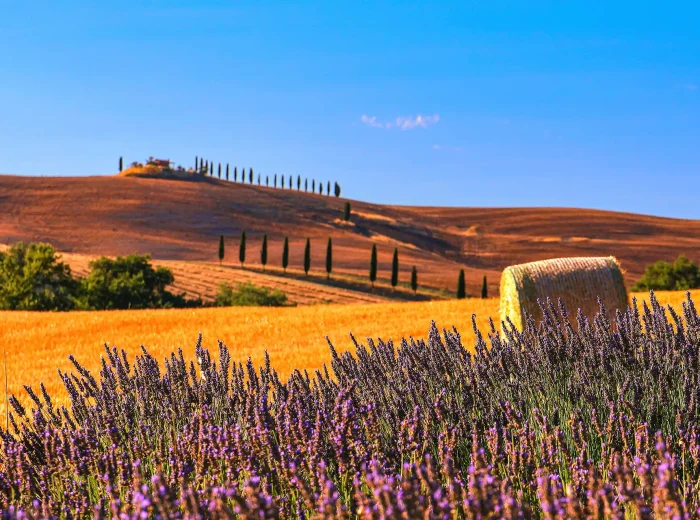
Pienza is steeped in ancient history. Evidence of a village from the Neolithic age (6th-5th millennium BC) has emerged from archaeological excavations in the area called Cava Barbieri, as well as Etruscan evidence found near the town, including the Cretaiole farm.
In Roman times, the urban structure of Corsignano, which was the original name of the village, was based on the model of a Roman settlement, with a cardo and a decumanus, corresponding respectively to the current Via Guglielmo Marconi and Corso Rossellino, with orthogonal streets alongside them. In the centre is the commercial area of the forum, corresponding approximately to the current Piazza Pio II. Corsignano was also mentioned by Boccaccio in a story from the Decameron and in the late Middle Ages it became part of the republic of Siena, which took care of building the walls to defend it from the attacks of Florence’s allies, represented by Montepulciano and Orvieto.
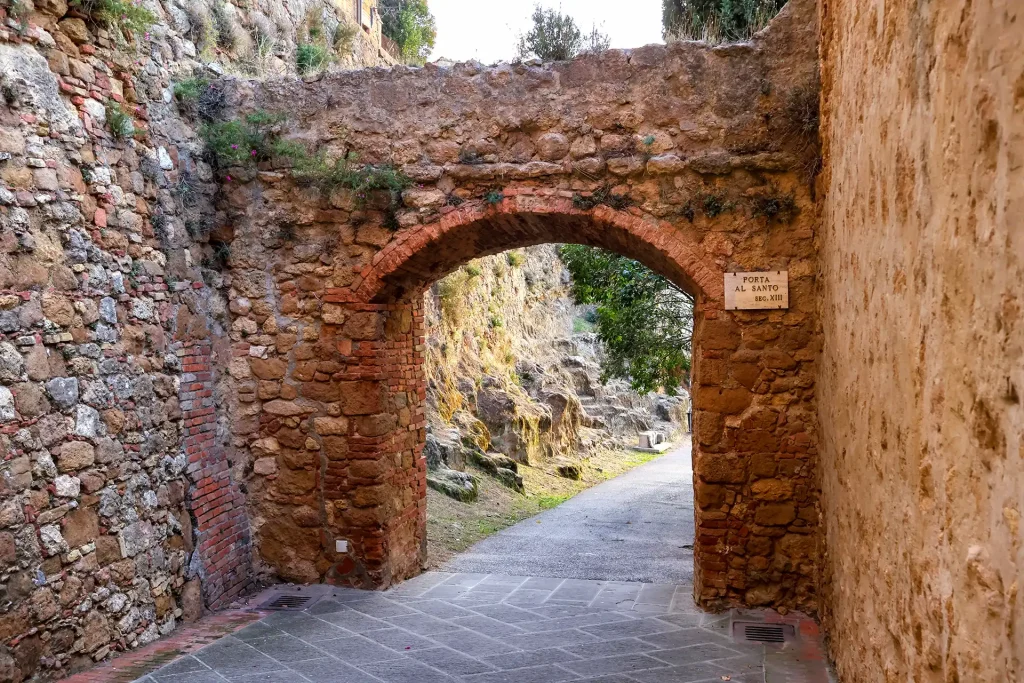
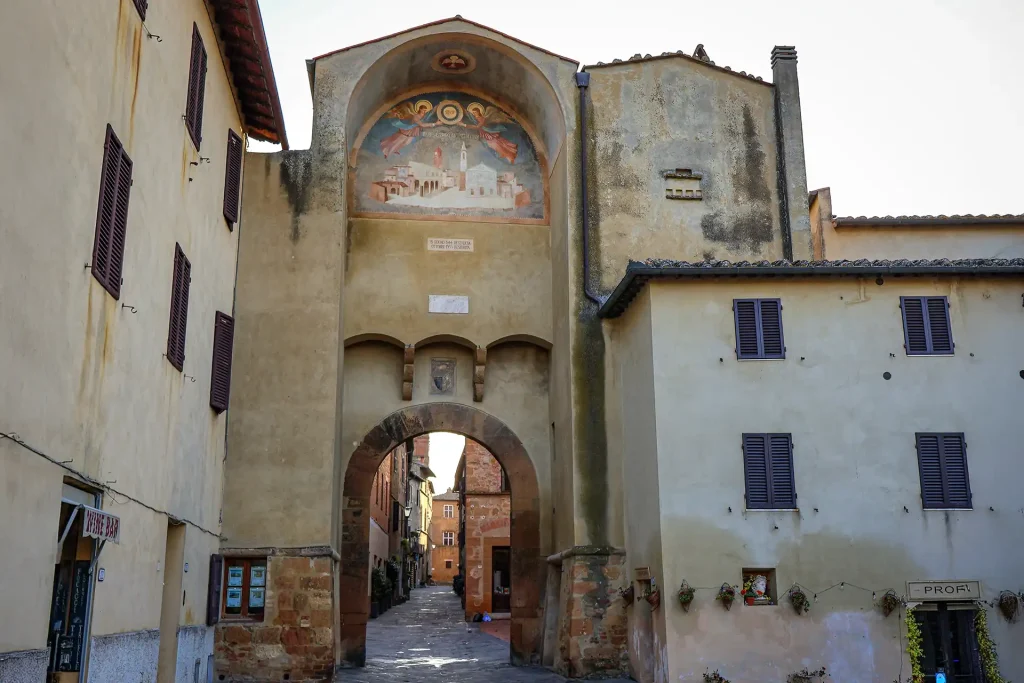
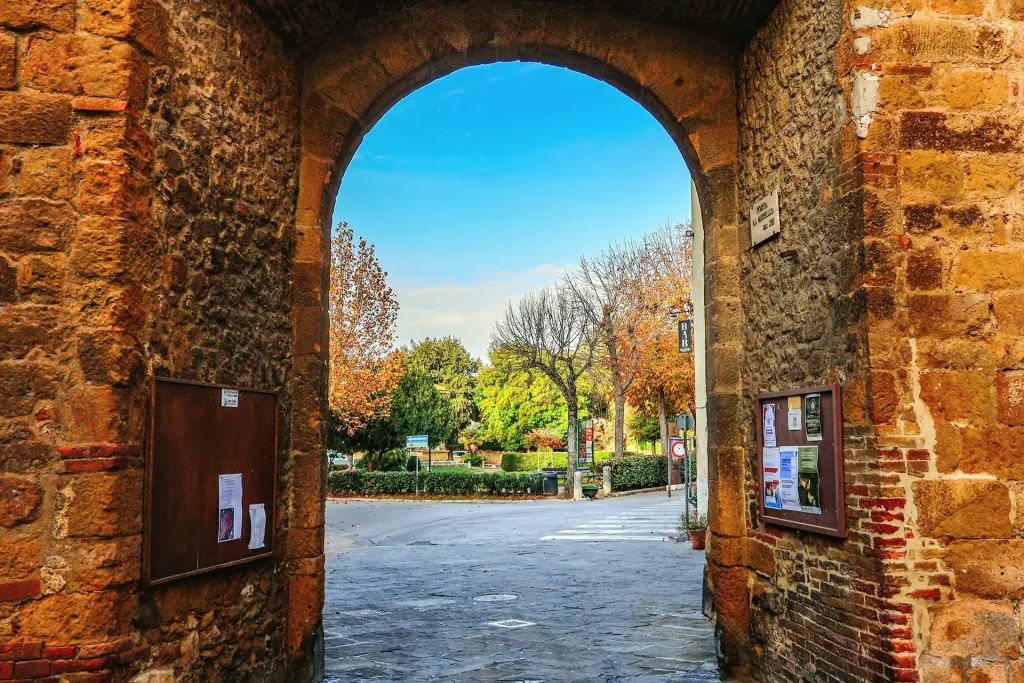
Today, only the walls of the southern side still remain, since the northern ones were demolished in the nineteenth century and can only be perceived from the place name of Via delle Mura (Street of the Walls). Therefore, the walls with the three gates of Porta al Murello, Porta al Ciglio and Porta al Santo are of medieval origin, as are the Church of San Francesco, the Parish Church of Corsignano and the Romitorio, a rock hermitage site which is now private and can be visited on request.
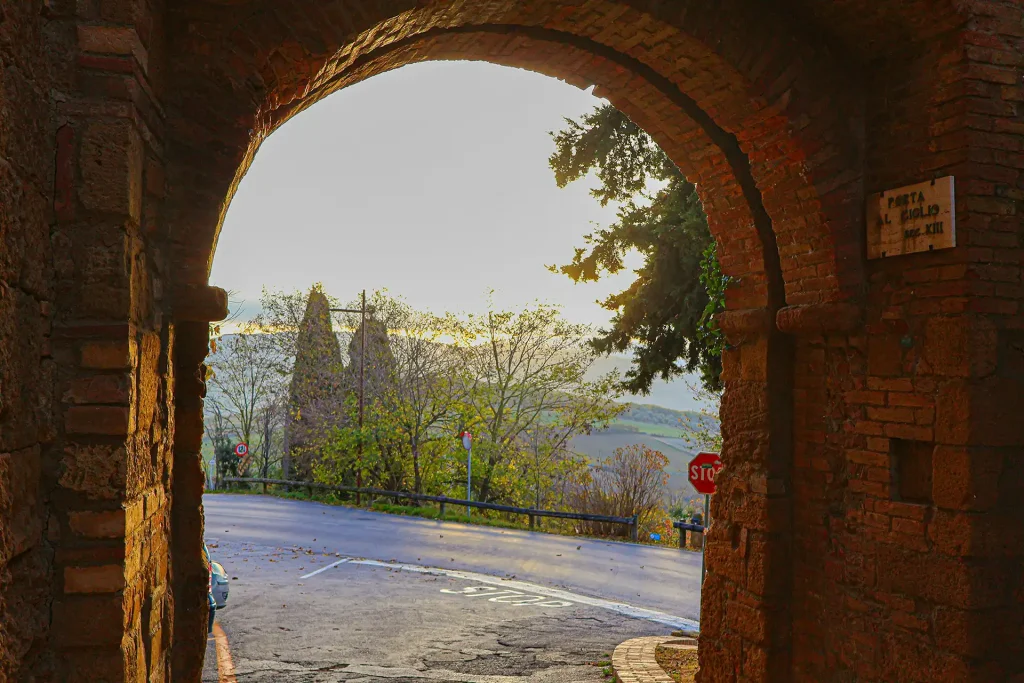
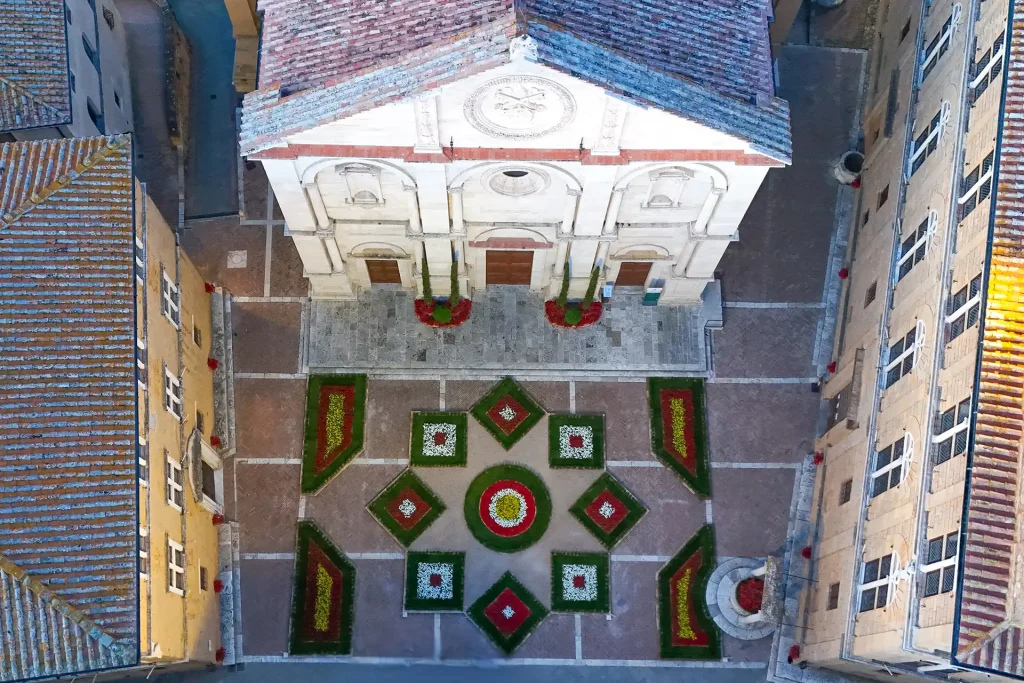
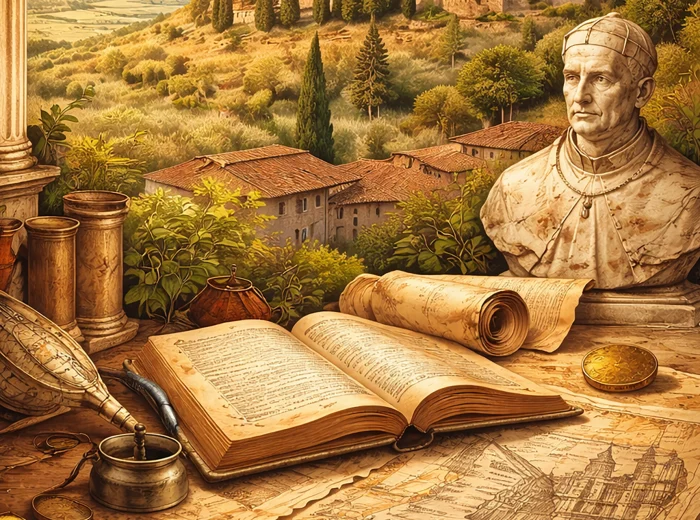
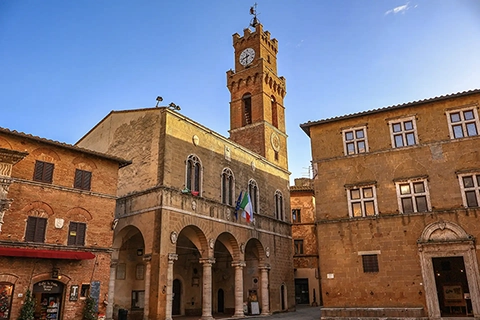
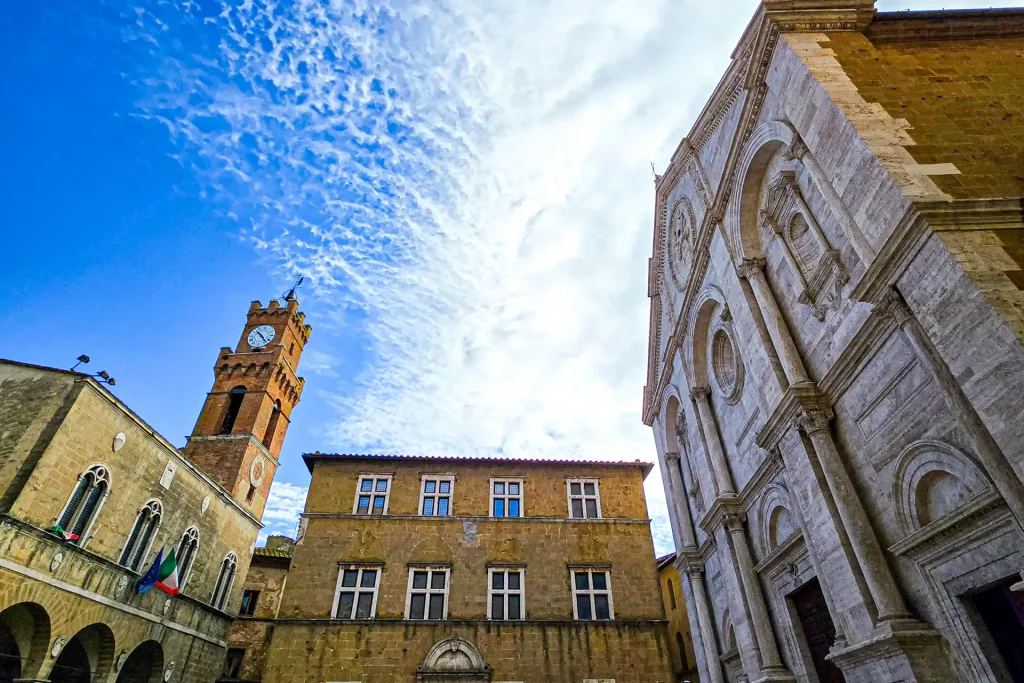
It was in the 15th century that the radical transformation from Corsignano to Pienza took place, led by Enea Silvio Piccolomini, after becoming the pope with the name of Pius II. He wanted to transform his native village into an ideal modern town, in which architecture and landscape could exist in a perfect union. He commissioned the Florentine architect Bernardo Gambarelli, known as Rossellino, to create the central square, along with the cathedral, Palazzo Piccolomini, Palazzo Borgia, the town hall and other buildings. The works were carried out quickly between 1459 and 1462, the date of the inauguration, the change of name and the elevation to the rank of town, or episcopal seat. However, with the death of Pius II, Pienza began to decline rapidly. The papal palace became a burden to his heirs, including Cardinal Francesco Piccolomini Tedeschini, who was pope for less than a month. In the mid-sixteenth century, during the war between Siena and Florence, the walls of Pienza were broken several times, the citizens were exhausted and the buildings were ruined. Nevertheless, a long period of peace began, once all the territories of the ancient Sienese republic were annexed to the Grand Duchy of Tuscany governed by the Medici.
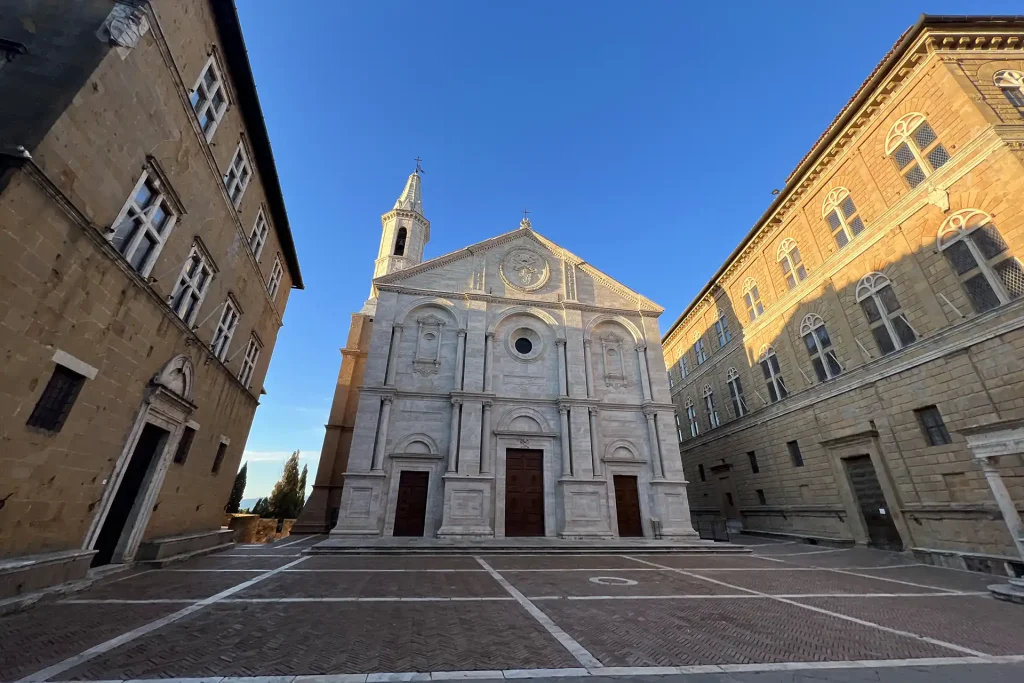
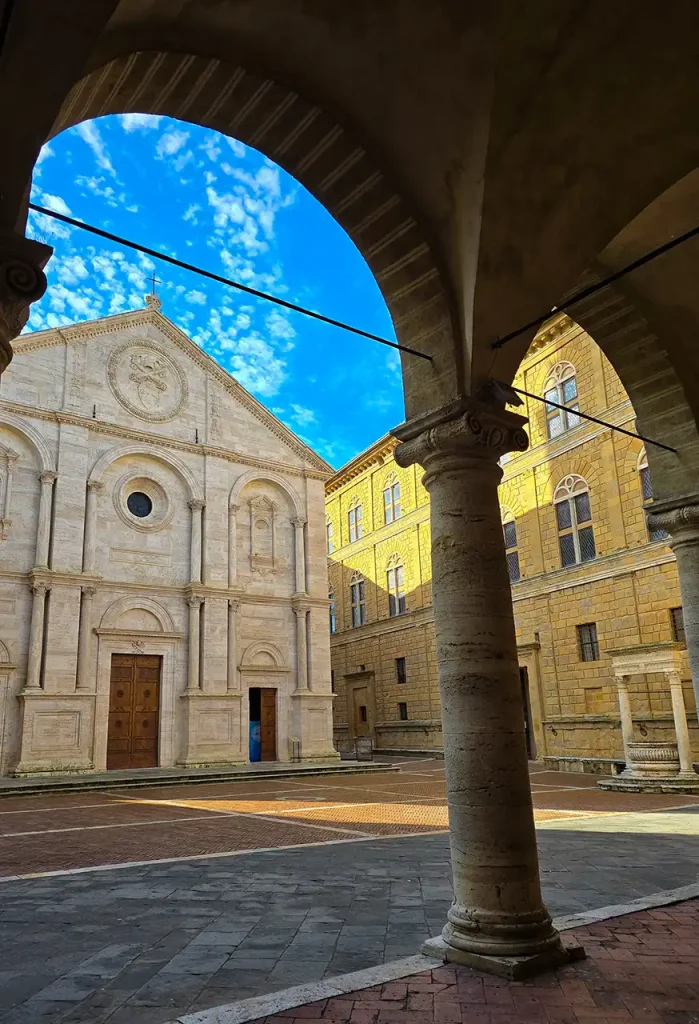
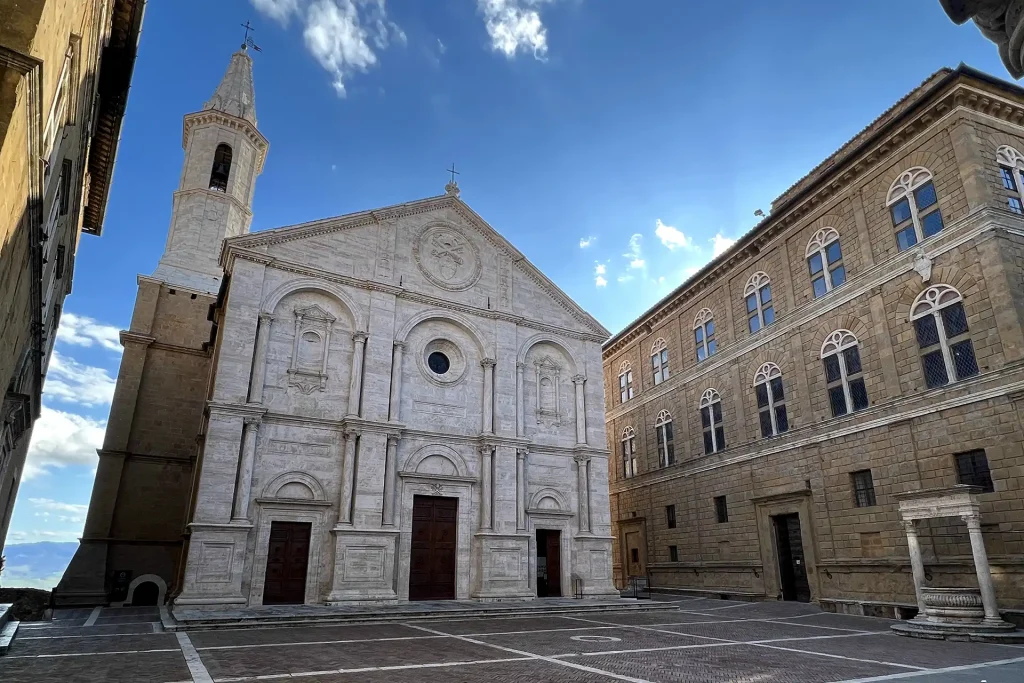
German scholars engaged in the Grand Tour started to rediscover Pienza at the end of the nineteenth century. Another fundamental figure in its history was that of Silvio Piccolomini della Triana, the last descendant of that branch of the noble house, who dedicated his life and resources to the restoration of Pienza’s monuments and the reconstruction of its modern reputation. In 1905, he directed the committee for the fifth centenary of his ancestor’s birth and invited the Savoy Royal Family to the inauguration. On that occasion, the poet Giovanni Pascoli coined a happy verse dedicated to Pienza, defining it “born from a thought of love and a dream of beauty”.
In 1944, the Second World War also took its merciless toll of human lives here, with victims of an allied bombing that hit the medieval district of Gozzante. Aleardo Paolucci was among those trapped in the rubble and not long after he became the celebrated painter of modern Pienza, exporting his works all over the world and attracting artist friends and intellectuals to Pienza. During the Resistance, Monticchiello, in particular, was the scene of terrifying events and also of bravery. The sacrifice of the fallen partisans, Mario Mencattelli and Marino Cappelli, will never be forgotten and nor will the heroic intervention of Irma Richter Angheben, who managed to prevent a massacre with the sweetness of her words. Another woman, the Anglo-American Iris Cutting, married to the Florentine nobleman Antonio Origo, along with her family, gave asylum to refugees in the farm estate of Villa La Foce and kept a diary, later published with the title “War in Val d’Orcia”. This diary led to the recent history of the Val d’Orcia and the wonderful garden, which she designed together with English architect Cecil Pinsent, becoming known throughout the world.
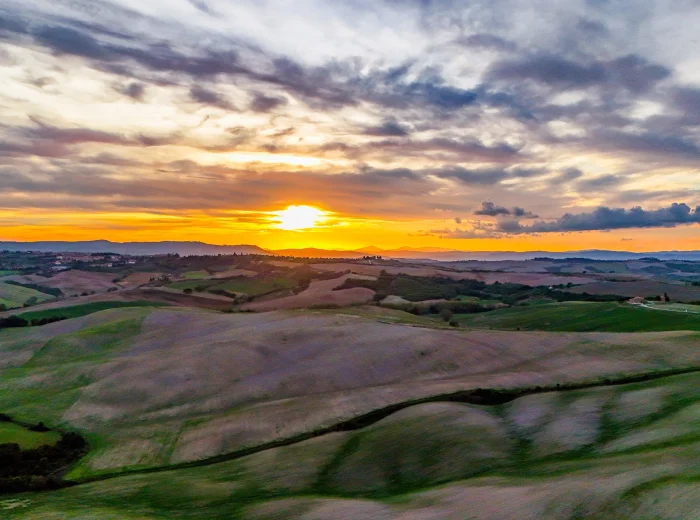
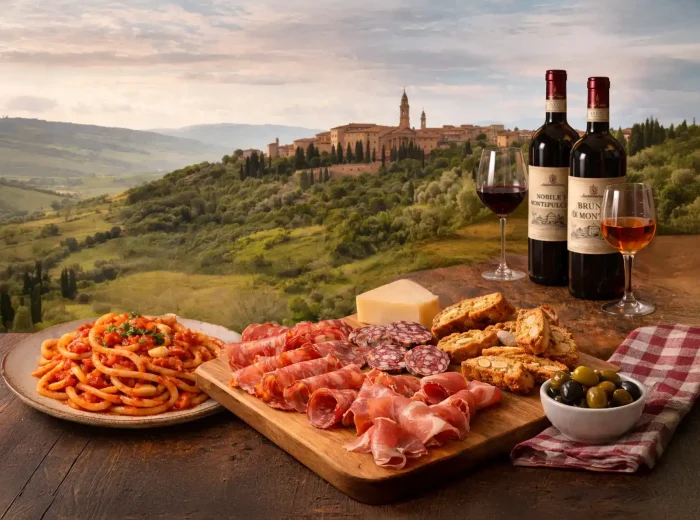
In the 1960s, the centuries-old agricultural system based on sharecropping came to an end and the territory witnessed rapid depopulation of the countryside, which became devalued and impoverished. It was Sardinian shepherds who brought new life to the area, by starting to produce the famous Pecorino di Pienza cheese, today a local excellence. In 1968, film director Franco Zeffirelli filmed several scenes of his “Romeo and Juliet” in Pienza and the poet Mario Luzi chose the town as his summer refuge. Since the 1980s, an agritourism economy has been developing more and more extensively, inviting visitors to stay in the landscape and taste local specialities at a slow pace, in contact with the local community.
In 1996, the coveted UNESCO recognition arrived for Pienza, followed by that for the entire Val d’Orcia in 2004. The present-day challenge is to be able to maintain the right balance between the increasingly numerous guests and few residents, by de-seasonalising a form of tourism that risks being too pressing, and protecting the resident community by guaranteeing basic services.
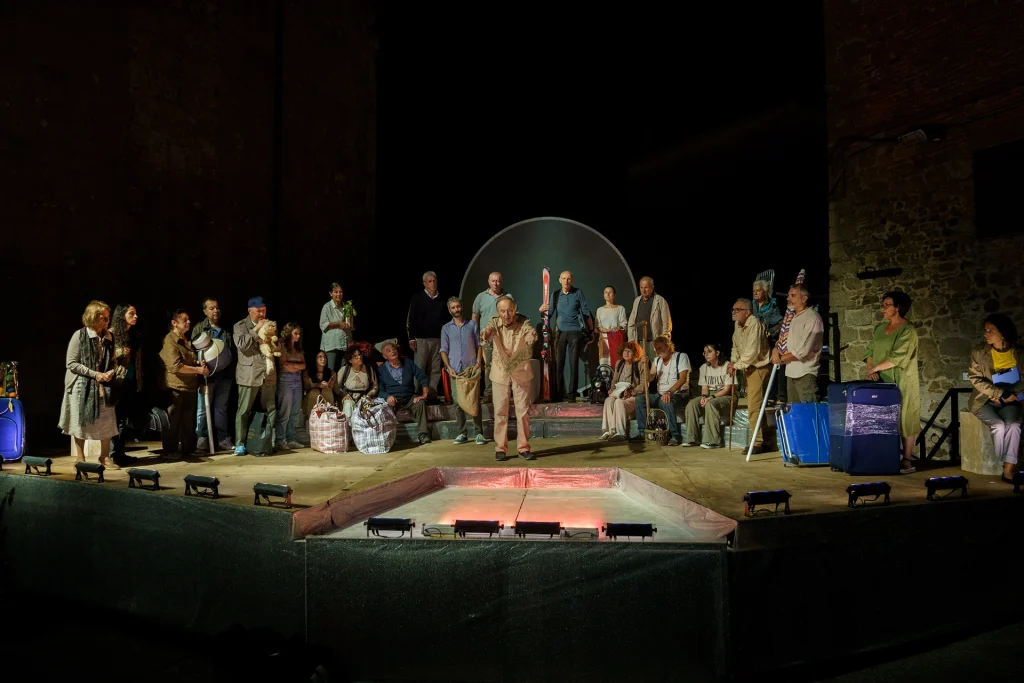
The commitment of the many associations that make up the living fabric of the community is tireless and is dedicated to organising numerous cultural events. The most famous of these are the Festa dei Fiori (Flower Festival) which takes place in May, the Teatro Povero (Poor Theatre) of Monticchiello in August and the Festa del Cacio (Cheese Festival) at the beginning of September.